Crowd-free islands in Croatia: 7 places for a quieter holiday
March 11, 2026
UNESCO heritage in Croatia: 10 World Heritage sites and 23 traditions worth experiencing
March 23, 202630 fascinating places in Croatia reveal just how many interesting stories are hidden behind well-known and lesser-known destinations. Croatia is full of locations that look beautiful at first glance, but only become truly unforgettable once you hear their story. From an island shaped like a heart and a spring that from above resembles a giant blue eye, to Roman cities, a monastery built into a cliff, and military tunnels hidden beneath islands, these are places that show a different, more intriguing side of the country.
Below, we bring you a selection of places that are interesting not only because of their views, but also because of the legends, history, unusual natural phenomena, and local stories connected to them. This list can serve as travel inspiration, but also as a reminder of how many layers lie behind famous and lesser-known destinations along the Croatian coast and on its islands.
Historical places and archaeological curiosities
1. Salona

Salona was once the capital of the Roman province of Dalmatia and one of the most important urban centers on the eastern Adriatic coast. At its peak, it had an amphitheater, baths, city walls, and thousands of inhabitants, while today its remains lie right next to modern-day Solin. Interestingly, Salona also gave the world a pope – Saint Caius (Gaius), who led the Church from 283 to 296.
What is especially interesting is that the fall of Salona directly influenced the founding of Split. After its destruction in the 7th century, part of the population sought refuge inside Diocletian’s Palace, where a new city gradually emerged.
2. Tito’s Cave (Vis)
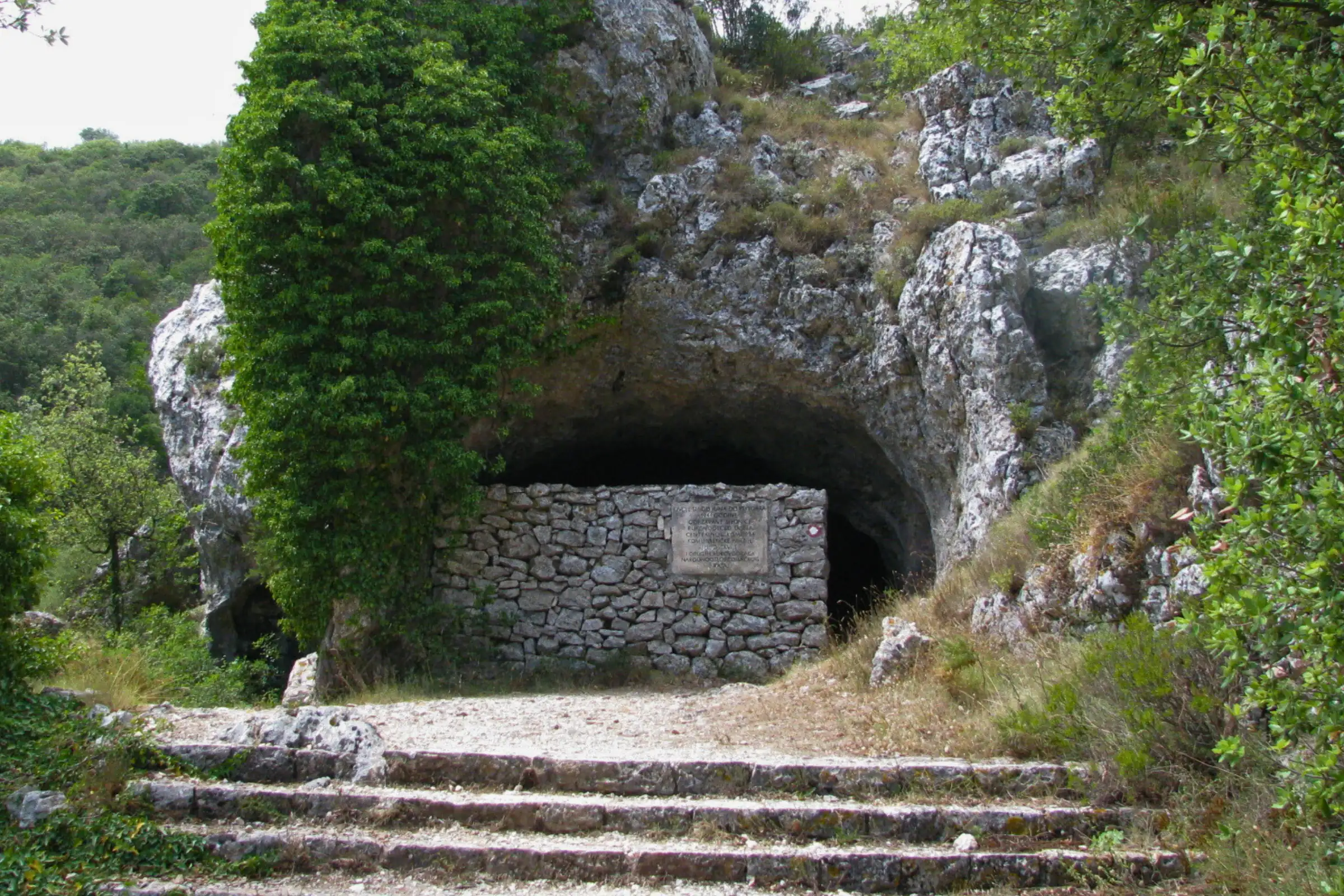
On the hill above Komiža there is a cave that served as the wartime headquarters of Josip Broz Tito during World War II. After a German assassination attempt and attack on the partisan leadership in 1944, Tito took refuge on Vis, where this cave became his hidden command post and safe shelter from German forces.
Besides the story itself, its location is impressive. The cave is reached on foot, and the view over Komiža and the open sea makes it easy to understand why this spot made it possible to monitor an important part of the surrounding waters.
3. Napoleon’s Road (Biokovo)
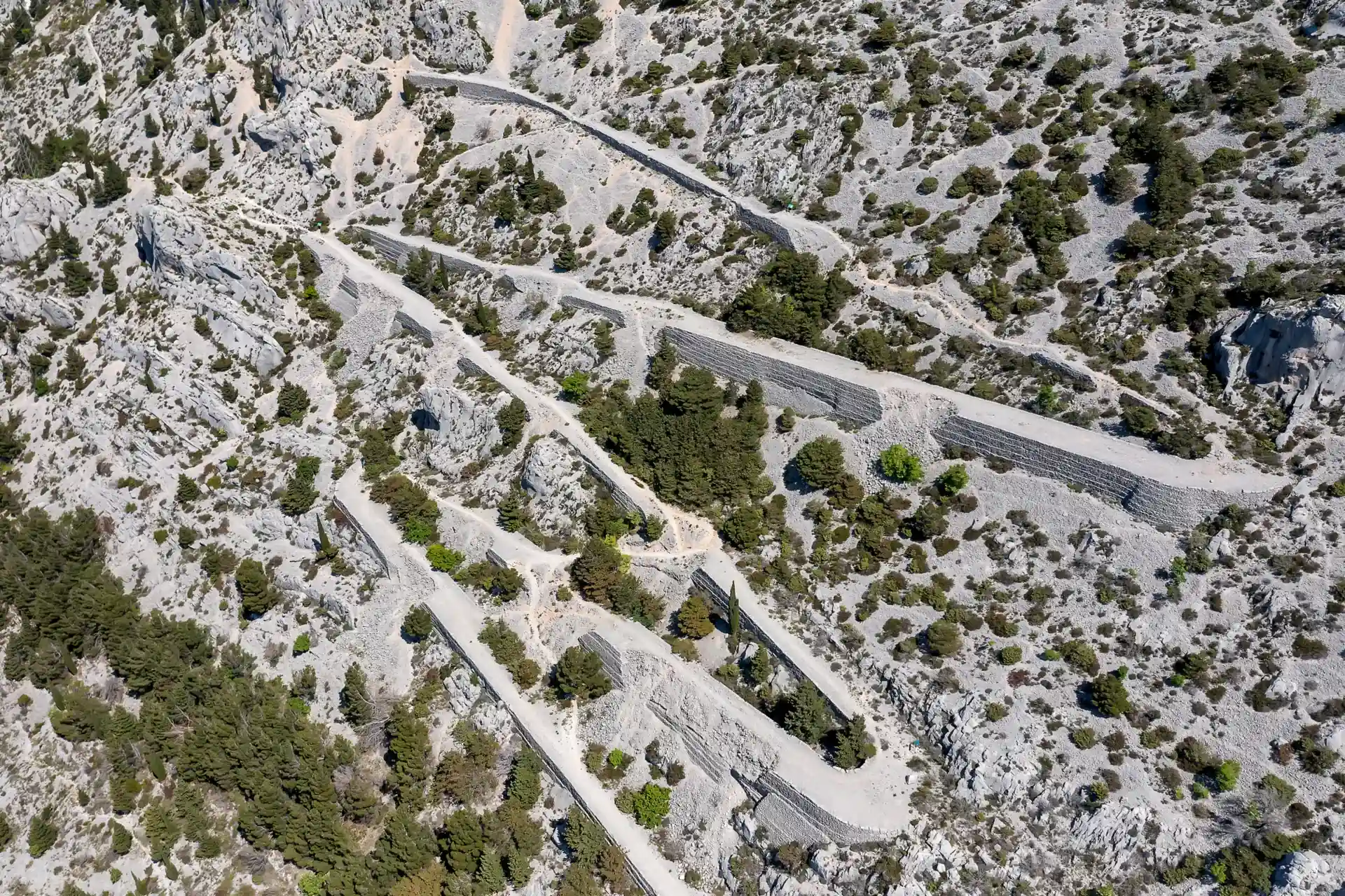
Napoleon’s Road on Mount Biokovo dates back to the period of French rule at the beginning of the 19th century. Today it is known for its panoramic views, but behind it lies an interesting historical trace of a brief yet important episode in the governance of Dalmatia.
Today the road is partly neglected and resembles more of an old mountain path than a classic road. That is exactly what gives it its special charm – passing along it reveals the raw side of Biokovo, far from the developed coast, where the landscape appears almost untouched and wild.
4. The Sphinx on the Peristyle (Split)

The Sphinx in Split stands on the Peristyle of Diocletian’s Palace and is around 3,500 years old. It was originally carved from black granite in Egypt during the reign of Pharaoh Thutmose III, and was brought to Split by ship during the construction of the palace at the end of the 3rd century, on the orders of the Roman emperor Diocletian.
The emperor had several sphinxes brought from Egypt to decorate the entrance to his mausoleum and imperial complex. It is estimated that there were around twelve of them in the palace, but most were damaged or destroyed over the centuries, so the sphinx on the Peristyle is now one of the best preserved.
5. Hvar Theatre
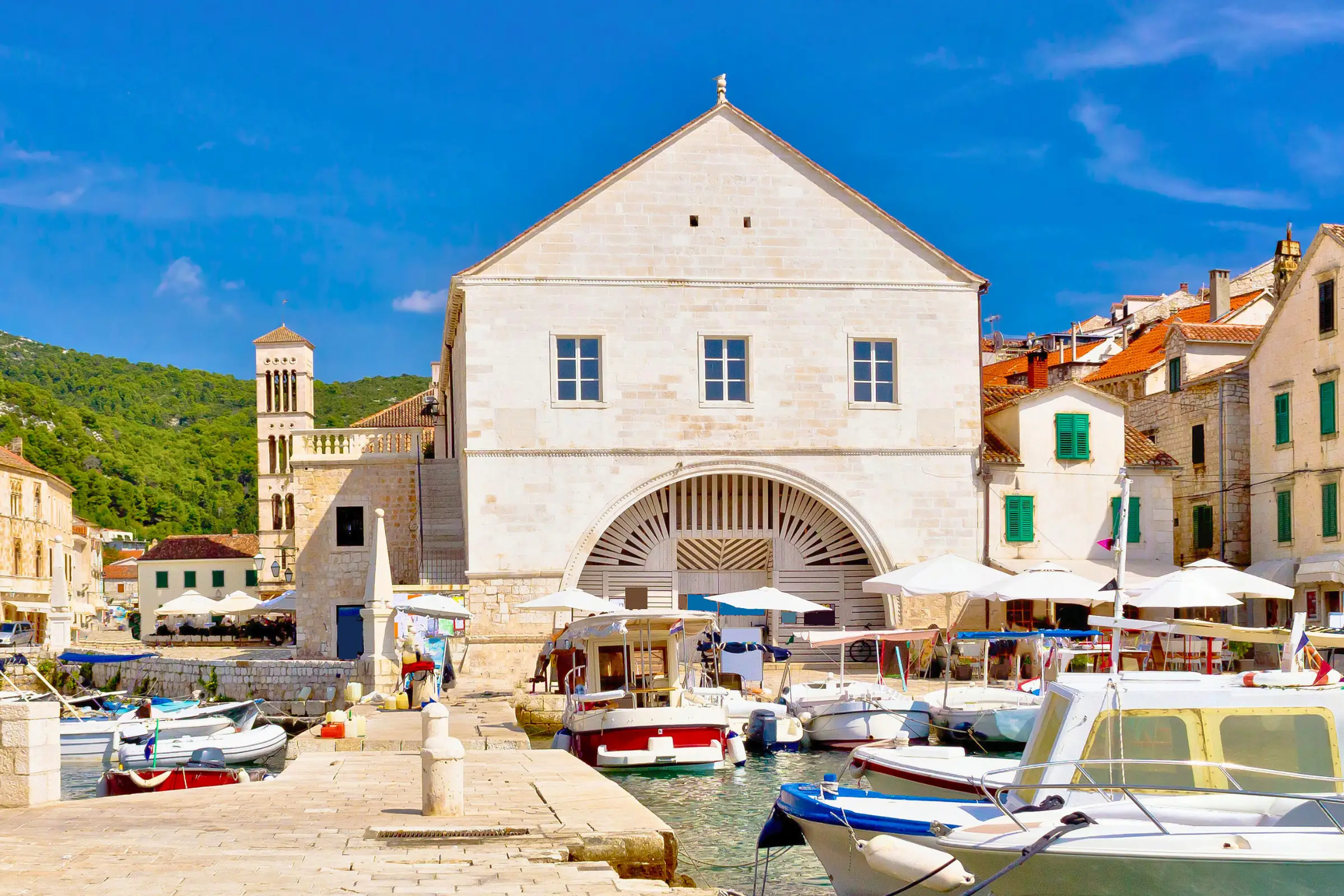
The theatre in the town of Hvar opened in 1612 and is considered one of the oldest public theatres in Europe. What makes it special is not only its age, but also the fact that it was open to different social classes, which was exceptionally progressive for that time.
In a destination that is now globally known for its summer scene, this story reminds us that Hvar has for centuries also been an important cultural center. If you are choosing between two popular Dalmatian islands, read also Brač or Hvar – which island to choose.
6. Korčula – Marco Polo
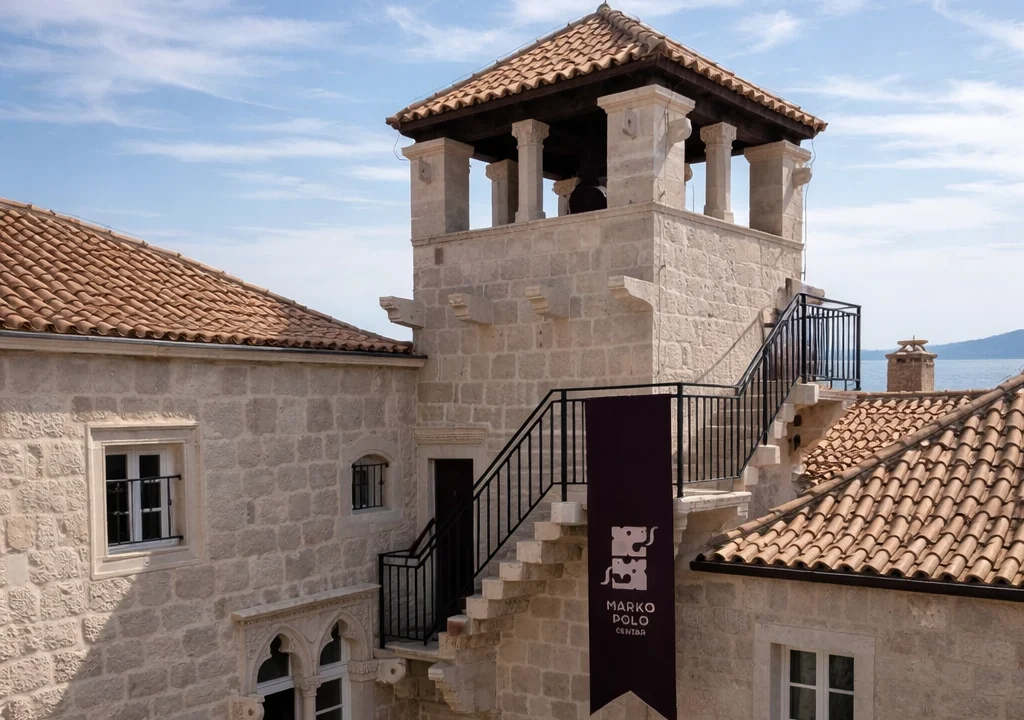
According to local tradition, the famous explorer Marco Polo was born in Korčula. Although historians still debate this, the story has strongly shaped the identity of the town and become part of its tourist and cultural recognizability.
Such stories are often the most interesting precisely because they stand on the boundary between history and legend. Korčula thus gains an extra layer of appeal that goes beyond the beauty of its old town core. If you are planning a visit, also read what you must not miss on Korčula.
7. Klis Fortress

Klis Fortress is situated on a narrow mountain pass between the coast and the Dalmatian hinterland, in a place that for centuries controlled one of the most important routes into Dalmatia. Because of this strategic position, it was a key defensive point in battles against the Ottomans, and it became especially famous during the time of the Uskoks who defended it for almost two centuries.
Today the fortress attracts visitors not only for its spectacular view of Split, but also because of popular culture. Scenes from the series Game of Thrones were filmed on its walls, where Klis stood in for the city of Meereen. Still, the real history of the fortress is often just as dramatic as the stories in the series.
8. St. Nicholas Fortress (Šibenik)
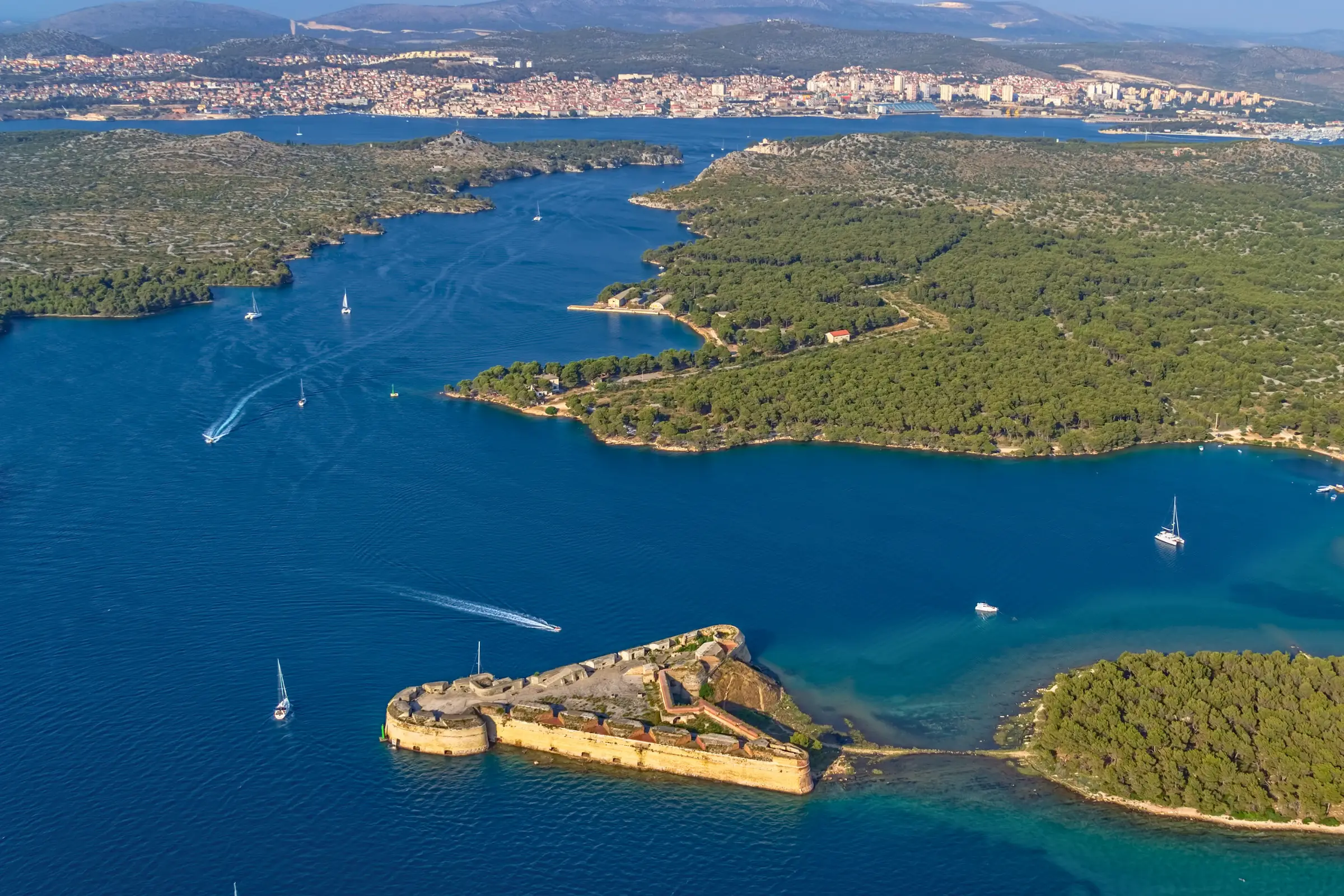
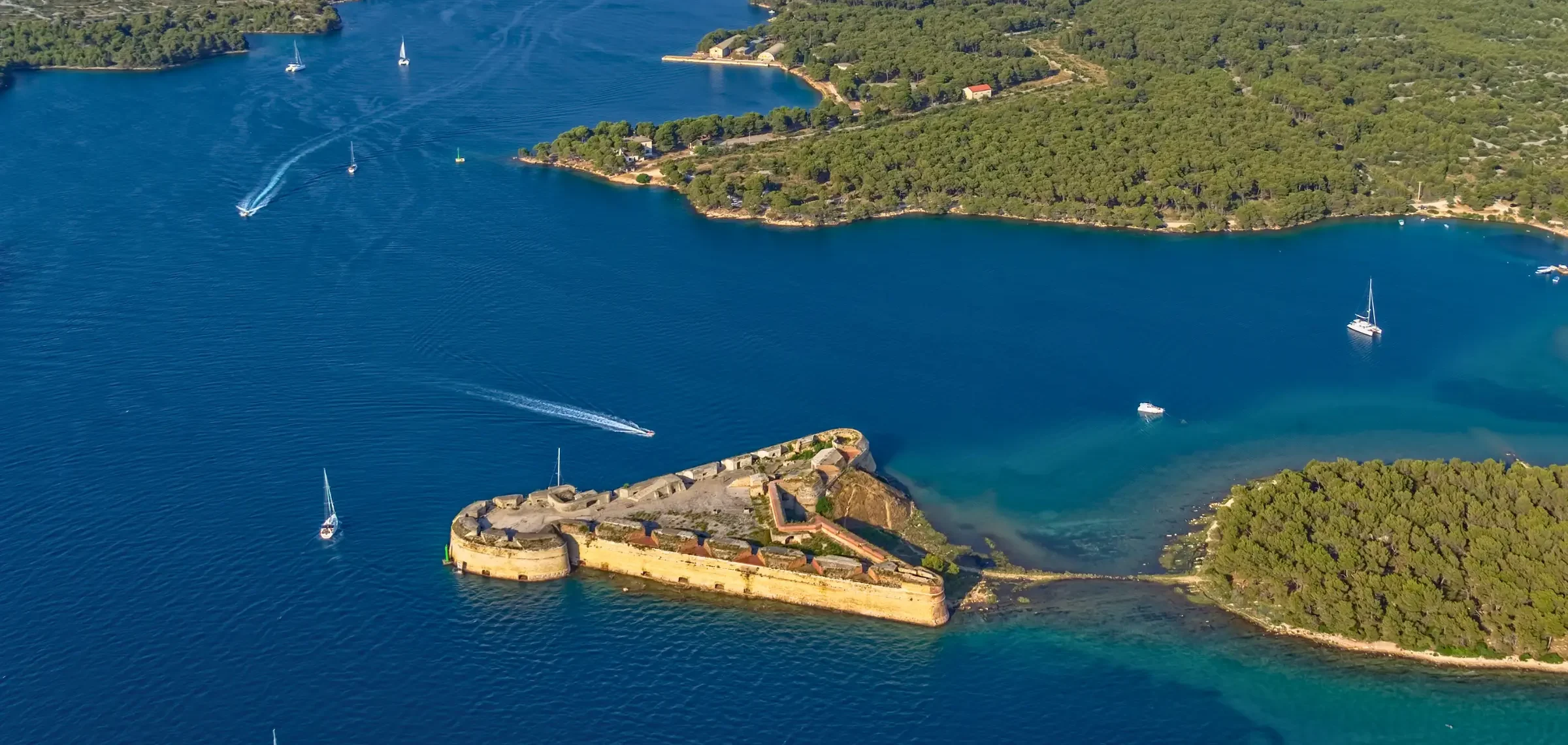
St. Nicholas Fortress stands at the entrance to the St. Anthony Channel and for centuries guarded the sea approach to Šibenik. It was built by the Venetians in the 16th century to defend the town from Ottoman attacks, on the site where the monastery of St. Nicholas once stood, from which the fortress got its name.
Because of its unusual position on a small island and its massive stone walls, the fortress looks almost like a ship anchored at the entrance to the channel. Today it is protected by UNESCO and is considered one of the most important examples of Renaissance military architecture on the Adriatic.
Unusual stories and local legends
9. Blaca Monastery (Brač)
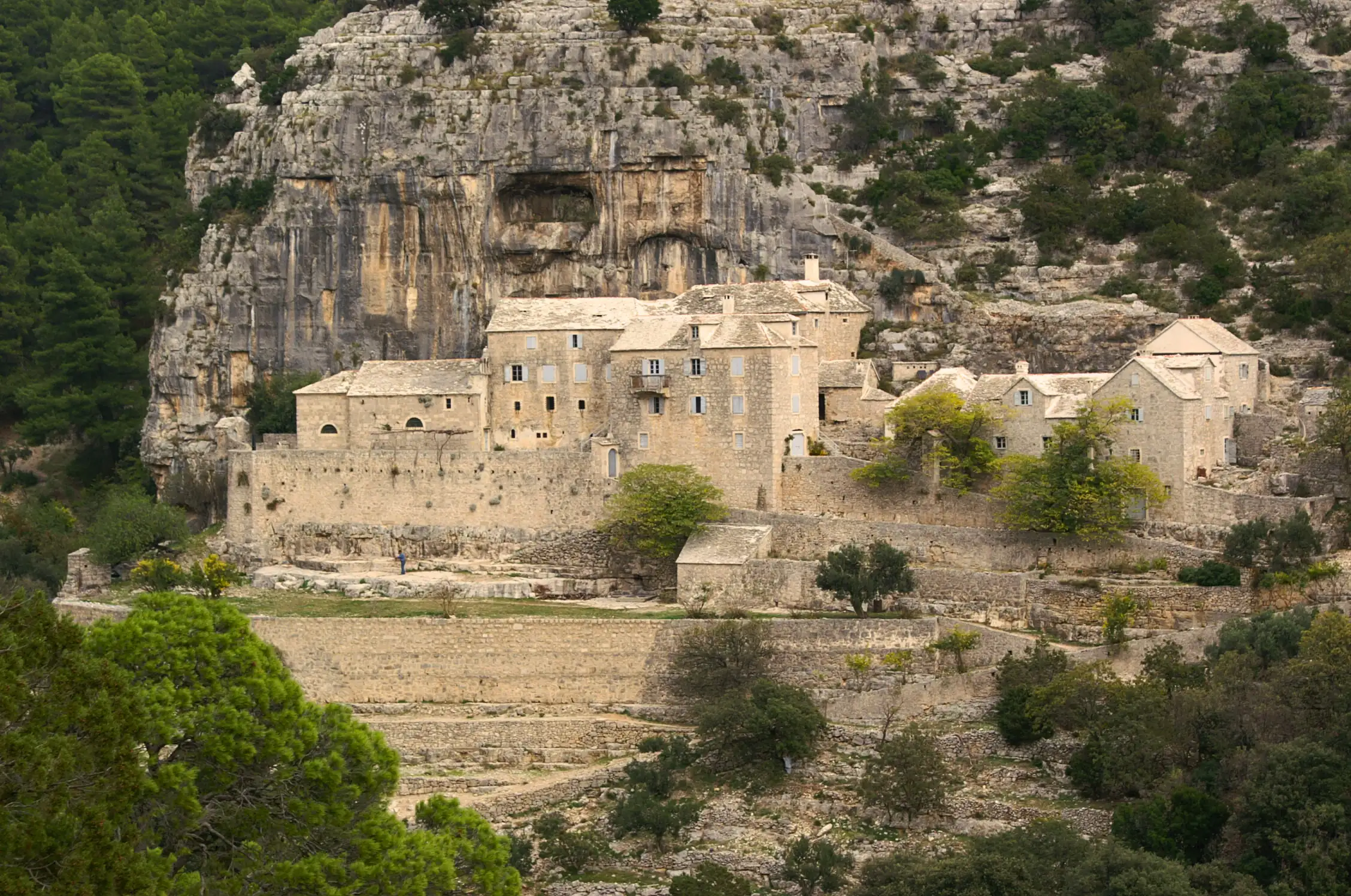
Blaca Monastery on the southern side of Brač is literally built into a cliff and already looks unreal because of its position alone. It was founded by Glagolitic monks in the 16th century, and over time it grew from a modest hermitage into an important cultural and scientific center.
The most fascinating detail is that this stone isolation also became home to an astronomical observatory with a telescope. The combination of monastery, wilderness, science, and isolation makes Blaca one of the most unusual stories on the Croatian islands.
10. Trakošćan Castle

On a hill above a quiet lake, where mist often lingers among the trees, rises Trakošćan – a castle that looks as if it were pulled out of an old legend. Although it appears romantic today, it began as a medieval fortress that guarded this region for centuries, before being transformed into an elegant noble residence in the 19th century.
According to local stories, a dragon once lived here, and traces of that legend supposedly remain even in the castle’s name, which is linked to the word “draco.” As you walk around the lake or through the surrounding forest, it is easy to imagine how such stories came to life – and why Trakošćan still carries a quiet, almost unreal mystique, just like a handful of other castles in Croatia.
11. Blue Lake (Imotski)
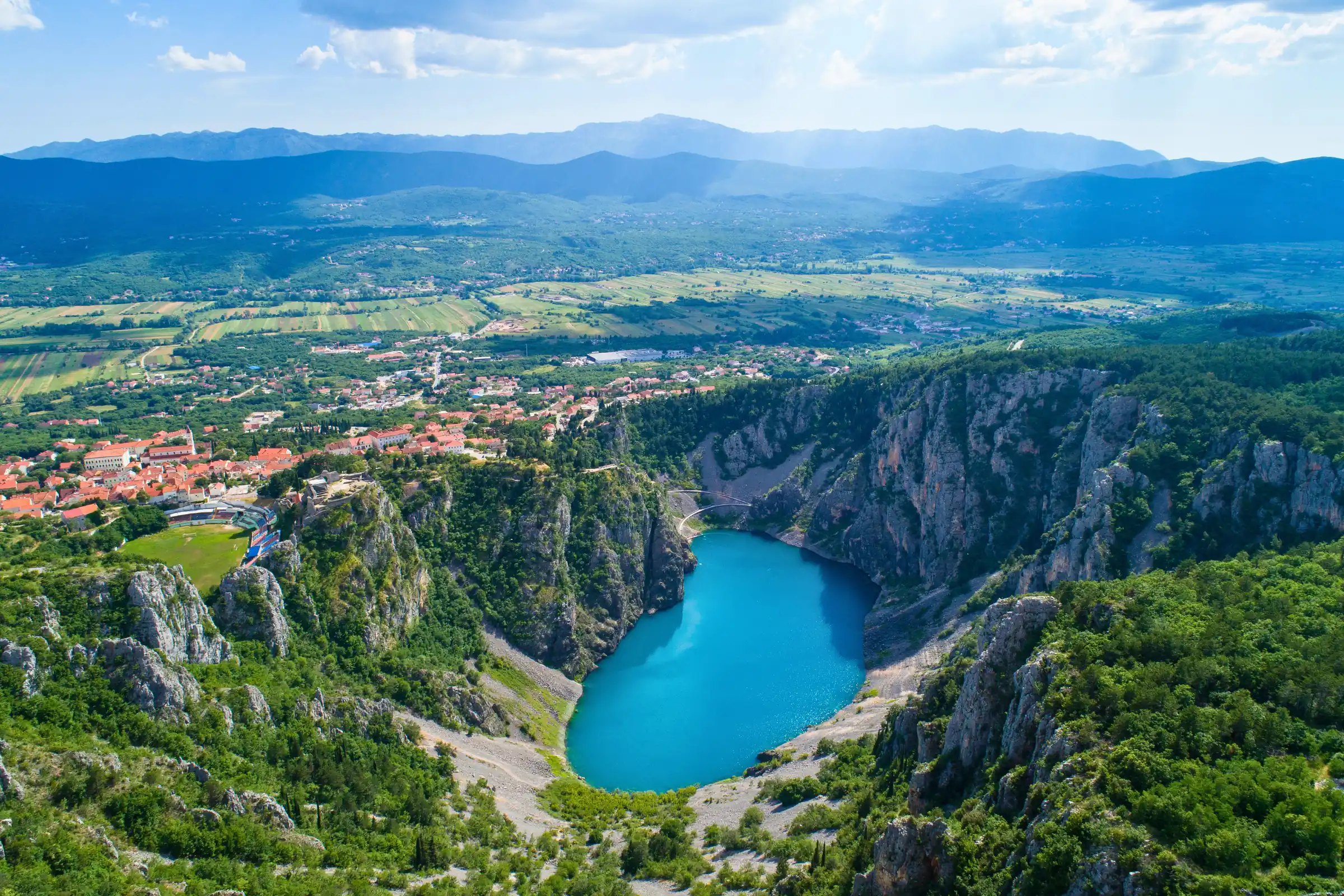
Blue Lake lies in a large karst sinkhole right next to the town of Imotski and is one of the most famous natural phenomena in the Dalmatian hinterland. According to one local legend, the lake was formed when the earth opened up and swallowed the castle of a cruel lord who refused to help the poor.
The water level in the lake varies greatly throughout the year, and during dry periods it sometimes dries up completely. Then, a flat surface appears at the bottom where football matches have been played for decades, a sight that has become a symbol of this unusual place.
12. House within a house – Bol (Brač)
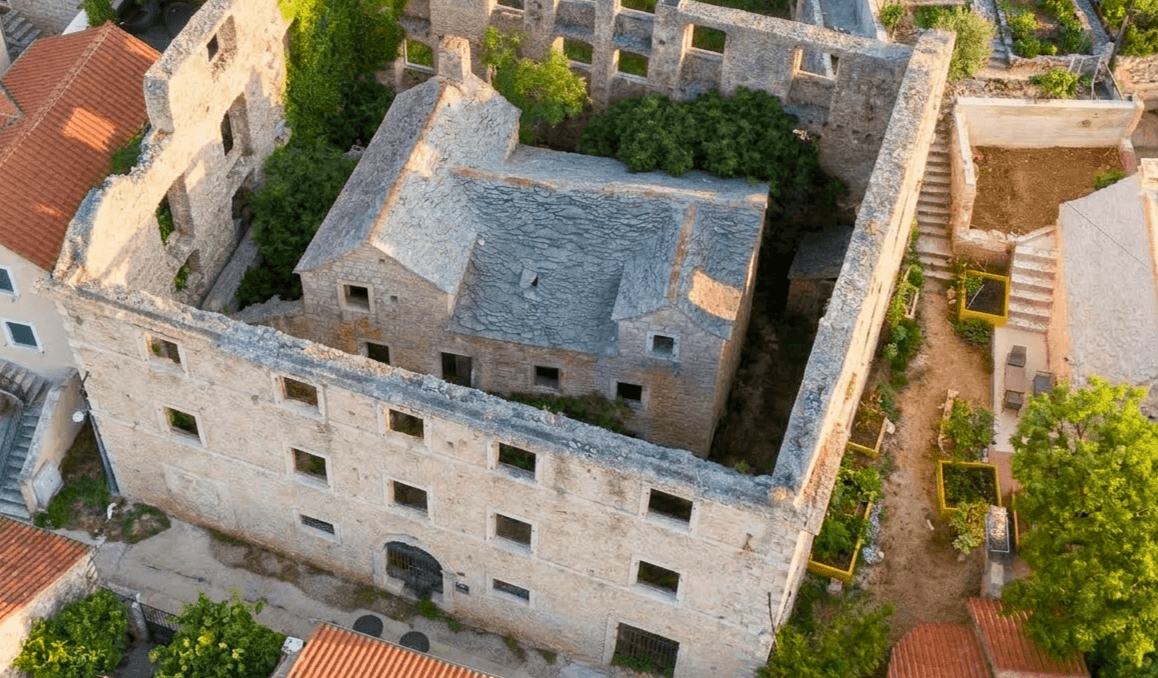
In Bol on the island of Brač there is an unusual building known as the “House within a house.” In the 19th century, a local laborer named Marko refused to sell his small house to the three Vuković brothers, sailors who wanted to build a large palace on that spot.
Since they could not persuade him, the brothers began building the palace around his house. Construction stopped after all three brothers died in a shipwreck, and Marko lived in his house, enclosed within the large walls of the unfinished palace, until the end of his life.
13. Odysseus Cave (Mljet)
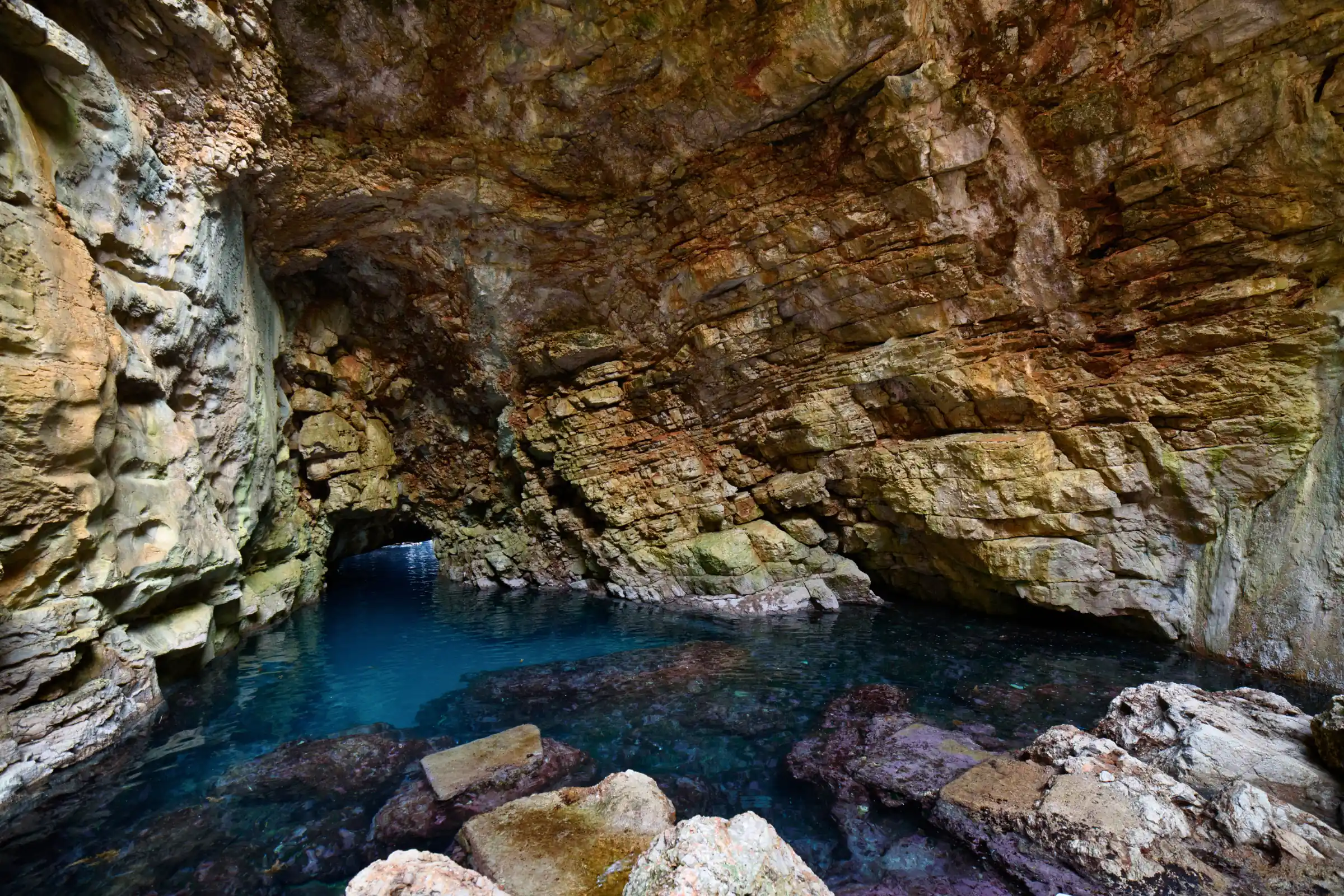
On the southern coast of Mljet there is a cave that local tradition connects with one of the most famous stories of ancient literature. According to legend, this is where the nymph Calypso held Odysseus for seven years after a shipwreck.
Whether or not the story is historically accurate, it gives the place a completely different dimension. The cave is no longer just an attractive sea location, but also a space that evokes myth, travel, and the idea of lost time.
14. Dragon’s Eye (Rogoznica)

Dragon’s Eye near Rogoznica is an unusual saltwater lake connected to the sea through underground channels. Because of its specific conditions, the oxygen level in it changes from time to time, making it a unique natural phenomenon on the Adriatic.
Alongside its natural peculiarities, it is also tied to the legend of the dragon from which the lake gets its name, which adds even more to its mystique, and you can learn more about it in the story of Dragon’s Eye.
15. Lokrum Island (Dubrovnik)

Lokrum Island lies just off Dubrovnik and is known for its Benedictine monastery founded in 1023. The monks lived there for centuries and cultivated the gardens until the end of the 18th century, when after the arrival of Napoleonic rule and the abolition of many monasteries, they were forced to leave the island.
According to legend, before leaving they spent three nights walking around Lokrum with candles turned downward and placed a curse on anyone who tried to claim it. The story is often linked to Archduke Maximilian of Habsburg, who later became Emperor of Mexico and was executed in 1867 after an uprising.
16. Hum

Hum in Istria is known as the smallest town in the world. Inside its medieval walls there are only a few houses, a small church, town gates, and just a few dozen residents.
Despite its size, Hum has a long history dating back to the Middle Ages, when it was an important fortress and administrative center. Today it is known for its preserved architecture and the Glagolitic Alley that leads to the town. If you want to learn more, also read why Hum is known as the smallest town in the world.
17. Silba – Toreta Tower

Toreta on Silba is one of the island’s most recognizable symbols. According to local tradition, it was built by a sailor as a gift to his beloved, and over time the tower became a kind of monument to love.
It is exactly these small island stories that often leave the strongest impression. It is not about grand history, but about a detail that gives a place personality and a recognizable atmosphere.
Island features and local tradition
18. Komiža – fishing tradition

Komiža was for centuries one of the most important fishing towns on the eastern Adriatic coast. It is often said that there are more boats in Komiža than inhabitants – an anecdote that nicely describes how deeply the fishing tradition has shaped life in the town.
The symbol of that maritime tradition is the gajeta falkuša, a traditional wooden fishing boat. One such boat, painted black, can be seen in the photo moored in the port of Komiža in front of the Venetian Communal Fortress. In recent years Komiža has also become known as one of the filming locations for Mamma Mia! Here We Go Again.
19. Pag – Pag cheese and the bora wind

Pag cheese is one of the most famous island products in Croatia, and its flavor is strongly connected to the landscape. The sheep graze on sage and other aromatic herbs, while the bora wind carries tiny particles of sea salt onto the pastures.
That is exactly why the cheese carries the taste of the island in a very concrete way. On Pag, it is said that there are up to four times more sheep than people, which clearly shows how important sheep farming is to the life and tradition of the island.
20. Grožnjan – the town of artists

After World War II, Grožnjan in Istria was almost left deserted. In the 1960s, the empty houses were assigned to artists, who opened galleries, studios, and workshops there and gradually brought life back to the old stone streets.
Today Grožnjan is one of the best examples of how a place can be revived through culture. Instead of becoming a forgotten village, it was transformed into a town that lives from art and atmosphere.
21. Mljet National Park – St. Mary

In the middle of the Great Lake in Mljet National Park lies the small islet of St. Mary with a Benedictine monastery from the 12th century. The sight of the monastery surrounded by water is one of the most recognizable images of Mljet.
What makes this place special is the combination of nature and silence with a historic building. It is not just a beautiful frame, but a space that feels secluded, symbolic, and almost meditative at the same time.
22. Military tunnels on Vis and Brač

Beneath the surface of some Croatian islands lies a completely different story from the tourist one. On Vis and Brač there are still military tunnels, bunkers, and other structures from the time when these islands played an important strategic role in the defense system of the former state.
Particularly impressive are the tunnels carved into the rock, which today are reminders of a period when many parts of the islands were closed off and inaccessible. It is exactly this contrast between today’s relaxed island atmosphere and the hidden military past that makes them so intriguing. If you want to explore more locations in this area, also read what to see on Vis and the surrounding islands.
Natural phenomena and unusual landscapes
23. Cetina Spring – The Eye of the Earth
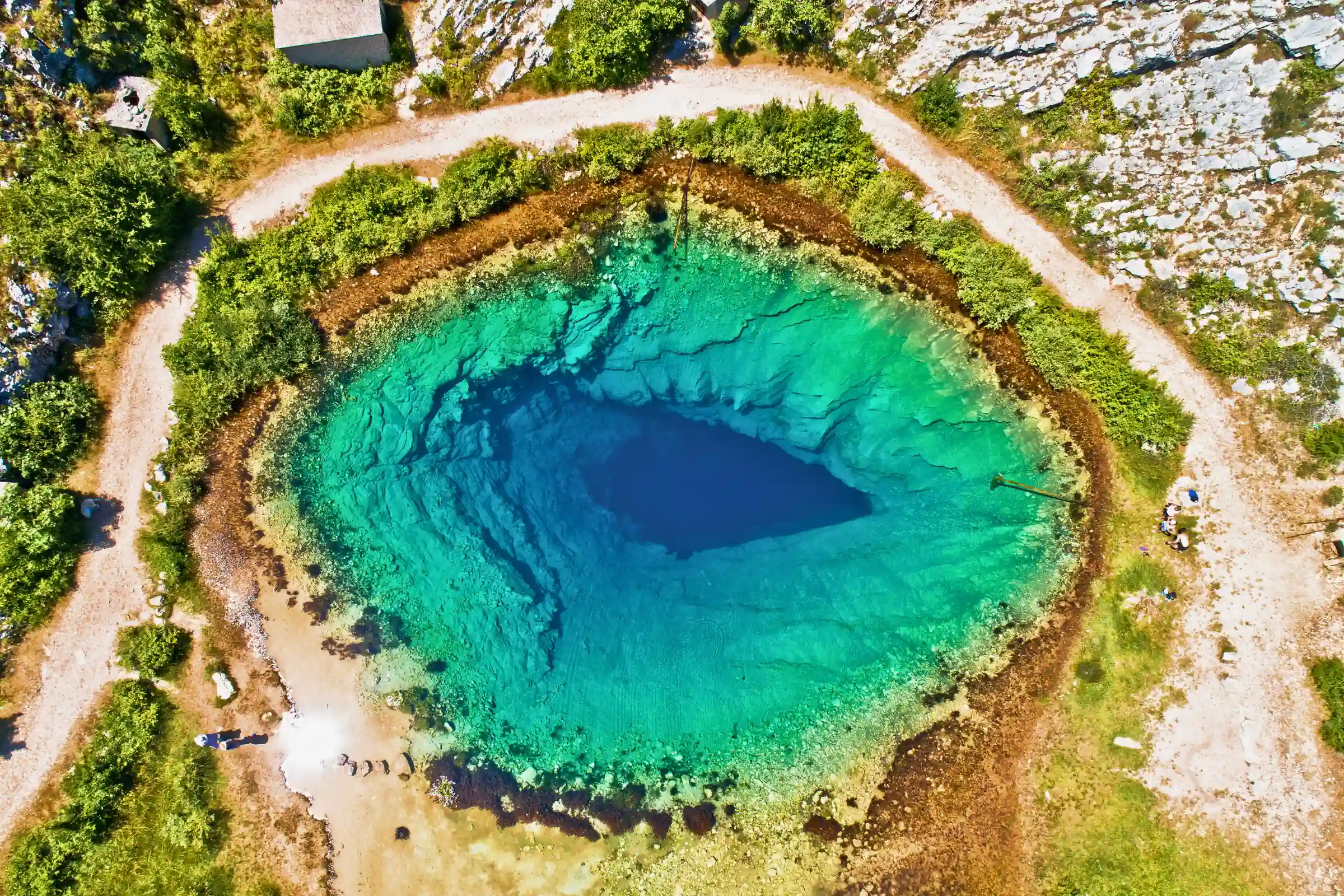
The source of the Cetina River at the foot of Dinara is one of the most unusual natural sights in Croatia. From above it looks like a giant blue eye in the middle of a rocky landscape, which is why in recent years it has become one of the most recognizable photographs from the Dalmatian hinterland. It is a powerful karst spring from which the Cetina River begins its course.
Diving research has shown that the cave channel descends to at least around 115 meters in depth, which is as far as it has so far been explored. However, it is believed that the underground karst system continues even deeper, so the true depth of the spring is still not fully known. The dark central part, light blue rings, and exceptionally clear water create a scene that resembles a huge blue eye in the rock.
24. Blue Cave (Biševo)

The Blue Cave on the islet of Biševo is one of the most famous natural wonders of the Adriatic. At a certain time of day, the sun’s rays enter the cave through an underwater opening and reflect off the bright limestone bottom, while the light scatters through the water and creates an intense blue color that fills the entire space.
Because of this optical effect, the sea inside the cave glows with almost unreal blue tones, while objects submerged in the water take on a silvery shine. The effect is strongest between late morning and early afternoon, when the sun is at the ideal angle.
25. Stiniva (Vis)

Stiniva on the island of Vis is one of the most dramatic coves on the Adriatic. Its narrow passage between high cliffs opens onto a small pebble beach hidden behind stone walls. Geologists believe it was formed by the collapse of the roof of a once large cave, which explains its unusual shape.
Because of this, Stiniva does not look like a classic beach, but rather like a natural stone stage. The contrast of the enclosed entrance, high cliffs, and open sea makes it one of the most striking natural locations on the Croatian coast.
26. Zlatni Rat (Brač)
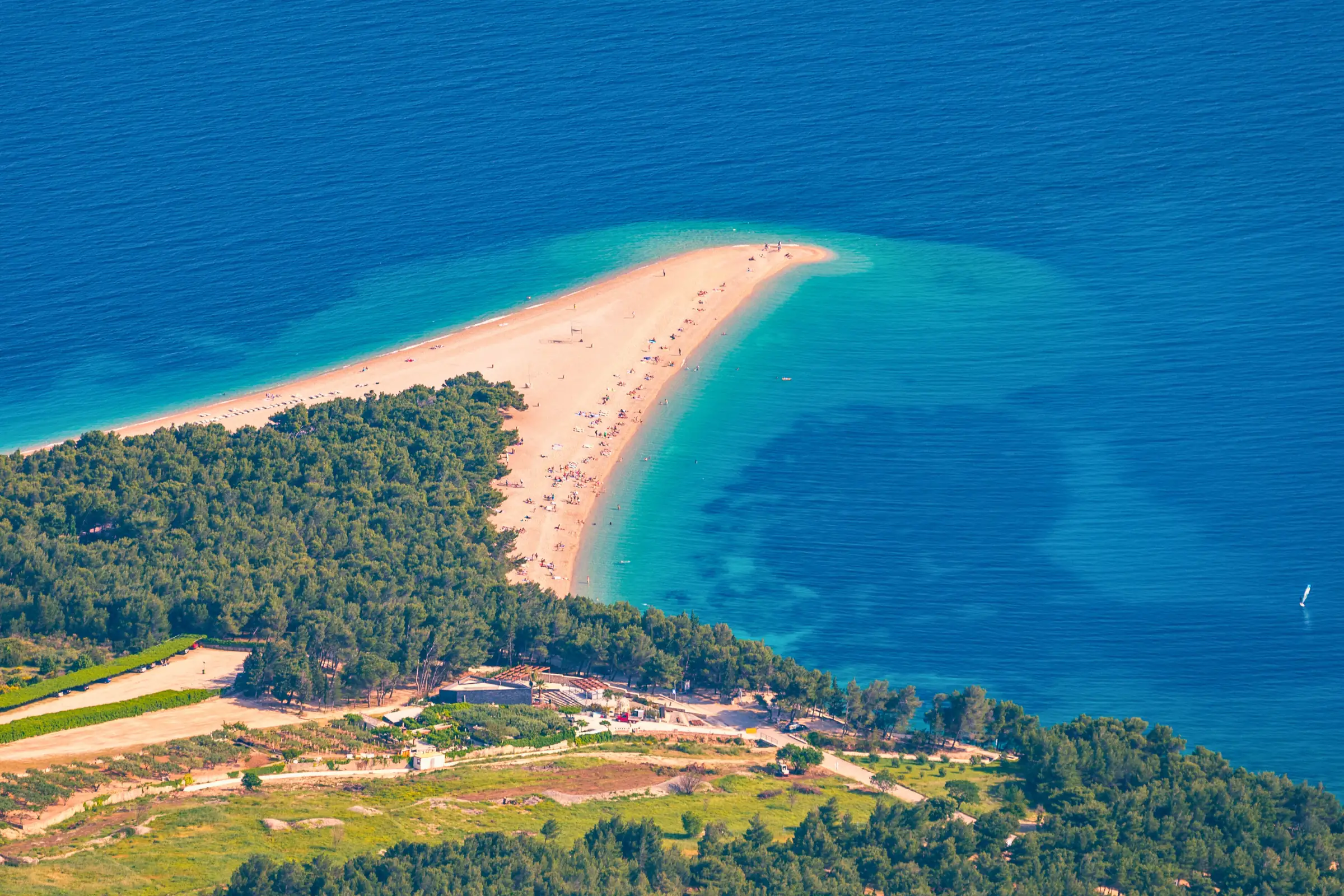
Zlatni Rat near Bol is one of the most famous beaches in Croatia, but also one of the few that constantly changes its shape. Its pointed tip is moved by winds, waves, and sea currents, so the beach never looks exactly the same.
It is precisely this changeability that gives it extra uniqueness. While most beaches are static and predictable, Zlatni Rat is literally shaped in real time by the forces of nature, which is why it has become one of the strongest symbols of the Adriatic coast. If you plan to explore the island in more detail, also read what else is worth visiting on Brač.
27. Vrana Lake (Cres)
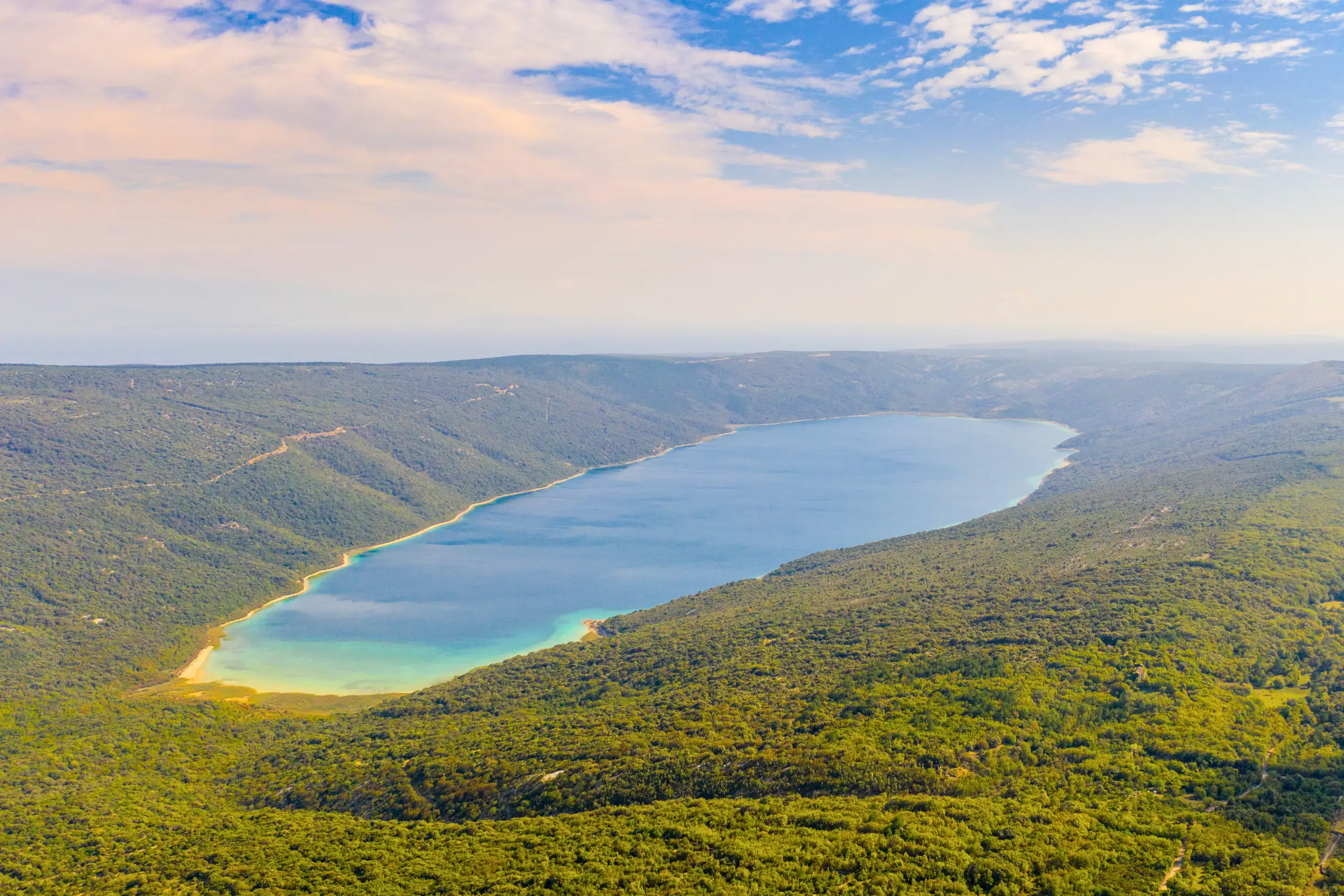
Vrana Lake on the island of Cres is one of the most interesting hydrological phenomena on the Croatian islands. It is a large freshwater lake that supplies drinking water to Cres and Lošinj, and what is especially unusual is that it lies in a karst area right next to the sea. The surface of the lake lies about 14 meters above sea level.
Even more interesting is that its bottom lies well below sea level, at more than 60 meters deep. Although it is located on an island, the water remains completely fresh, and the whole system is still not fully understood, which is why Vrana Lake is one of the most unusual natural phenomena on the Croatian islands.
28. Jabuka – the magnetic island
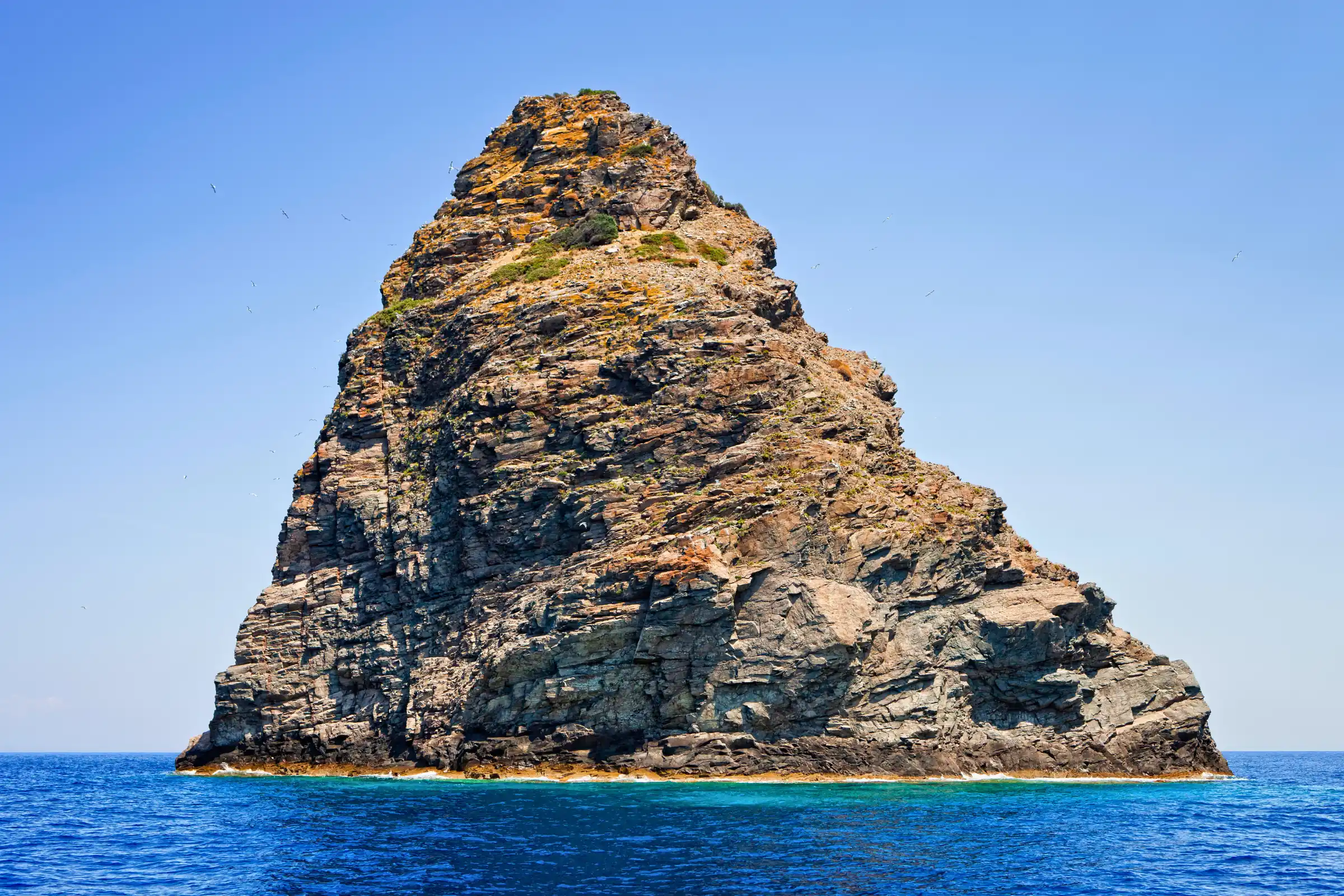
Jabuka is a small volcanic island in the open Adriatic, west of Vis, recognizable by its steep dark cliffs that rise abruptly from the sea. It is made of volcanic rock rich in iron and magnetite, so for a long time it has been associated with the story that it can confuse ship compasses.
The island is uninhabited, difficult to access, and completely different from most Croatian limestone islands. It is exactly this combination of black rock, isolated position, and unusual geological origin that makes Jabuka one of the most distinctive islands in the Adriatic.
29. Galešnjak – the heart-shaped island
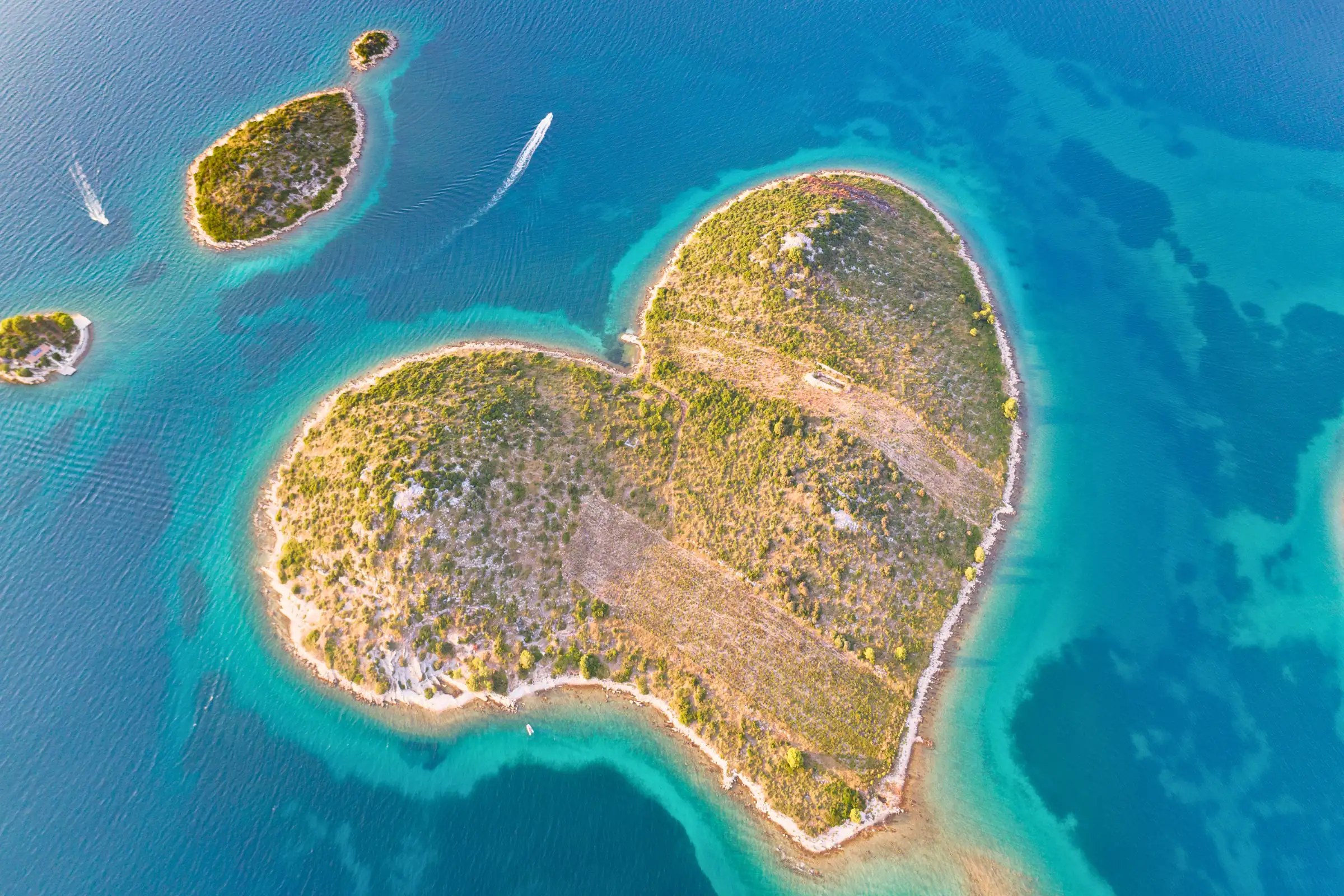
Galešnjak in the Pašman Channel is now known as the Island of Love, but its global popularity is actually quite recent. Although local people had always known about it, the world noticed it only when Google Earth users spotted its almost perfect heart shape.
It is one of those examples where modern technology completely changes the perception of a place. From a small uninhabited island, Galešnjak became one of the most recognizable romantic locations in the Adriatic.
30. Lastovo – dark skies

Lastovo is one of the few places in the Mediterranean where the night sky is still exceptionally dark. Because of the very low level of light pollution, on clear nights the Milky Way can be seen very clearly there, which is now almost impossible at many other coastal locations.
It is precisely this feeling of remoteness, silence, and complete darkness that gives Lastovo its special atmosphere. It is not just an island for swimming and the sea, but also a place where nature reveals a completely different face after dark.
Conclusion
Croatia is full of places worth visiting, but the most interesting ones are not necessarily only the most beautiful in photographs. Their true value often appears only when a story becomes attached to the landscape – whether it is an ancient city, an island legend, an unusual natural phenomenon, or a detail of local tradition that changes the way we look at a place.
That is exactly why such locations stay in memory longer than classic postcard views. They offer not only a view, but also context, curiosity, and the feeling that behind every destination there is another layer worth discovering.