
Top 10 Croatian wines 2026
October 28, 2025
Visit the island of Šolta | 4 things you must do
October 28, 2025In the second part of the article, we continue our journey through cultural events in Croatia. This time, we will visit the islands, take a peek into the inland areas of Istria, and discover unconventional theatrical forms, the largest water sports competition, travel back to the Middle Ages on the island of Rab, or become part of the craziest costume party in Croatia!
8. MOREŠKA KORČULA
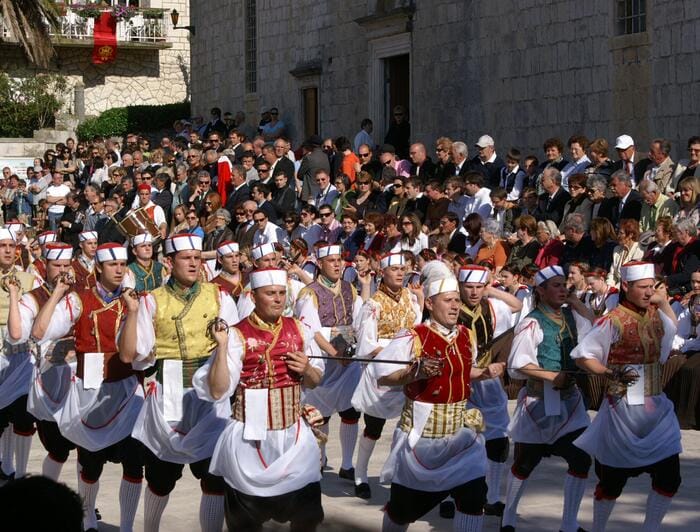
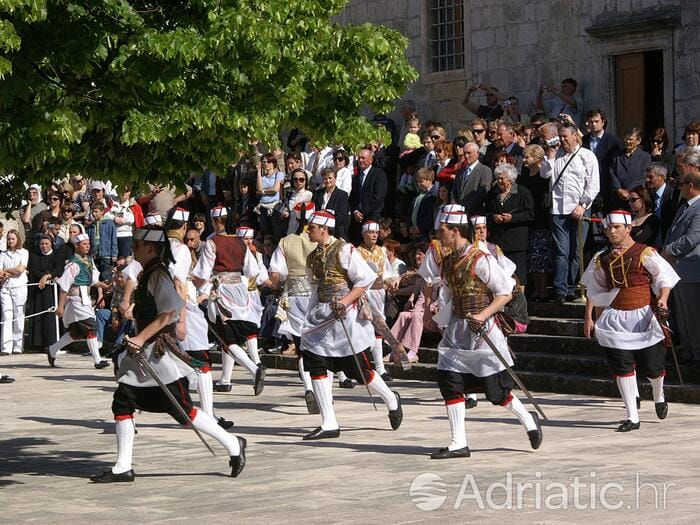
Korčula is an island of incredibly rich history, culture, and traditions passed down from generation to generation. According to legend, it is the home of the legendary explorer Marco Polo, as well as ancient cultural events and customs that have transcended local boundaries. One such example is the knightly sword dance Moreška, which is part of the intangible cultural heritage protected by UNESCO.
Moreška is a traditional knightly sword dance that arrived in Croatia at the end of the 13th century. On Korčula, it has been performed continuously since the 15th century until today. It represents a proud island tradition celebrating the successful rebellion against the occupying rule of the Moors. Once performed across Europe, today it can only be seen on Korčula, where it is performed by nine dance groups from the island!
Today, Moreška is a festival lasting from June to mid-September. The dance performance is the festival’s main event, involving everyone. By tradition, Moreška is performed on July 29, on the feast day of Saint Theodore, the island’s patron saint. However, the dance is also performed several times a week for visitors and is exclusively performed by men.
The first dated records take us back to the 17th century, when there were two variations of the dance: Moreška with two swords, and Kumpanija and Moštra with one. Above all, it is a dramatic stage performance combining musical, textual, and choreographic elements. In Moreška, there are four main characters: the Black King, the White King, Otmanović, and Bula. She is the only unarmed female character around whom the two armies clash.
The introductory part is a dramatic dialogue between the Black King and Bula, followed by the dance itself. It invo
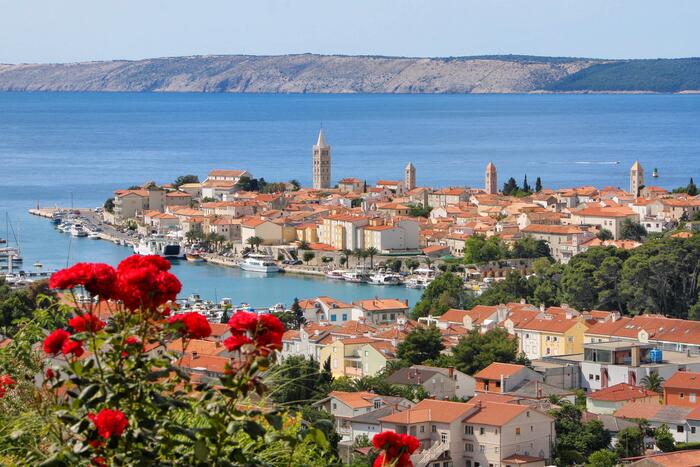
9. FJERA RAB
In addition to the parade, the festival is packed with a rich variety of events and entertainment. For the youngest visitors, there’s the Children’s Festival Parade, which transforms Rijeka into a fairy-tale city. Characters from comics, novels, movies, and TV shows bring joy to the little ones and pass on the Carnival spirit to future generations.
The most exciting part of the festival is the competition. Most notably, it features the selection of the Festival Queen for the prestigious title of the “Golden Cloak.” The chosen mask becomes the official face of the Carnival for that year. Additionally, there’s a contest for the best group stage performance. Afterward, the mayor of Rijeka symbolically hands over the city keys to the Master of the Carnival, and for the next month, Rijeka becomes the epicenter of the wildest party!
What will surely make you laugh is the “Paris–Bakar” Rally, a parody of the world’s most famous rally. Costumed drivers and decorated cars race through the city in the funniest competition you’ll ever see. Moreover, the Rijeka Carnival is the only one offering snowy fun so close to the sea. For something completely different, visit the Carnival Snowboarding Session and enjoy stunts and an unforgettable after-party.
And of course, the festivities wouldn’t be complete without a great party. That’s where the Rijeka Carnival Party comes in — inspired by the Berlin Love Parade. It celebrates multiculturalism and freedom through music, fun, and socializing. Join in and remember the festival’s motto: “Krepat, ma ne molat!” (“To die, but never give up!”) — a slogan that defies social norms and humorously reflects everyday life.
Every year, more than 100 groups and 10,000 participants take part in the Festival. Hundreds of thousands follow the Carnival live, and even more through digital channels. That’s why in 1995, Rijeka was admitted to the Association of European Carnival Cities as a top cultural event.
Because of its popularity, the Carnival is also known as the fifth season — for one month, Rijeka becomes the ultimate party destination where the usual rules don’t apply. Be bold, come and follow the festival’s motto “Be what you want!” and “Be yourself!” — and become part of the most entertaining masked story ever!
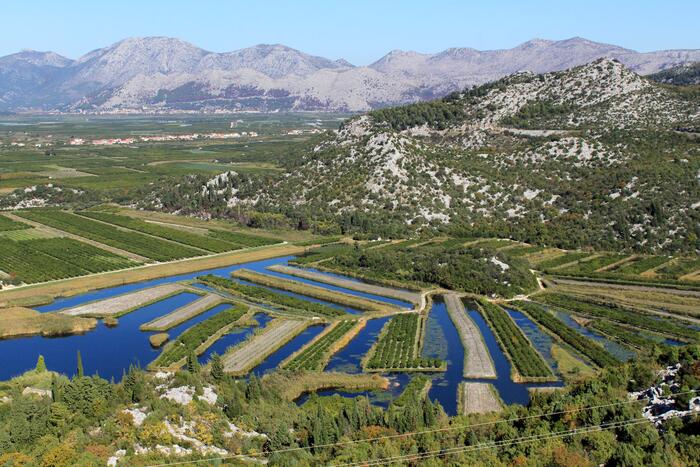
Once a fertile area that fed tens of thousands of people, the Neretva River area is today an undiscovered tourist gem. One of the events that helps to promote its international recognition is the Boat Marathon. It is held on the last Saturday in August. In 23 years, it has become the main cultural event of the region.
It is an amateur sports race of traditional rowing boats on a 22.5 kilometer route. As many as 400 rowers are participating in the race down the Neretva from Metković via Opuzen to Ploče. It is considered the largest maritime sports event, attended by up to 50,000 visitors every year!
The real spectacle starts at the start when 33 boats turn a calm river into a turbulent and wild rapid to the delight of the audience. The pace rarely slows down and, most importantly, everyone has the same boat, so skill and ability are the keys to victory. The team consists of 10 rowers, a drummer and a helmsman. In Opuzen, up to 6 substitutions are allowed. All boats are wooden and built using the traditional method and have a precisely defined number of ribs.
The competition rules are rigorous: in addition to the boat, the oars and rudder must be made of wood, rowers must have feet in the water, a drummer in the middle, and there must always be 10 oars in the water. Initially, only rowers from that region were allowed to participate, but due to the popularity of the event, the Boat Marathon is now international in nature. For a quality race, the maximum number of boats must be 33. Only the fastest can take part in the competition, and the winner receives gold medals and the bronze shield of Prince Domagoj.
The Boat Marathon beganin 1998 as an idea of a few sports and history enthusiasts. In the meantime, it has become a television spectacle, a documentary has been made about it, and it has achieved international recognition and fame.
Although a sports competition, the Boat Marathon symbolizes the entire history and way of life in these regions. People died and were born in boats, and they were the only communication channel to the outside world. That is why this event has cultural and identity importance.
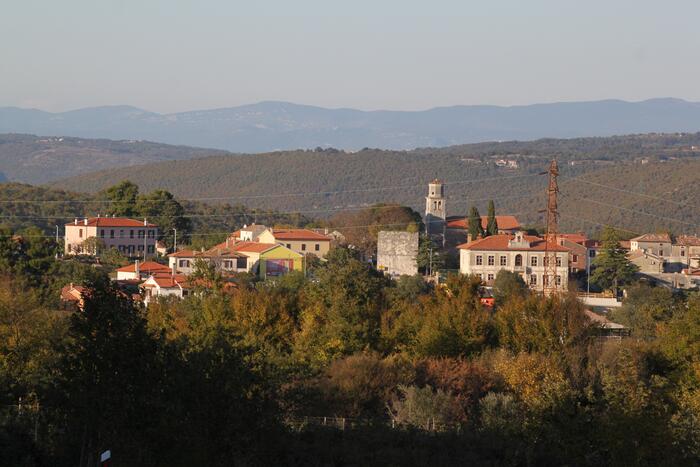
Our largest peninsula, the “Green Istria,” hides many wonders within its picturesque towns and villages. One such place is Barban, a small settlement with a rich history, culture, and natural beauty. However, during the last week of August, this place becomes the center of attention thanks to the Ring Race.
This is a knightly equestrian competition similar to the Sinj Alka. It dates back to the late 17th century, though the modern version has been held for the past half-century. On a 150-meter track, the knights of Barban compete to strike the ring with a spear three times within 12 seconds. There are three races in total, and the winner is the one who earns the highest number of points. In case of a tie, a fourth race, known as the tiebreaker, is held.
Unlike the Alka, the ring is divided into four small circles. A hit in the center (“srida”) earns 3 points, the upper part 2 points, the lower part 1 point, and the side sections half a point. The program lasts for three days, with the main race held on the final day. The first day features a ceremonial opening, the second is a qualification race called na viticu, which determines the finalists, and the third day hosts the main event.
The competition is open to all adult Istrians up to 60 years of age. After completing the race, the rider stops before the judge with the spear pierced through the ring for score confirmation. Additionally, style, speed, and agility are also evaluated. The riders and horses are ceremonially dressed in traditional costumes from that era, and the spear is specially decorated.
The Ring Race is a major attraction for both the public and the media, which is why it is expected to be included on the list of intangible cultural heritage. This recognition is anticipated to increase attendance beyond the current 10,000 visitors who come to the small village over those three days.
The importance of the race is highlighted by the fact that Barban has a permanent exhibition and an educational-interpretative center dedicated to it. There, you can explore the history, tradition, and culture of the area — and even become a Barban knight yourself for a moment through 3D virtual reality!
If you are a fan of dance, theatre, and unconventional art forms, then the Festival of Dance and Non-Verbal Theatre in Svetvinčenat is the perfect event for you. Organized by a Zagreb-based ensemble, it represents a unique cultural manifestation that brings together artists and enthusiasts in one place. At the festival, visitors can enjoy classical and contemporary dance, physical theatre, mime performances, circus acts, street performances, as well as educational seminars and workshops.
Although not originally a local festival, excellent collaboration with the residents has made this cultural event a driving force behind all major cultural and tourism activities in Svetvinčenat. Thanks to the Festival, Svetvinčenat gained both a cultural center and a tourist board, establishing itself as a true hub for dance and theatre. Since its founding in 2000, the festival has hosted over 150 dance groups that have performed more than 190 works.
The goals of the festival are the presentation of domestic and international works, the promotion of international cooperation, creativity, critical thinking, as well as artistic freedom and expression. In essence, the festival serves as a place for sharing ideas, education, projects, and building new connections that enrich the world of dance and theatre.
Education, presentation, and creation are the festival’s motto, with the ultimate goal of establishing a Mediterranean Dance Center. This initiative aims to enhance the festival’s international significance, create new artistic platforms, and position it as an avant-garde institution in the world of art.
In addition to dance, Svetvinčenat is also known for its medieval festival, held for the past ten consecutive years at the town’s most famous landmarks. The event lasts for three days and features around 100 costumed participants who vividly reenact ancient times, customs, and traditions. Camps, inquisitions, cannons, catapults, and fireballs are among the main attractions.
At the Medieval Fairground, you can discover traditional crafts and skills and try the region’s local cuisine. Visit medieval games, a knight tournament, firearms shows, night fire programs, a castle siege, and much more.
Workshops for children, a mini zoo, and weapon-handling demonstrations guarantee fun for all ages — making Svetvinčenat a must-visit destination this August on your way to the blue Adriatic!
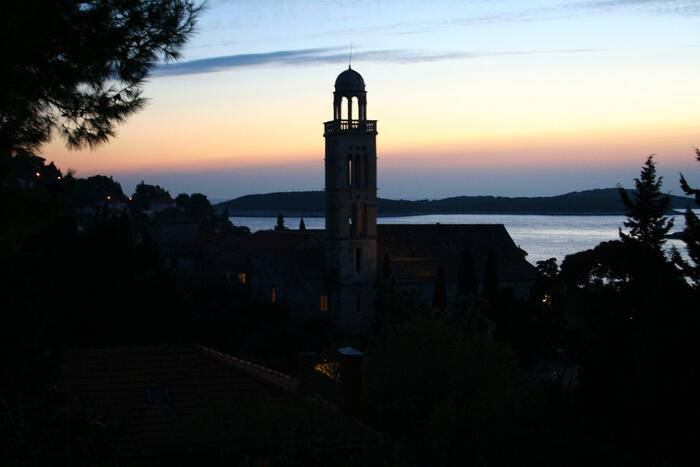
One of the oldest cultural events of great significance to the local population is the “Za Križen” Procession on the island of Hvar. This is a sacred religious procession that captivates with its intimate, mystical, and unique atmosphere, holding immeasurable importance for the island’s residents.
The procession reflects the identity of the island and its centuries-old customs passed down through oral tradition — an ambiance truly difficult to describe in words. It has been held for over 500 years and was recognized and protected by UNESCO in 2009. This expression of religious devotion and ancient tradition takes place on the night between Holy Thursday and Good Friday.
The procession consists of six smaller processions that start simultaneously from six different villages. The journey covers 20 kilometers and passes through all the other settlements. The groups move in a clockwise direction and during the eight-hour journey, the processions must never meet, as such an encounter is considered a bad omen. Along the way, participants perform pastorales and ancient chants, and one of the most moving moments is when the cross-bearer finally runs into the church carrying the cross.
Being a cross-bearer is the greatest honor — a privilege sometimes awaited for up to 20 years. Other participants include torchbearers (torcevi), singers (kantaduri), assistants (batistrada), and local villagers. All are dressed in white tunics, and the performance of the “Gospin Plač” (“Our Lady’s Lament”) from the 15th century is particularly striking.
Although it is a cultural event, the Za Križen Procession is a tradition, not a folklore performance, so be sure to respect the proper rules of conduct if you wish to experience it. One thing is certain — it will not leave you indifferent. This unique event evokes deep emotions and leaves a lasting impression, regardless of whether you are religious or not.
In a mystical setting, the island is illuminated only by lanterns and torches, while the archaic chants of the singers create a haunting atmosphere. The procession has survived wars, natural disasters, and countless hardships — preserved in its original form to this day.
Become part of this 500-year-old spiritual journey and connect with the island of Hvar in a way you never thought possible!
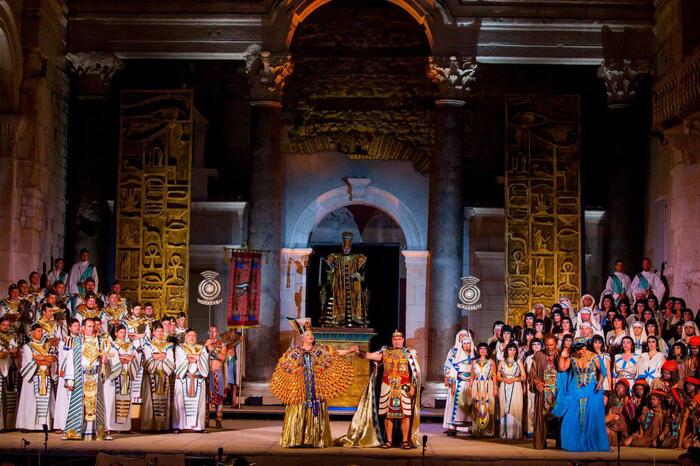
Although we’ve covered as many events as possible, it still feels like we’ve barely scratched the surface. If you love classics and tradition, visit events such as the Split Summer Festival, the Lace Festival in Lepoglava, the Marulić Days, the Vinkovci Autumns, the Samobor Carnival, the Visualia Festival in Pula, the Children’s Festival in Šibenik, and the Marunada and Folklore Festival in Zagreb.
For lovers of the “seventh art” and “the boards that mean the world,” there are the Pula and Motovun Film Festivals in the heart of Istria, the EXIT Summer Nights Theatre Festival, and Ulysses Theatre on Brijuni, featuring new and prestigious performances. The Night of Museums and the Night of Theatres are special cultural events that attract thousands of visitors. Book lovers will enjoy the Zagreb Interliber Book Fair.
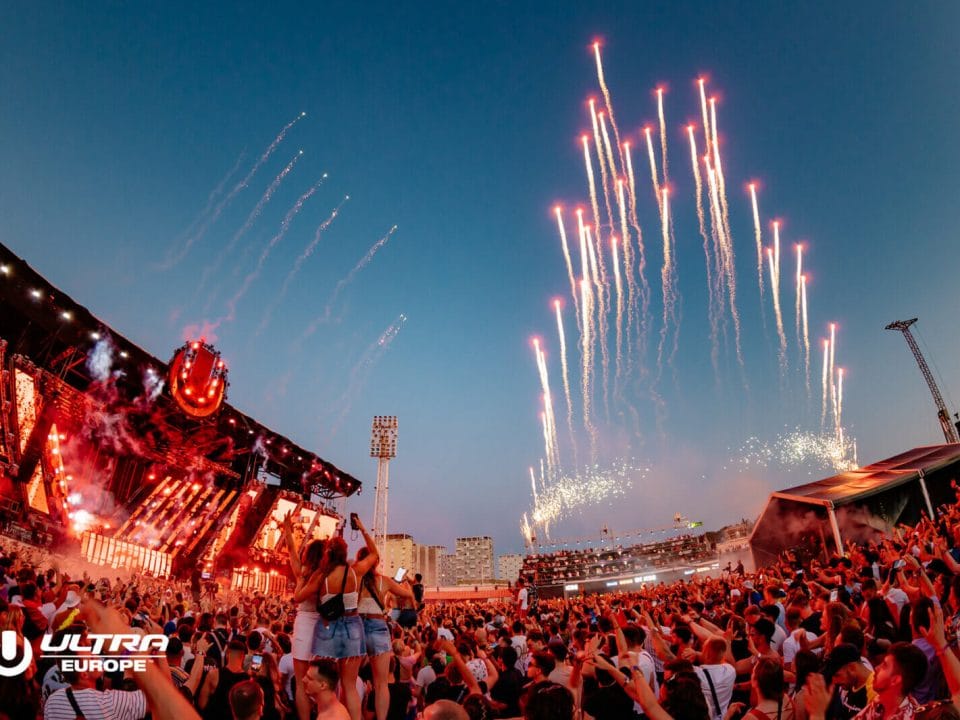
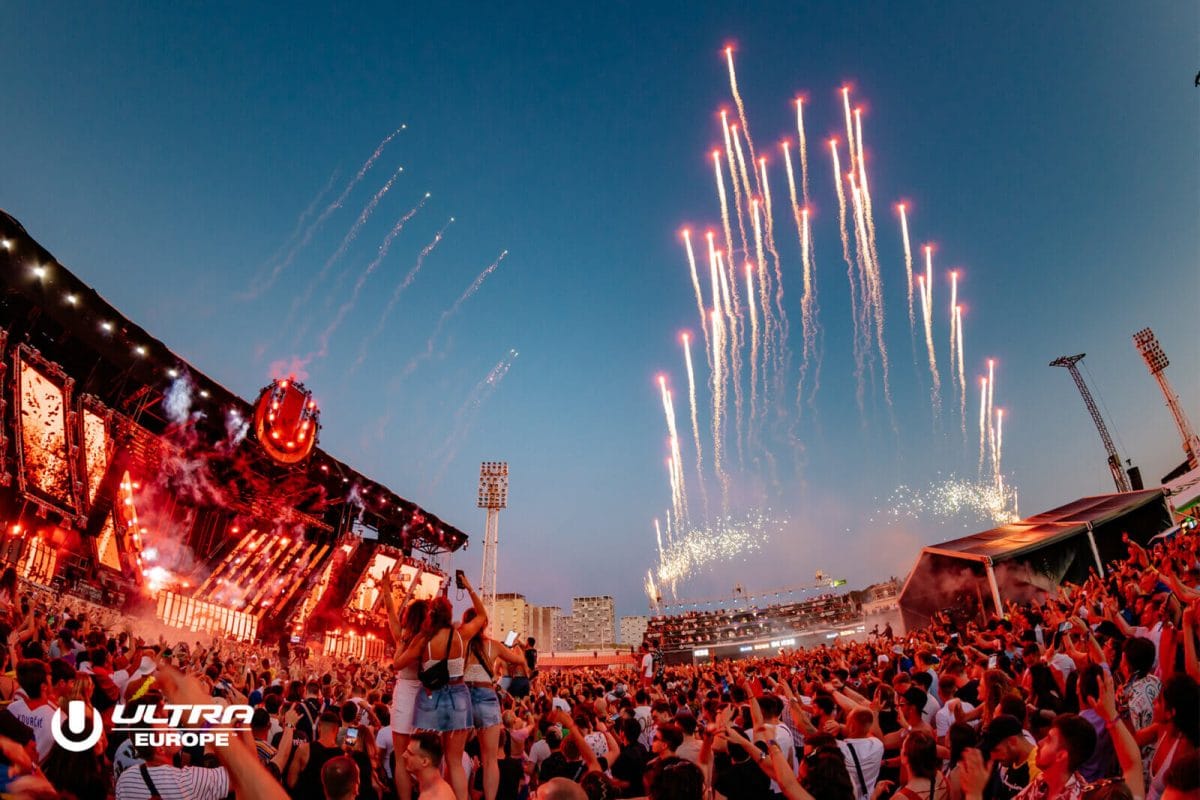
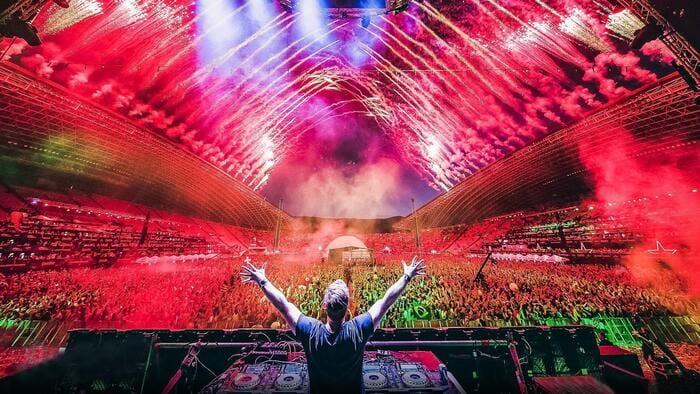
As a true tourist destination, Croatia is the center of the party scene. Tisno hosts a number of festivals such as The Garden, Love International, and Suncebeat, while Split is home to the Ultra Music Festival. Other notable events include EXIT in Umag and SONUS on Zrće Beach in Novalja, all offering rich music programs. For a more relaxed atmosphere, visit InMusic and Evenings at Grič in Zagreb, Ferragosto Jam in Orahovica, or Queenvention in Zadar.
Beyond its rich culture, Croatia can also boast remarkable sporting achievements that have become part of the nation’s tradition and identity. Major events include Wings for Life, the Hanžeković Memorial, Velebit Ultra Trail, Biograd Boat Show, Rally Santa Domenica, and the ATP Tournament in Umag.
Of course, even with all these mentions, many events and festivals are still left out. If this still isn’t enough, check the UNESCO list of protected heritage sites and explore historical landmarks, city centers, local parks, botanical and zoological gardens — and immerse yourself in the millennia-old history and culture that has been passed down and cherished through generations in Croatia!