8 most special/unique accommodations in Croatia – for a memorable vacation
February 10, 2026
The 5 most beautiful beaches of the Pelješac Peninsula
February 20, 2026Contents
Show- Queen’s Beach – Nin
- Divna Beach – Pelješac
- Stiniva – Island of Vis
- Zlatni Rat – Brač
- Paradise Beach – Lopar, Rab
- Pasjača – Popovići, Konavle
- Sakarun – Dugi Otok
- Punta Rata – Brela
- Nugal – Osejava, Makarska/Tučepi
- Lojena – Levrnaka Island, Kornati
- Podvrške – Island of Murter
- Sveti Ivan (Lubenice) – Island of Cres
Croatia is blessed with a coastline of thousands of islands and coves, and among them are beaches that will truly take your breath away. Below, you’ll find a guide to twelve Adriatic gems, enriched with tips on how to reach them, when to visit, and who they’re best suited for. The text is inspired by the best travel stories to capture the feeling of arriving at—and spending time on—each beach.
Queen’s Beach – Nin
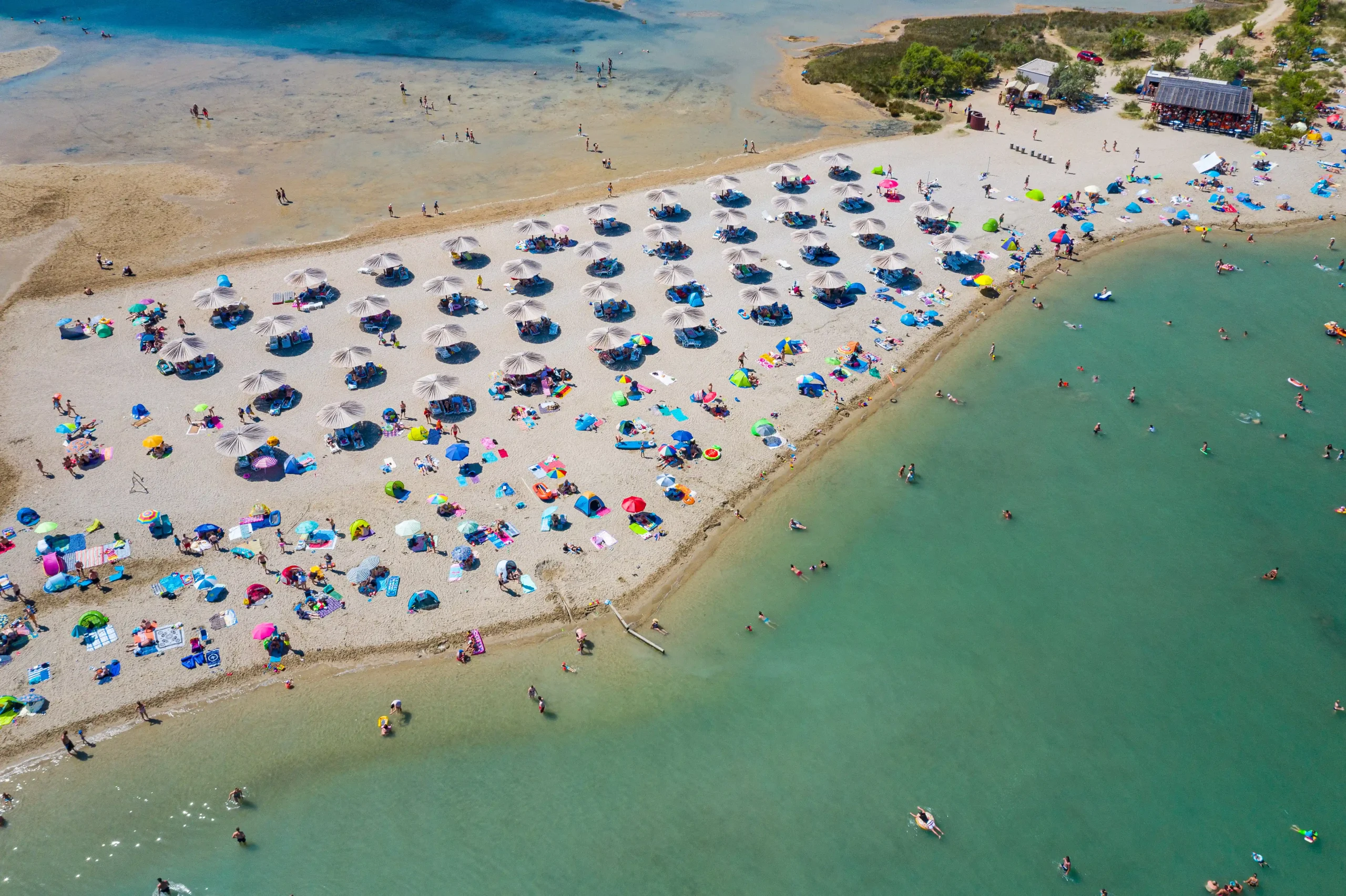
Set beside the historic town of Nin, Queen’s Beach is the longest sandy beach in the area, stretching for about three kilometers. Legend has it that Croatia’s first queen found her refuge here, and the views of the Velebit mountains plus the warmth of the shallow sea really do feel like royal treatment. Thanks to its long, gentle shallows, it’s a paradise for families with small children, while kitesurfers and water-sports lovers are drawn by the favorable winds.
Beyond swimming, visitors can try the healing mud from the nearby lagoon, used for centuries for rheumatic issues. The infrastructure is well developed—sun loungers, umbrellas, showers, restrooms, and cafés are available. The beach is about a 10-minute walk from Nin’s charming streets, with parking nearby as well as cycling and walking paths.
Location📍 | Nin, Northern Dalmatia – a sandy lagoon about 3 km long with views of the Velebit mountains |
How to get there🚗 | By car: Nin is about 15 km from Zadar; parking is near the beach. On foot: a 10-minute walk from the center of Nin across the small bridge. By bike: marked paths run along the lagoon. |
Best time to visit☀️🍂 | Late spring and early summer bring warm water and fewer crowds; July and August are the busiest, so arriving in the morning helps you secure a good spot. |
Ideal duration & who it’s for⏱ | Spend the rest of the day enjoying the shallows, the healing mud, and a picnic. Perfect for families, beginner kitesurfers, and anyone who loves long walks on soft sand. |
Divna Beach – Pelješac
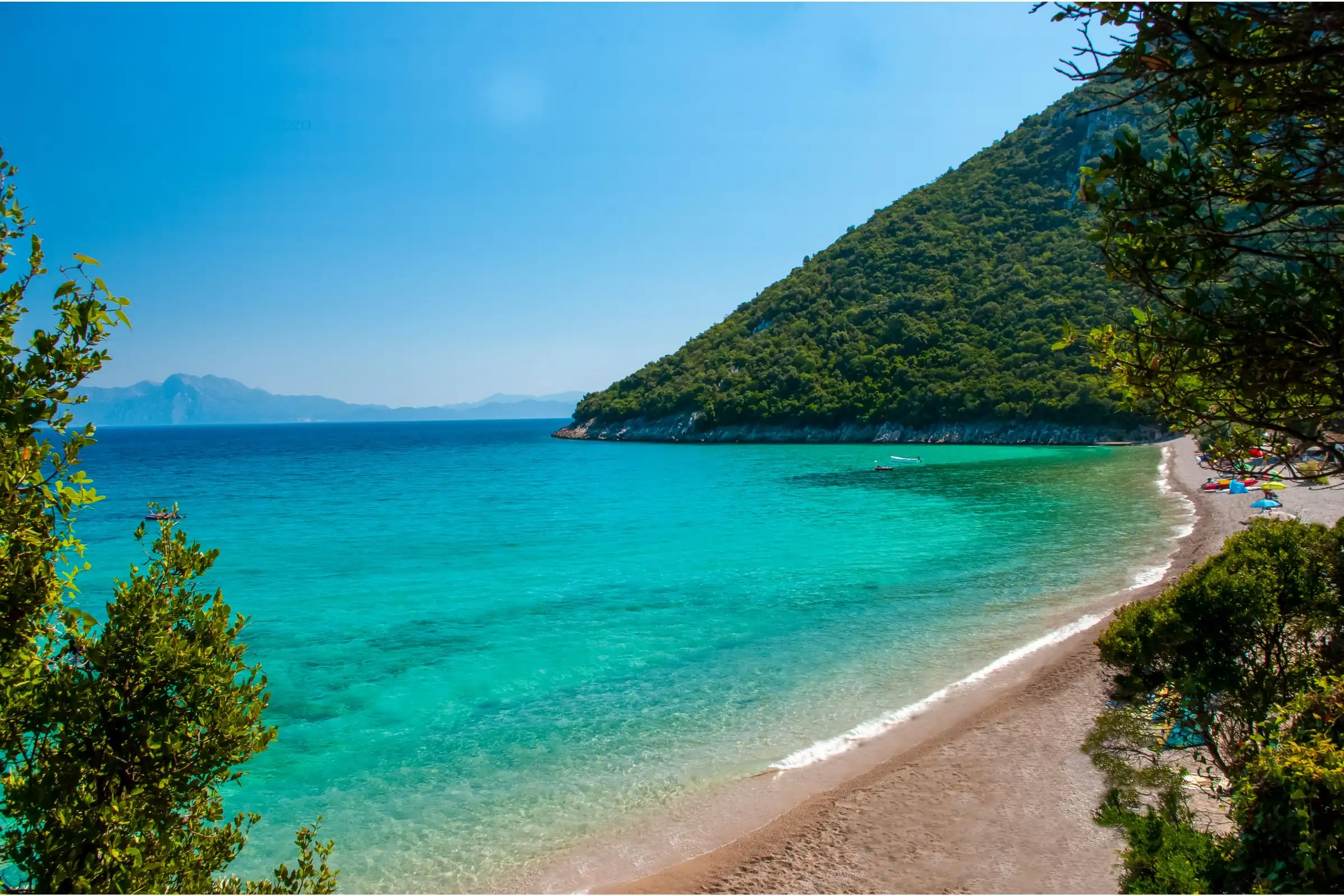
Its name says it all: Divna Beach is a true gem of northwestern Pelješac. The pebbly shore is framed by greenery and crystal-clear water, and from the sea you can see a small islet you can reach by kayak or SUP. Only a handful of camps and apartments keep the area quiet—here, nature leads the way, with the sound of waves and birdsong in the background.
The beach lies about ten kilometers from Trpanj; a narrow, winding road brings you to the turnoff for Dolnja Vrućica and the Divna campsite, followed by a few kilometers of macadam road. Since there are no restaurants or shops, it’s recommended to bring your own supplies and plenty of water. Limited parking means it’s best to arrive early, especially during peak season.
Location📍 | Northern Pelješac, about 10 km from Trpanj; a pebbly cove surrounded by pine trees. |
How to get there🚗 | By car: from Trpanj follow signs for Dolnja Vrućica or the Divna campsite; the last ~7 km is macadam road. Parking is limited, so come early. |
Best time to visit☀️🍂 | July and August offer warm sea but also crowds; June and September feel calmer. Avoid the hottest afternoon hours. |
Ideal duration & who it’s for⏱ | Half a day to a full day for sunbathing, swimming, and exploring the nearby islet. Recommended for couples, families with older children, and lovers of unspoiled nature. |
Stiniva – Island of Vis
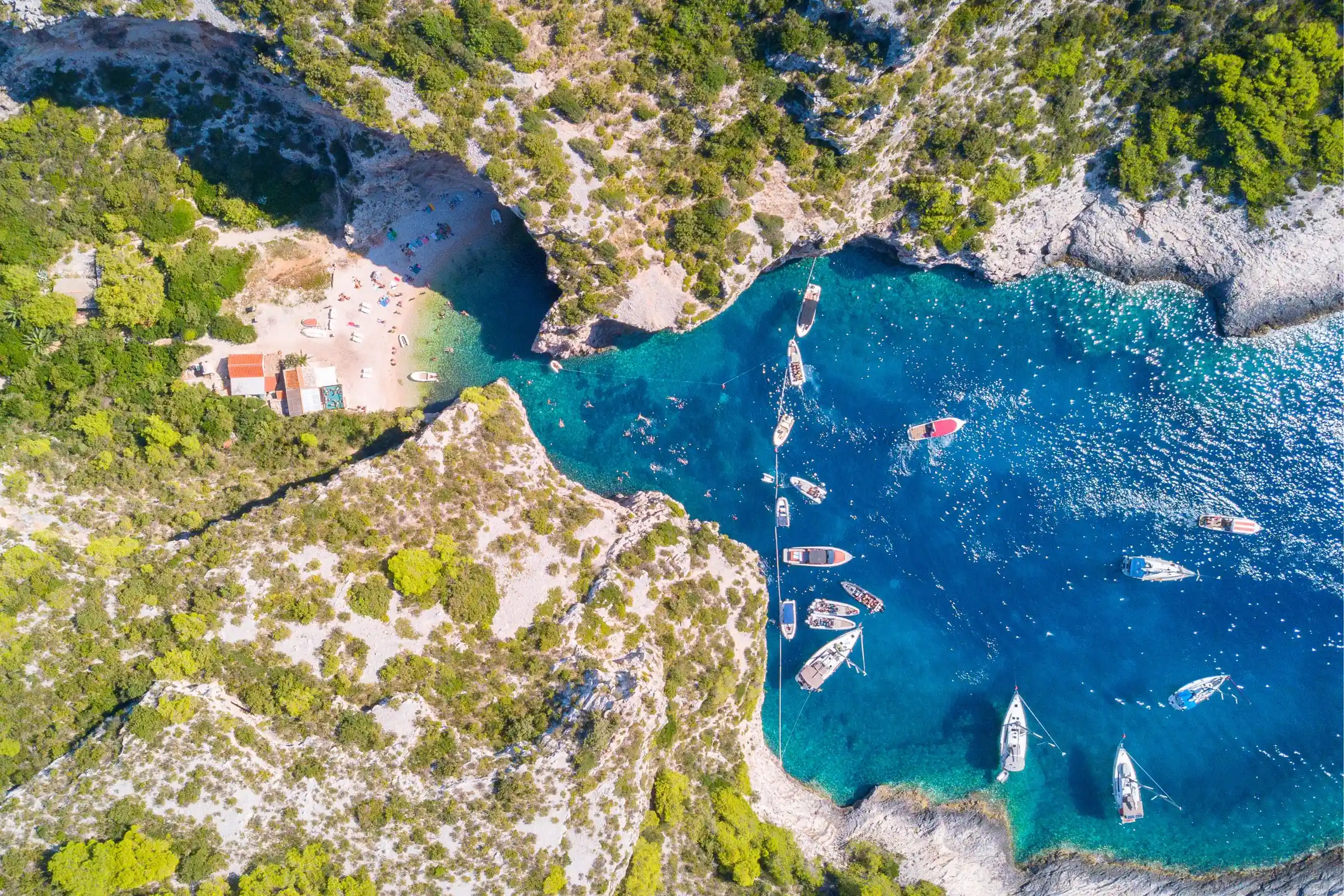
Hidden behind towering limestone cliffs, Stiniva is often called the most beautiful beach in Europe. Narrow “sea gates” open onto white pebbles and emerald water, creating a feeling of privacy and seclusion. Thanks to this dramatic setting, it earned the title of Europe’s most beautiful beach in 2016, drawing visitors who come to dive into its underwater world and enjoy the quiet.
You can reach Stiniva by boat from Komiža, or on foot via a steep trail from the village of Žužeca; the descent takes about 20 – 30 minutes and requires good footwear. On the beach you’ll find only a simple spot for refreshments and a few boats, so it’s best to arrive early in the morning or later in the afternoon to avoid crowds and strong heat. There isn’t much shade, and the sun is strongest around midday, so bring a hat and plenty of water.
Location📍 | Island of Vis – the southern shore of Stiniva Bay, protected by high cliffs. |
How to get there🚗 | By boat: taxi boats from Komiža. On foot: park in Žužeca and follow the steep trail for 20–30 min. Not ideal for small children or the elderly. |
Best time to visit☀️🍂 | Early morning or late afternoon for more shade and fewer people. Off-season (June or September) offers a calmer experience. |
Ideal duration & who it’s for⏱ | A few hours for swimming and snorkeling. Best for adventurers and nature lovers; the demanding access isn’t recommended for small children or older visitors. |
Zlatni Rat – Brač
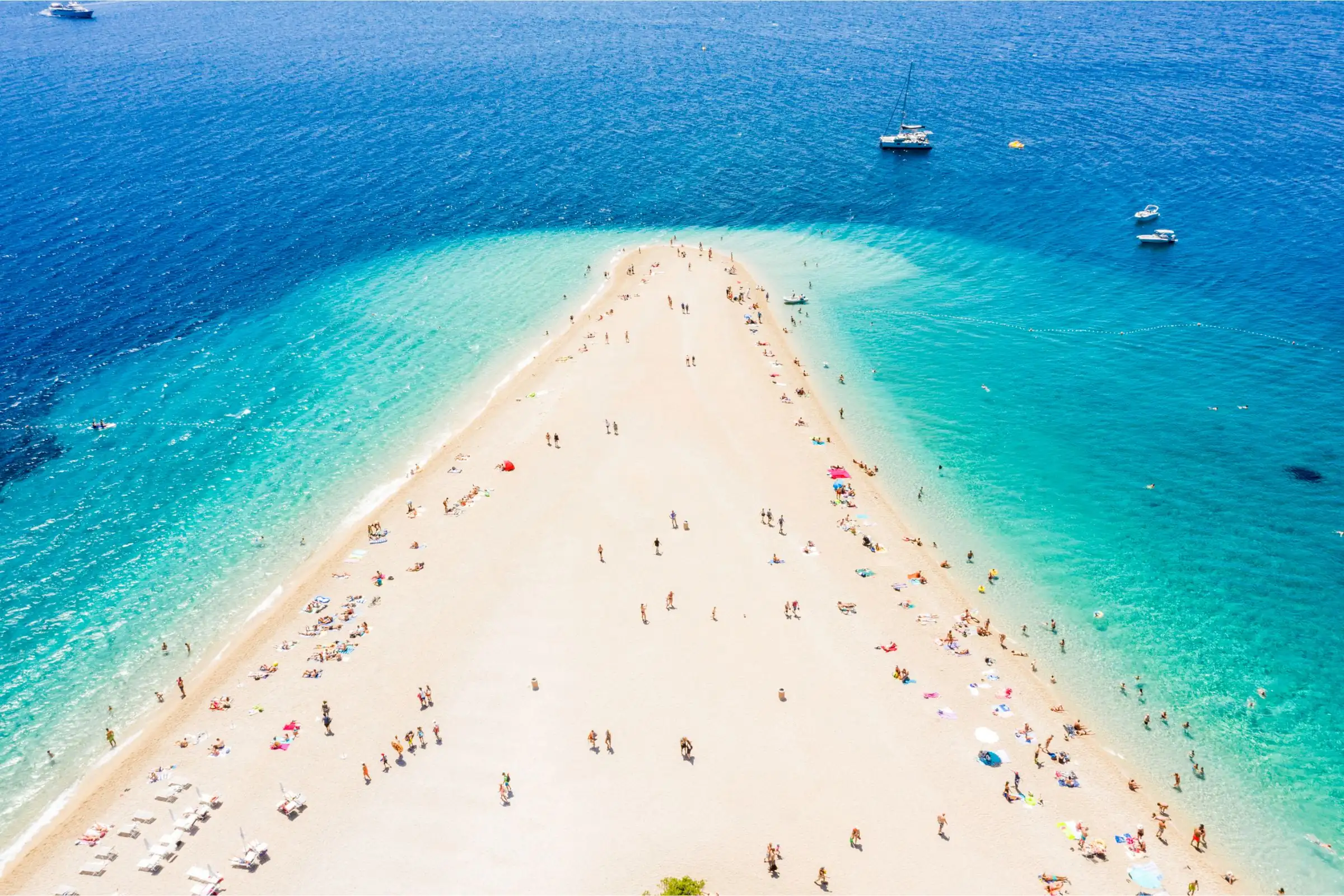
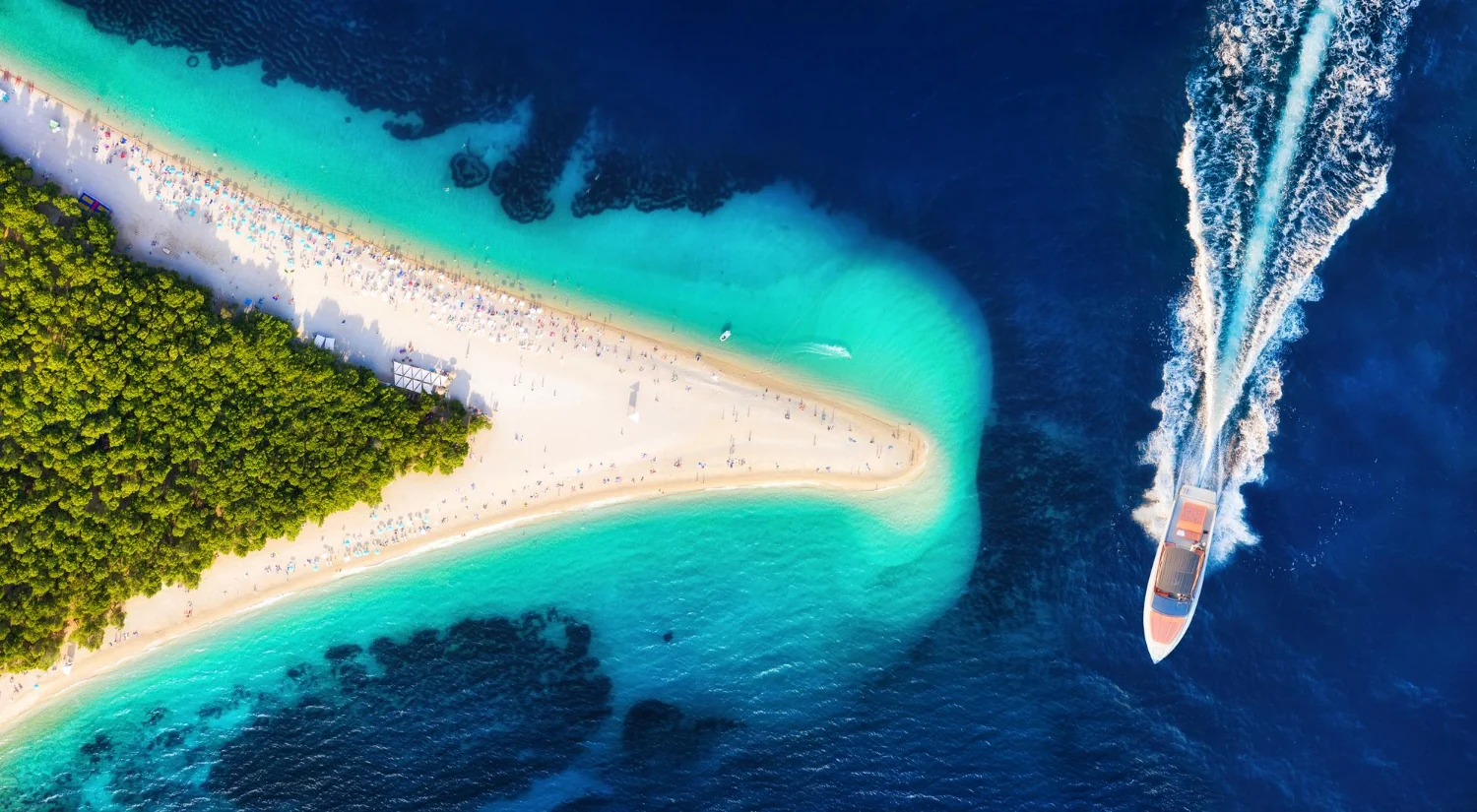
World-famous for its distinctive cape shaped like a golden horn, Zlatni Rat never stops impressing. This 600 meter-long spit shifts shape depending on sea currents and the winds of the Maestral and Bora, so every visit feels slightly different. The beach is covered in fine pebbles that shimmer underfoot, and it’s framed by dense pine forest on one side and crystal-clear sea on the other.
You can rent sun loungers and umbrellas, try windsurfing or kitesurfing, and refresh yourself in nearby bars and restaurants. Zlatni Rat is only 2.5 km from the town of Bol; you can reach it on foot, by bike, by car, or by a small taxi boat. Because it’s so popular, arriving early is recommended—especially in summer when temperatures and crowds peak.
Location📍 | Brač, near Bol – a 600 m-long cape surrounded by pine forest. |
How to get there🚗 | Walk or bike from Bol (~2.5 km). By car or taxi boat from Bol harbor. Parking is located above the beach. |
Best time to visit☀️🍂 | July and August are ideal for surfers thanks to the wind; for a quieter stay, June or. |
Ideal duration & who it’s for⏱ | A full day for sunbathing, swimming, and water sports. Great for families, couples, and anyone who loves an active beach day. |
Paradise Beach – Lopar, Rab
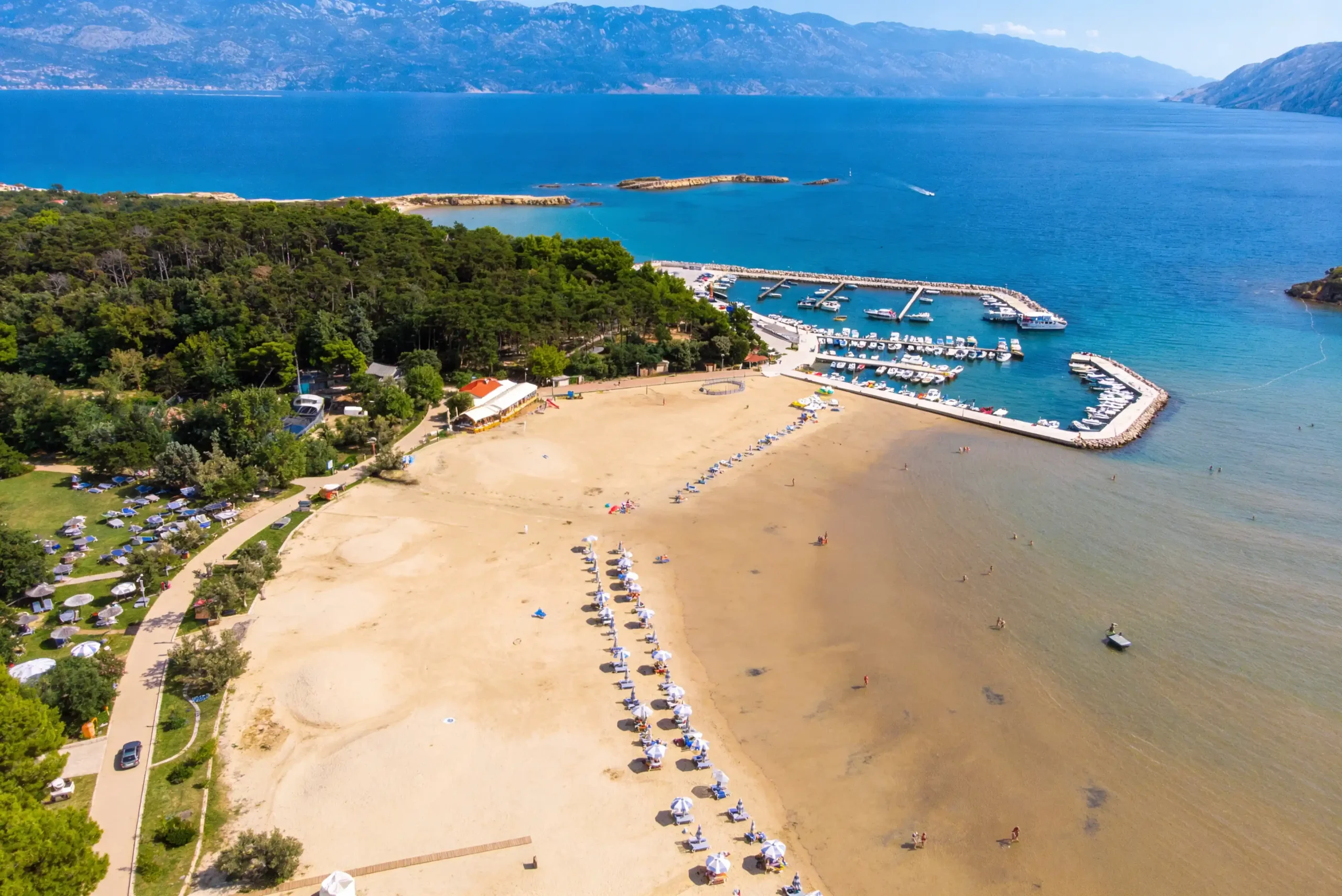
When a beach has “paradise” in its name, expectations are high—and Paradise Beach more than delivers. This nearly two-kilometer sandy shoreline in Lopar flies the Blue Flag and has been included in CNN’s list of the 100 best beaches in the world. The sea is shallow and warm—perfect for small children—and the beach is lined with amenities, from water slides and sports courts to beach bars and restaurants.
Paradise Beach also has a designated area for pets, along with plenty of options for windsurfing, parasailing, and pedal boats. It’s located 12 km from the town of Rab and is accessible by car, bus, or boat, with parking close by. The sandy strip is easy to maintain, while lifeguards and showers ensure safety and comfort throughout the day.
Location📍 | Lopar on the island of Rab – a 2 km-long sandy beach with a Blue Flag. |
How to get there🚗 | By car: 12 km from the town of Rab; large parking areas by the beach. By bus: regular lines from Rab. By boat: taxi boats dock at the Lopar marina. |
Best time to visit☀️🍂 | June and September bring warm water and fewer crowds. Peak season (July, August) offers the most activity but also more people. |
Ideal duration & who it’s for⏱ | A full day with plenty to do. Perfect for families with kids, sandy-beach lovers, sports enthusiasts, and dog owners. |
Pasjača – Popovići, Konavle
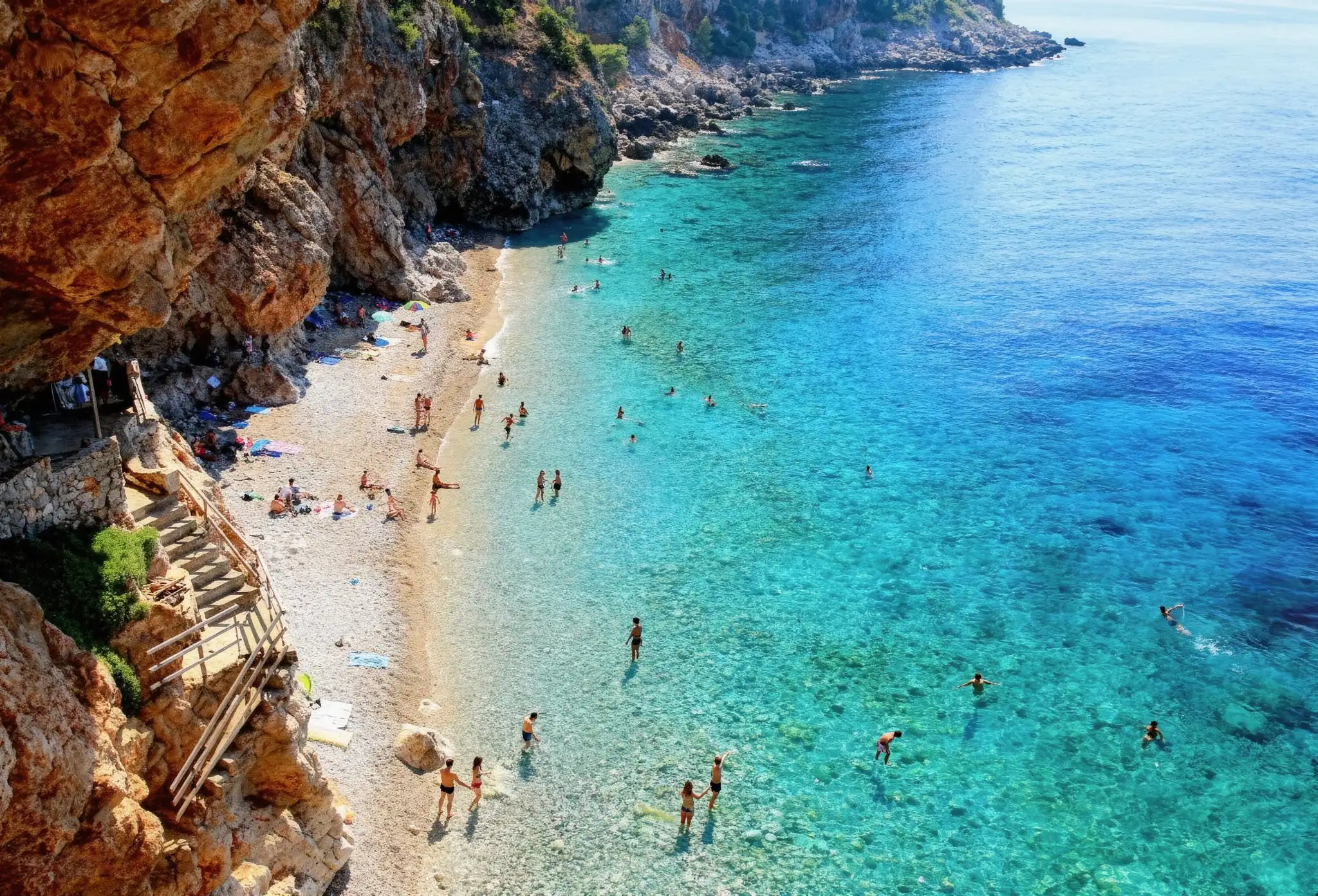
Pasjača is a small beach tucked beneath the steep cliffs of Konavle, about 30 km southeast of Dubrovnik. It was formed in the mid-20th century when rock from a tunnel was thrown into the sea and the waves gradually turned it into sand. Today it’s a narrow strip of sand and pebbles about 80 m long, with emerald water that captivates thanks to the contrast with the reddish cliffs.
To reach Pasjača, follow the steep path from the village of Popovići; the route starts from an asphalt road with parking for around 50 vehicles, followed by a descent down stairs carved into the rock. There are no facilities and no shade, so it’s essential to bring water, food, and sun protection. Because of the demanding access and the uphill return, it’s not suitable for small children or older visitors.
Location📍 | Konavle, village of Popovići – a hidden cove beneath high cliffs, 30 km from Dubrovnik. |
How to get there🚗 | By car: park in Popovići (50 spaces), then descend the steep path and rock-cut stairs to the beach. No public transport; you can also arrive by boat. |
Best time to visit☀️🍂 | Spring and early summer bring pleasant temperatures; in July and August, visit early in the morning or near sunset to avoid heat and crowds. |
Ideal duration & who it’s for⏱ | 2–3 hours for swimming and photos. Great for adventurers, naturists, and lovers of hidden coves; not ideal for families with small children. |
Sakarun – Dugi Otok
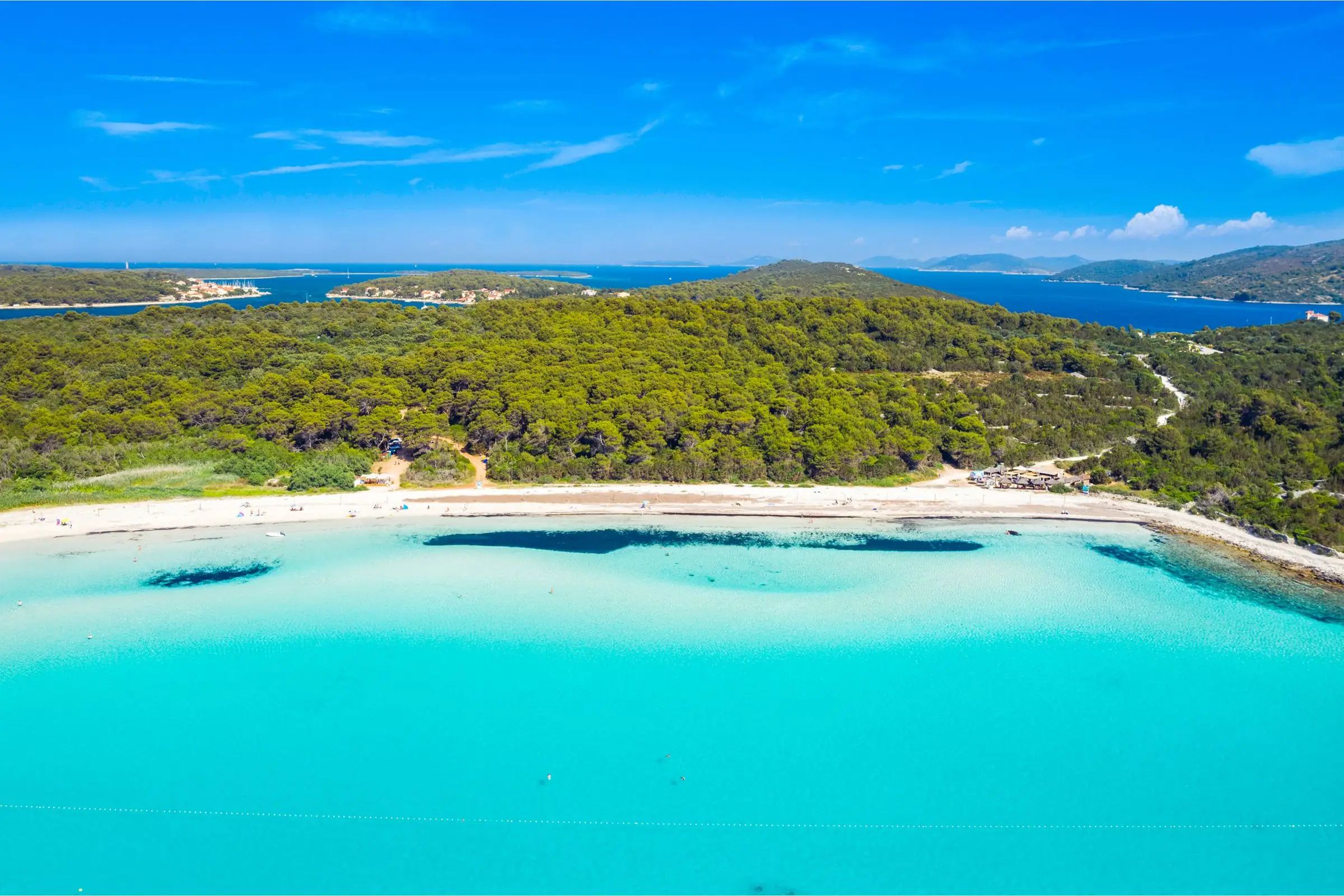
Sakarun, also known as the “Croatian Caribbean,” offers nearly a kilometer of white sand and turquoise sea protected by pine forest. The shallow water stretches for 350 meters, making it ideal for families with children and for anyone who enjoys carefree swimming. Fragrant pines provide natural shade, while the soft sand invites long walks along the shore.
In the bay you’ll find two restaurants, restrooms, and showers. Sakarun is reached by ferry from Zadar to Brbinj, then about a 20-minute drive, or by a tourist train from Božava. The beach has paid parking, plus areas with sun loungers and free space; nearby places like Veli Rat, Verunić, and Božava offer accommodation.
Location📍 | The northwest of Dugi Otok, near the villages of Verunić and Božava – a wide sandy bay. |
How to get there🚗 | Ferry from Zadar to Brbinj (1 h 45), then a 20-minute drive to the beach. Alternative: tourist train from Božava; also accessible by boat. Parking by the beach. |
Best time to visit☀️🍂 | June and September for fewer crowds; July and August bring a Caribbean vibe but also more visitors. |
Ideal duration & who it’s for⏱ | A full day for enjoying the shallows, games, and sun. Recommended for families, couples, snorkelers, and anyone looking for a peaceful oasis. |
Punta Rata – Brela
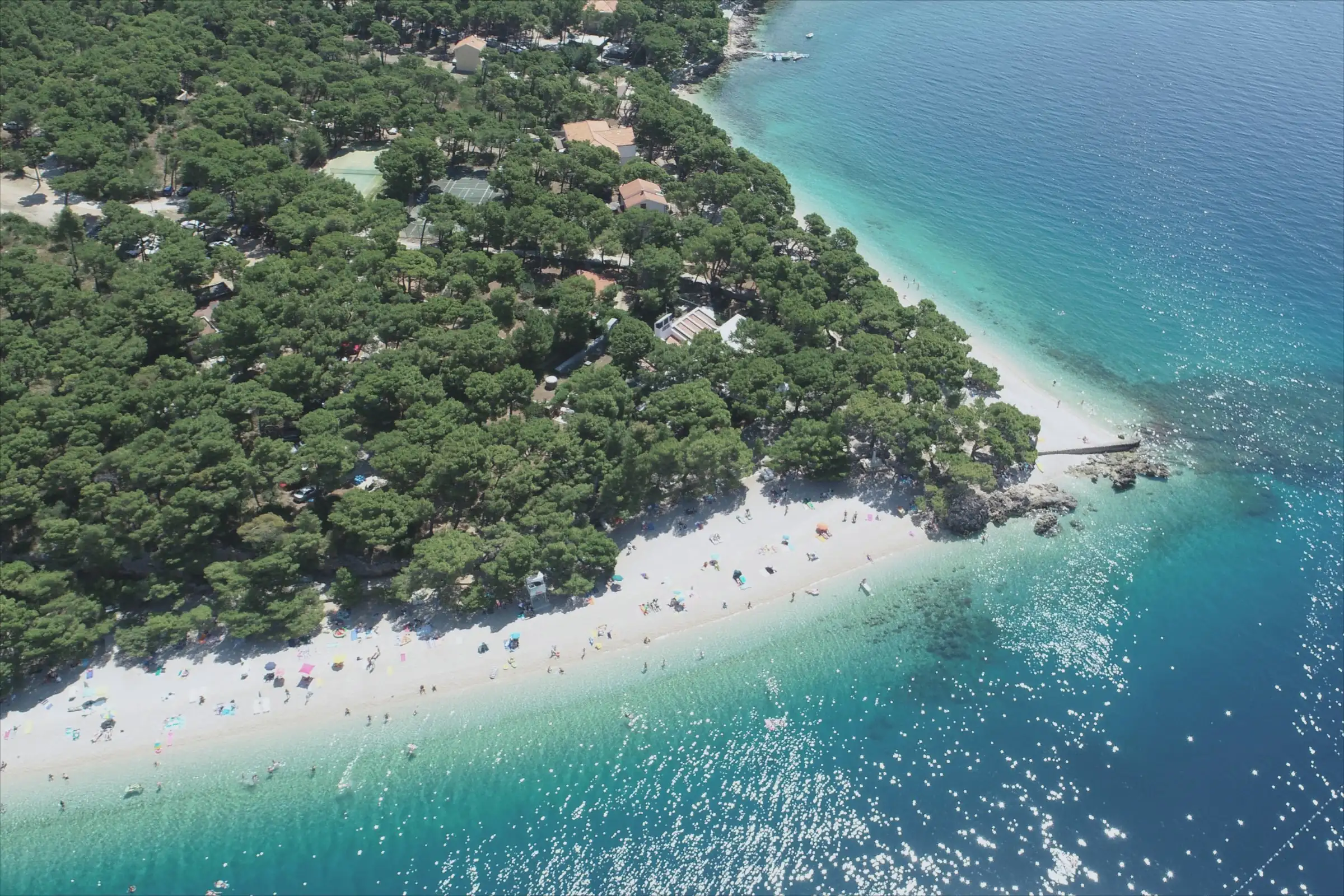
Punta Rata is often described as one of the most beautiful beaches in the world. Forbes listed it among the 10 most beautiful beaches globally and as the top one in Europe, and it proudly flies the Blue Flag. The beach is covered in fine white pebbles and the water is exceptionally clear; Aleppo pines provide natural shade and an atmosphere that instantly relaxes you. The beach’s iconic symbol is the Brela Stone—an isolated rock crowned by a pine tree rising from the sea.
Punta Rata stretches for more than a kilometer and offers activities like swimming, snorkeling, kayaking, and beach volleyball. You’ll also find plenty of services—sun loungers, showers, changing cabins, cafés, and restaurants. Brela is about 50 km from Split Airport; you can reach it by car or bus, and the beach sits right in the center of town, making it easy to access on foot.
Location📍 | Brela, Makarska Riviera – a pebbly beach surrounded by pines and the distinctive Brela Stone rock. |
How to get there🚗 | By car: 50 km from Split Airport. By bus: lines along the Makarska Riviera. On foot from accommodation in Brela. |
Best time to visit☀️🍂 | June to September – warm sea and long sunny days. Visiting off-season (May, October) offers more peace. |
Ideal duration & who it’s for⏱ | A full day for swimming, sports, and relaxing. Ideal for families, couples, and lovers of an active beach holiday. |
Nugal – Osejava, Makarska/Tučepi
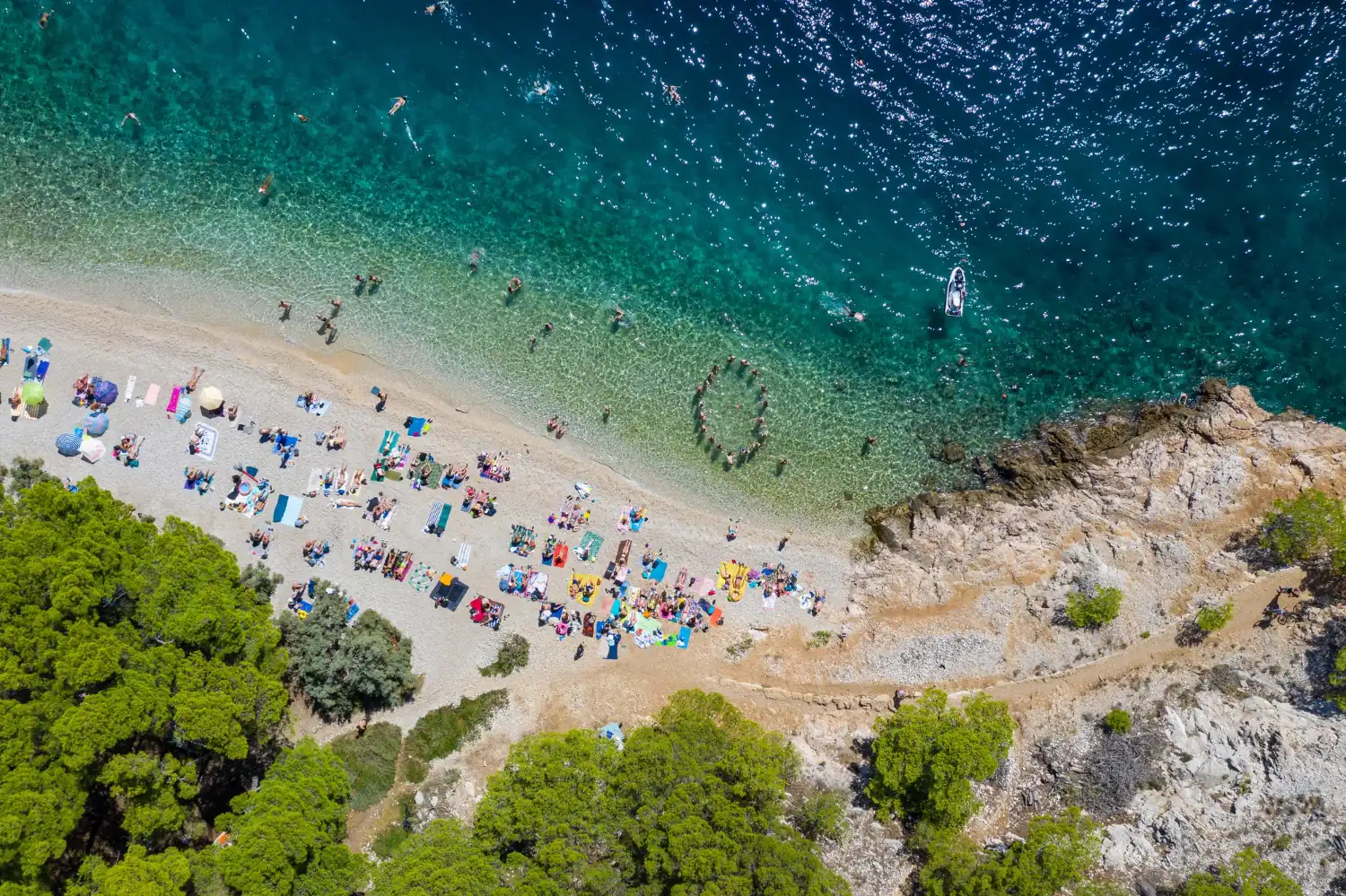
Hidden beneath the cliffs of the Osejava forest park, Nugal is a beach for naturists and adventure lovers. The path leads through the Osejava woods; it takes about 15–20 minutes from Makarska or around 30–45 minutes from the Tučepi side, with the last few meters being steep. Once you arrive, you’ll find a narrow pebble shoreline, framed by pines that offer natural shade and deep-blue water known for its clarity.
Nugal is an FKK beach with no facilities—no bars, sun loungers, or showers—so you’ll need to bring water, food, and swim shoes. Thanks to its beauty, it was named the third most beautiful beach in Europe in 2019. It’s best to visit in the morning or late afternoon when temperatures are more pleasant; in summer it can get very hot, and the uphill return is demanding.
Location📍 | Osejava, between Makarska and Tučepi – a pebbly cove under. |
How to get there🚗 | On foot: 15–20 minutes from Makarska through Osejava park, or 30–45 minutes from Tučepi; the trail is partly steep. No car access. |
Best time to visit☀️🍂 | Late spring and early autumn for comfortable temperatures. In summer, come early or near sunset to avoid the heat. |
Ideal duration & who it’s for⏱ | A few hours to half a day. Suited to naturists and couples; not recommended for families with small children due to the tougher access and lack of facilities. |
Lojena – Levrnaka Island, Kornati
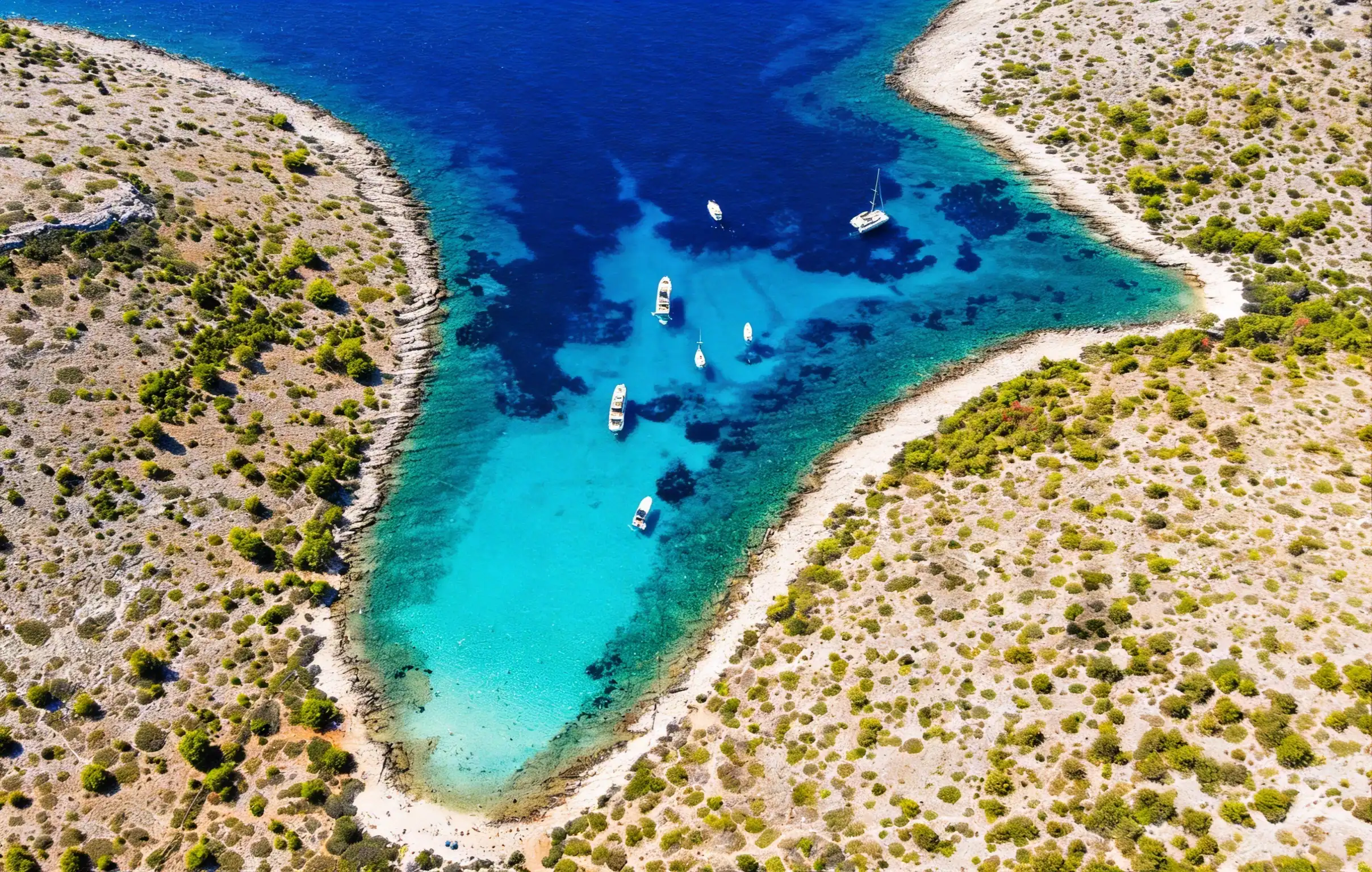
Lojena lies on the southwest coast of Levrnaka Island in the Kornati National Park. This small bay is covered in silvery pebbles, and the sea is so clear and turquoise it looks like a swimming pool. Surrounded by unspoiled nature, the beach is backed by a hill offering panoramic views over the Kornati islands—perfect for a short walk.
You can reach Lojena only by boat, most often as part of organized excursions from Zadar, Murter, or Šibenik; entrance to the national park is paid, and it’s often included in the tour price. The beach is about 60 m long and has basic facilities—a restroom unit and a few nearby bars/restaurants (e.g., Konoba Andrija). Because there’s little shade and the atmosphere is quiet, it’s recommended to bring an umbrella, water, and swim shoes.
Location📍 | Levrnaka Island in the Kornati archipelago – a small bay with white pebbles. |
How to get there🚗 | By boat only: organized tours from Zadar, Murter, or Šibenik include the NP entry ticket. With your own boat, you need to pay the entrance fee. |
Best time to visit☀️🍂 | June to September for warm sea. Off-season visits are quieter but depend on weather and boat availability. |
Ideal duration & who it’s for⏱ | Half a day on an excursion with swimming and snorkeling. Ideal for divers, couples, and anyone who loves silence and nature. |
Podvrške – Island of Murter
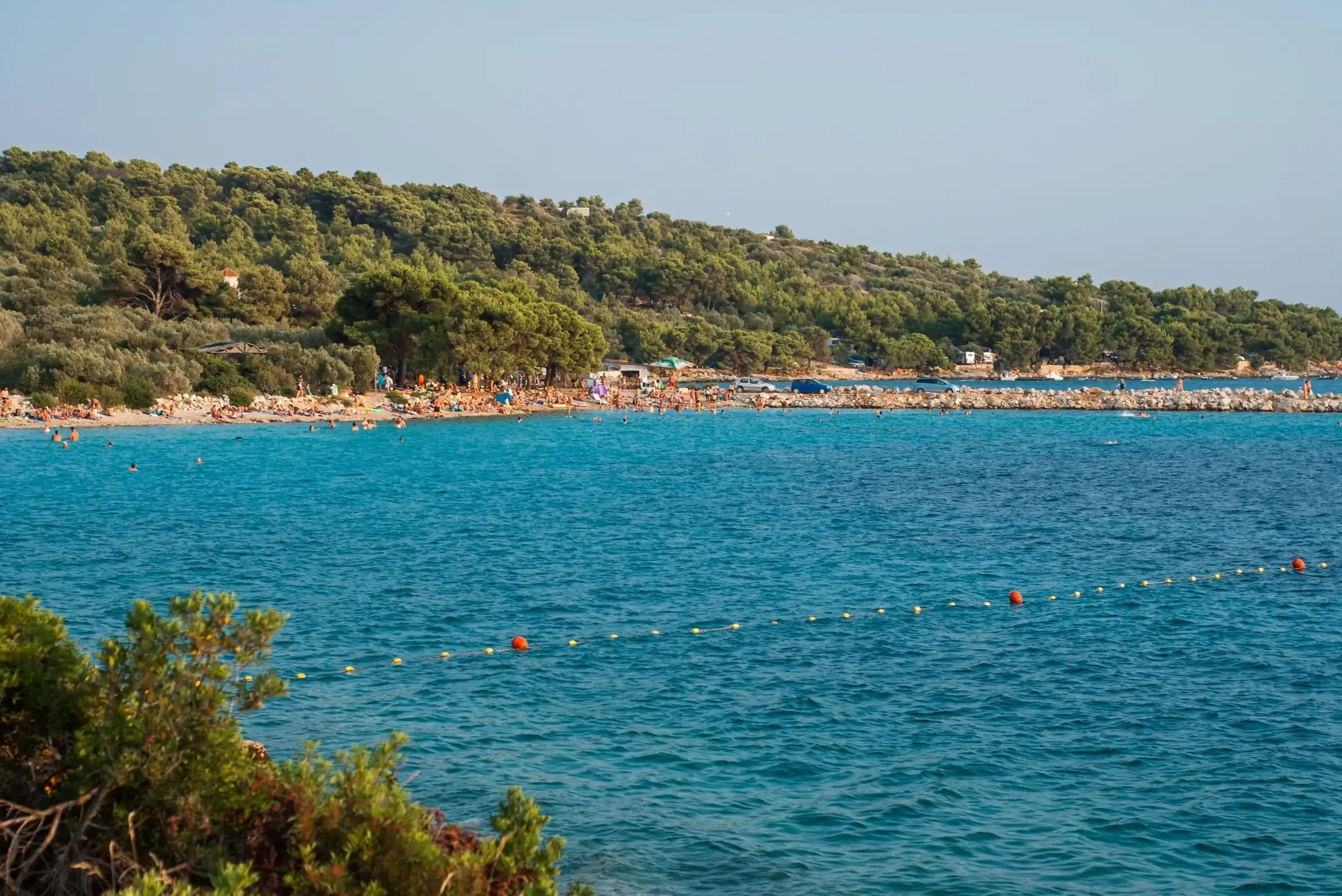
Podvrške is one of the few sandy beaches on Murter, and thanks to its shallow entrance and warm sea, it’s a favorite for families. The turquoise water and the view of the Kornati islands create an almost exotic feel, while the dense pine forest behind the beach provides much-needed shade. A seaside promenade is lined with cafés and restaurants, and you can rent pedal boats, SUPs, and sun loungers.
Podvrške is reached by an asphalt road from the town of Murter (1.5 km); parking is limited and fills up quickly, so arriving early is recommended. The beach has showers, changing cabins, and a children’s playground; the best months to visit are May, June, September, and October, when temperatures are pleasant and crowds are smaller. You can also arrive by taxi boat or private boat from the sea.
Location📍 | Island of Murter, southern coast – a sandy beach surrounded by pine forest with views of the Kornati islands. |
How to get there🚗 | By car: 1.5 km from the town of Murter, with limited parking. By boat: taxi boat or your own boat can dock near the beach. |
Best time to visit☀️🍂 | May, June, September, and October offer pleasant temperatures and fewer crowds. In summer, come early because of parking. |
Ideal duration & who it’s for⏱ | A full day for swimming, playtime, and lunch in nearby restaurants. Ideal for families with children and lovers of sandy beaches. |
Sveti Ivan (Lubenice) – Island of Cres
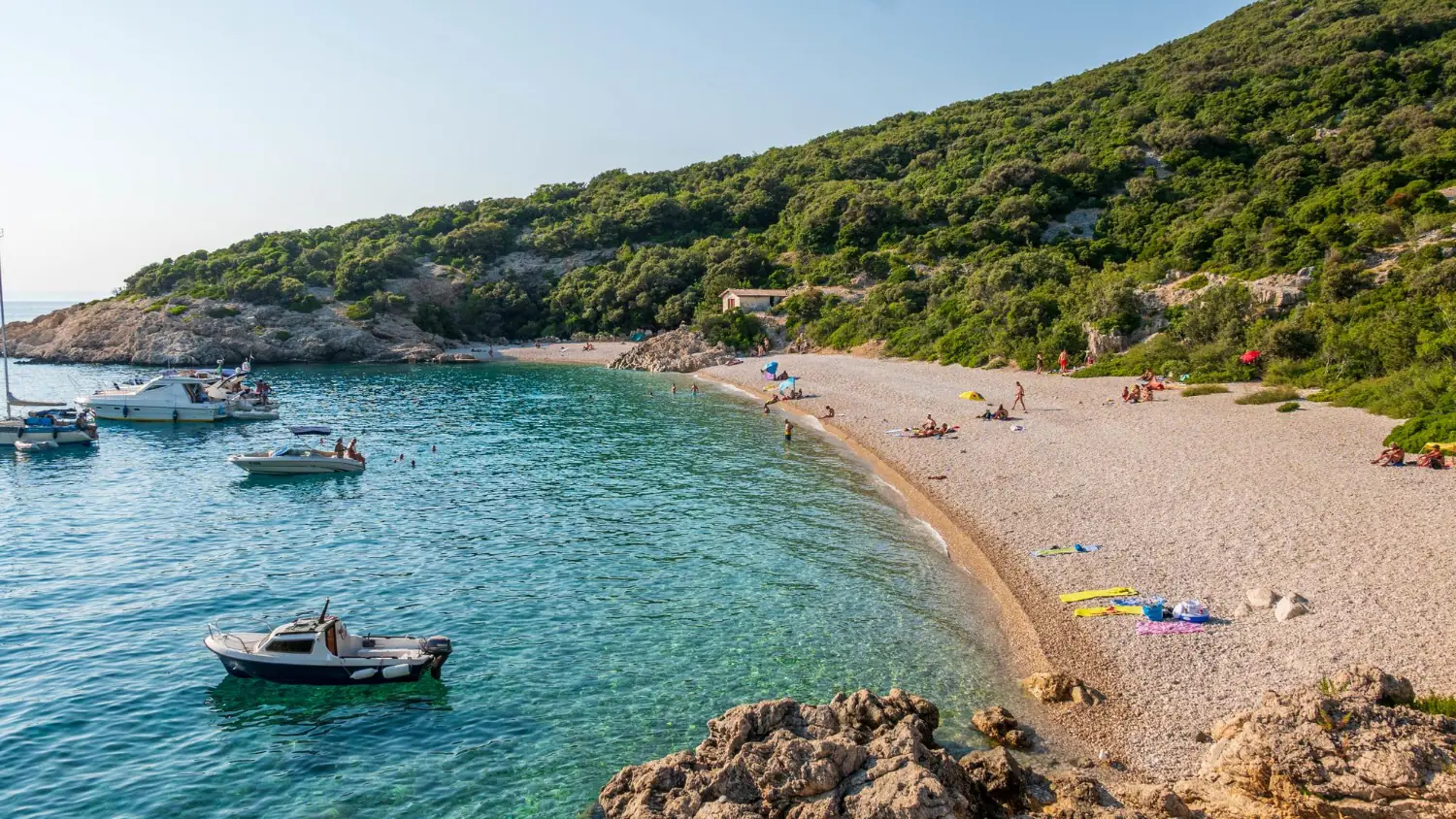
Deep below the stone village of Lubenice on the island of Cres lies Sveti Ivan Beach. This wild beauty was listed by the German magazine Bild among the world’s most beautiful hidden beaches. Fine white pebbles, turquoise sea, and Mediterranean vegetation make it a perfect escape from civilization; a large rock in the middle of the beach splits it into two parts and adds extra charm.
A steep trail leads down to the beach from the village of Lubenice at an elevation of 400 m; the descent takes about 40–50 minutes, and the uphill return is demanding—so bring enough water and comfortable footwear. An alternative is arriving by boat from nearby places such as Valun or Cres. There are no facilities and no shade, so you should bring food, water, and sun protection; due to its isolation, it’s not recommended for small children or anyone with limited fitness.
Location📍 | Island of Cres, below the village of Lubenice – a secluded cove beneath cliffs. |
How to get there🚗 | On foot: a steep trail from Lubenice (~45 min down and 60 min up). By boat: taxi boat from Valun, Cres, or private boat. |
Best time to visit☀️🍂 | Late spring and September offer more comfortable temperatures and fewer crowds. In summer, come early due to the heat and the longer uphill return. |
Ideal duration & who it’s for⏱ | A half-day trip for swimming and snorkeling. Made for adventurers and lovers of wild nature; not recommended for families with small children due to the demanding access. |
Stiniva on Vis was named Europe’s most beautiful beach in 2016, while Nugal took third place on the European list of the most beautiful beaches in 2019. Pasjača went a step further—Forbes named it Europe’s most beautiful secret beach in 2024. These awards speak to the uniqueness and beauty of Croatia’s coastline.