What Are the Most Scenic Road Trips Along the Adriatic Sea?
January 7, 2026
Ultra Split 2026: dates, results, lineup in the future (guest guide )
February 3, 2026Croatia can boast a total of eight national parks that preserve the most beautiful parts of nature – from magnificent waterfalls and lakes to untouched archipelagos and mountain peaks. Each of these parks is a unique oasis of natural beauty and biodiversity, attracting visitors from all over the world.
How many national parks does Croatia have and which are they?
The Republic of Croatia has 8 national parks. These are:
- Brijuni – an archipelago off the western coast of Istria 🔗
- Kornati – an archipelago in central Dalmatia
- Krka – a river valley in Dalmatia 🔗
- Mljet – an island in southern Dalmatia 🔗
- Paklenica – mountain canyons of southern Velebit (northern Dalmatia) 🔗
- Plitvice Lakes – lakes in mountainous Croatia (Lika) 🔗
- Risnjak – a mountain massif in Gorski Kotar
- Northern Velebit – a mountainous area of northern Velebit (Lika)
Croatia’s national parks – map and layout

Croatia’s national parks are spread from the north to the south of the country and across a range of elevations – from the seacoast to mountain peaks. In short, the geographic layout is as follows: in the mountainous inland you’ll find Plitvice Lakes and the mountain parks Risnjak and Northern Velebit. In Istria, in the northwest of the country, the island park Brijuni is located. The remaining parks are in the coastal Dalmatian region: Paklenica (a mountain massif along the coast of northern Dalmatia), Kornati (an island archipelago in central Dalmatia), Krka (a river canyon in central Dalmatia near Šibenik) and Mljet (an island in southern Dalmatia near Dubrovnik).
Thanks to this distribution, wherever you are in Croatia, a national park is not far away. Still, you can’t visit most of the parks in a single day because they’re hundreds of kilometers apart – so plan your trip by regions. For example, if you’re vacationing on the Dalmatian coast, visit Krka, Kornati, Paklenica or Mljet; and if you’re in Zagreb or on Kvarner, Plitvice, Risnjak, Northern Velebit or Brijuni are closer.
Closest parks to popular cities:
- Zagreb: Plitvice Lakes (about 2h by car), Northern Velebit (about 3h)
- Zadar: Paklenica (45 min), Plitvice Lakes (1h 45 min), Kornati (boat trip, departures from Zadar/Murter)
- Split: Krka (1h), Plitvice Lakes (about 2h 30 min)
- Šibenik: Krka (20 min), Kornati (boat trip from Murter Island ~1h)
- Dubrovnik: Mljet (by ferry ~1h 20 min from the city to Polače/Pomena)
- Rijeka: Risnjak (45 min), Northern Velebit (2h)
National parks in Croatia – detailed guide (by park)
Below you’ll find detailed information for each of Croatia’s eight national parks. Learn why each park is worth visiting, where it is, how to get there, when to go, what to see, and how to prepare for the best experience.
National Park Brijuni
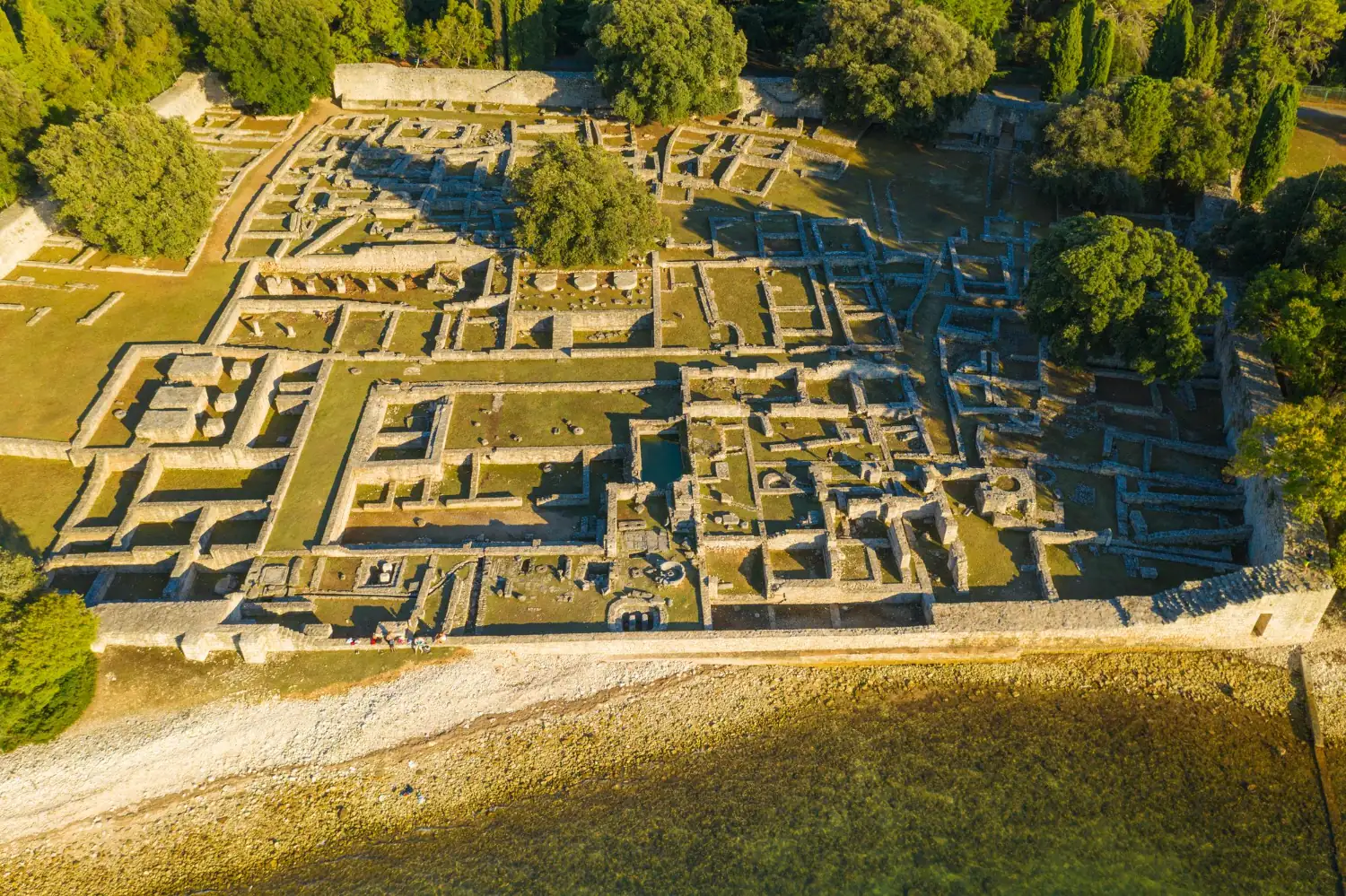

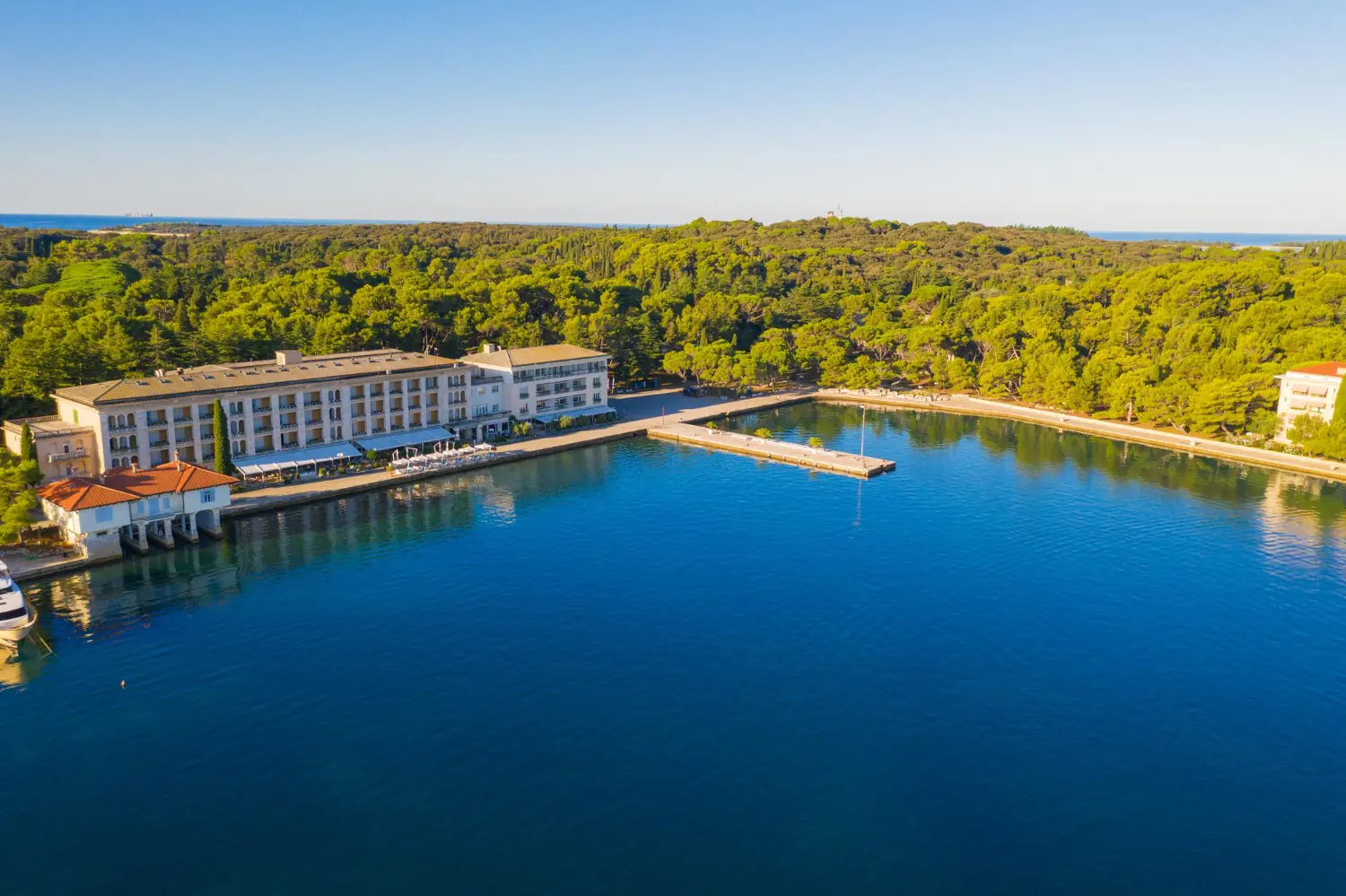
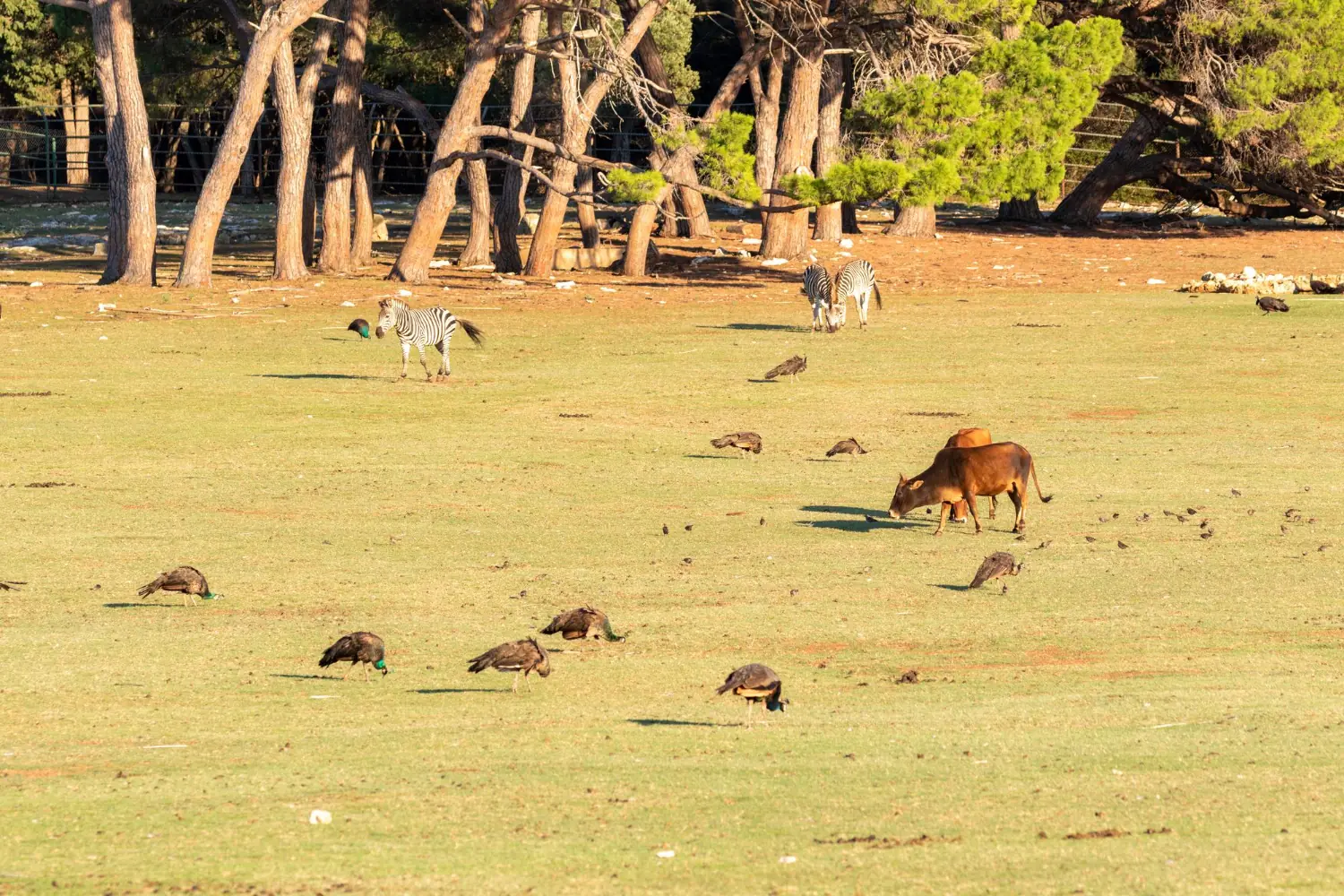
National Park Brijuni covers an idyllic archipelago (2 larger and 12 smaller islands) off the western coast of Istria, known for the perfect blend of nature and cultural heritage. Brijuni attracts visitors with a safari park featuring exotic animals, beautifully landscaped parks, and valuable archaeological sites from Roman and Byzantine times – a true paradise for lovers of nature and history.
Location📍 | Northern Adriatic, western Istria – the Brijuni Islands lie just off the coast (near the town of Fažana, 7 km from Pula). |
How to get there🚢 | Brijuni can be reached exclusively by boat. Organized boat transfers depart from Fažana (a small town near Pula) several times a day, and the ride takes about 15 minutes. Fažana is easily accessible by car or bus from Pula. Personal vehicles are not allowed on the islands – getting around is on foot, by bicycle, or by the park’s tourist train. |
Best time to visit ☀️🍂 | Late spring, early summer, or early autumn months are ideal for Brijuni – the weather is warm and stable, and crowds are smaller than in peak summer. Summer tours are also popular (the island offers plenty of shade, but July and August are the busiest). In winter, visits are possible with prior notice, but boat departures are less frequent and services are limited. |
Ideal duration and who it’s for ⏱️ | To tour Veliki Brijun, 4–5 hours is enough (the standard guided tour lasts about 4 hours). The park is ideal for families (kids love the safari), culture lovers, and those who enjoy easy walks. If you want to explore more deeply, you can spend a full day on the island, or even stay overnight in a hotel on Veliki Brijun for peace and quiet after day-trippers leave. |
What are the top attractions on Brijuni?
- Safari park – a free-roaming area among animals (elephants, zebras, llamas, a hippo, etc.) on Veliki Brijun.
- Remains of a Roman villa in Verige Bay – an archaeological site of a luxurious seaside Roman villa from the 1st century.
- The old olive tree – an olive tree over 1600 years old, one of the oldest in the Mediterranean, still bearing fruit.
- Museum and Tito’s residence – tour Villa Brijunka and exhibitions about the island’s history (Brijuni was a favorite summer retreat of President Tito).
- Natural history collection – a small exhibition of native animals and preserved exotic species from Brijuni.
- Golf and cycling trails – explore the island by bike or play golf on one of the oldest golf courses in Europe.
Practical tips: There are no cars on the island – bring comfortable footwear for walking or cycling (bike rentals are available in the park). You can buy food and drinks at the island’s restaurant/café, but prices are higher; feel free to bring your own water and a light meal. In summer, bring a hat and sunscreen (the safari and archaeological sites are outdoors with little shade). Avoid arriving without checking the boat schedule in advance – confirm departure and return times so you don’t miss the last boat back. Swimming is prohibited in unmarked areas (Brijuni isn’t a classic beach destination, although it has clean beaches).
NOTE: Check the exact departure times of boats from Fažana and return times from the island to avoid long waits or missing the last boat. Reserve your ticket before departure, especially during the summer season.
National Park Kornati
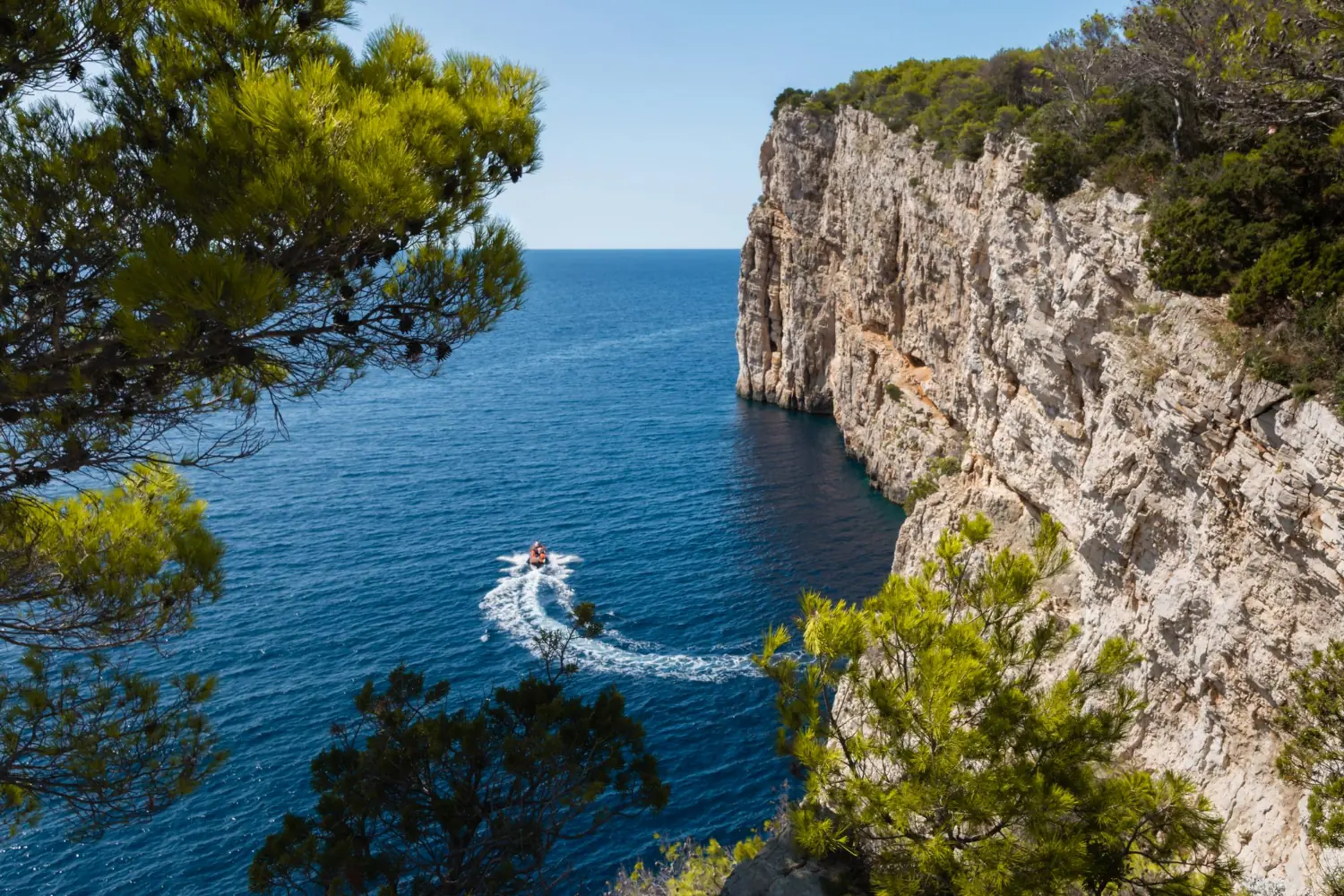
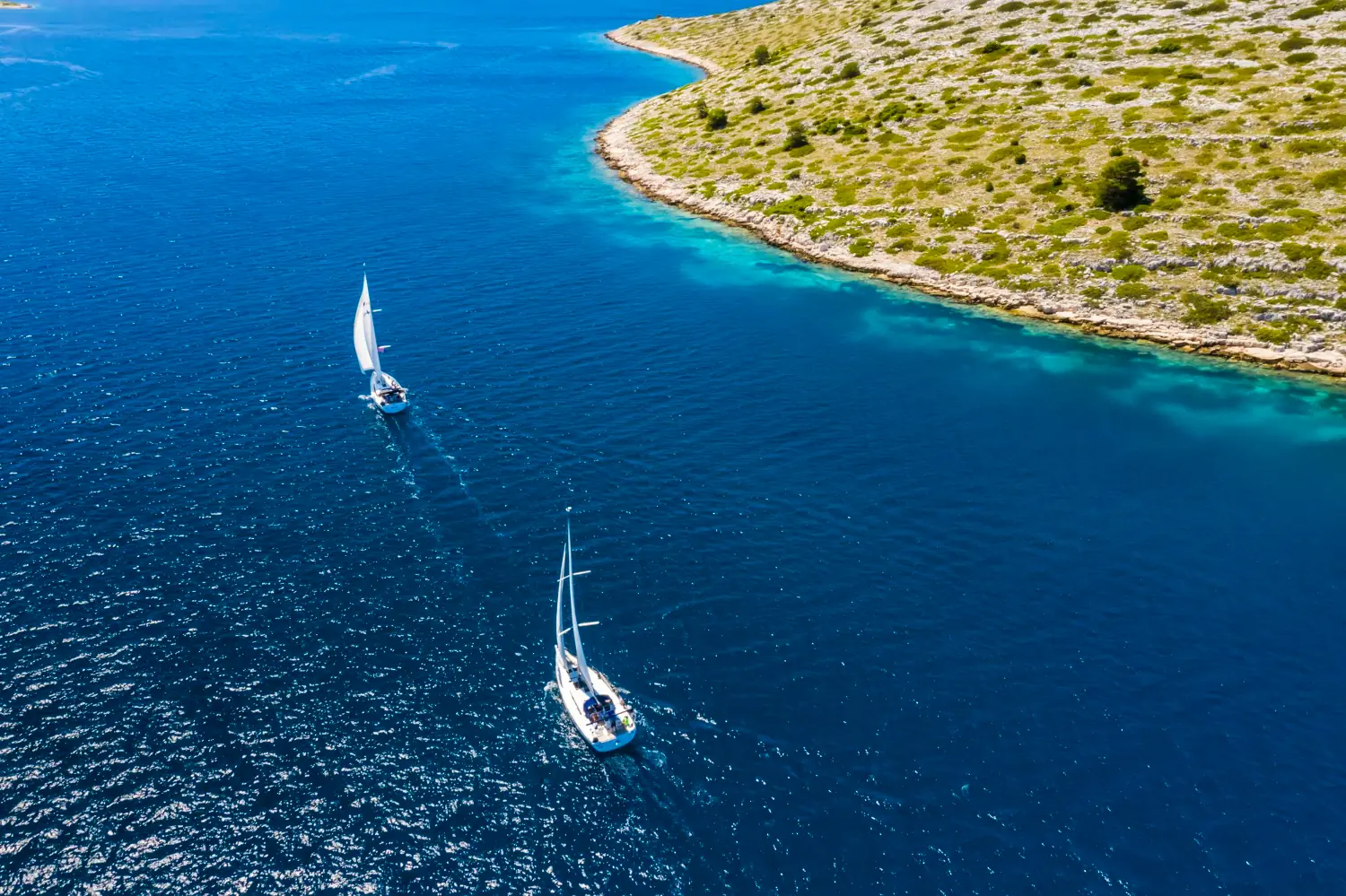

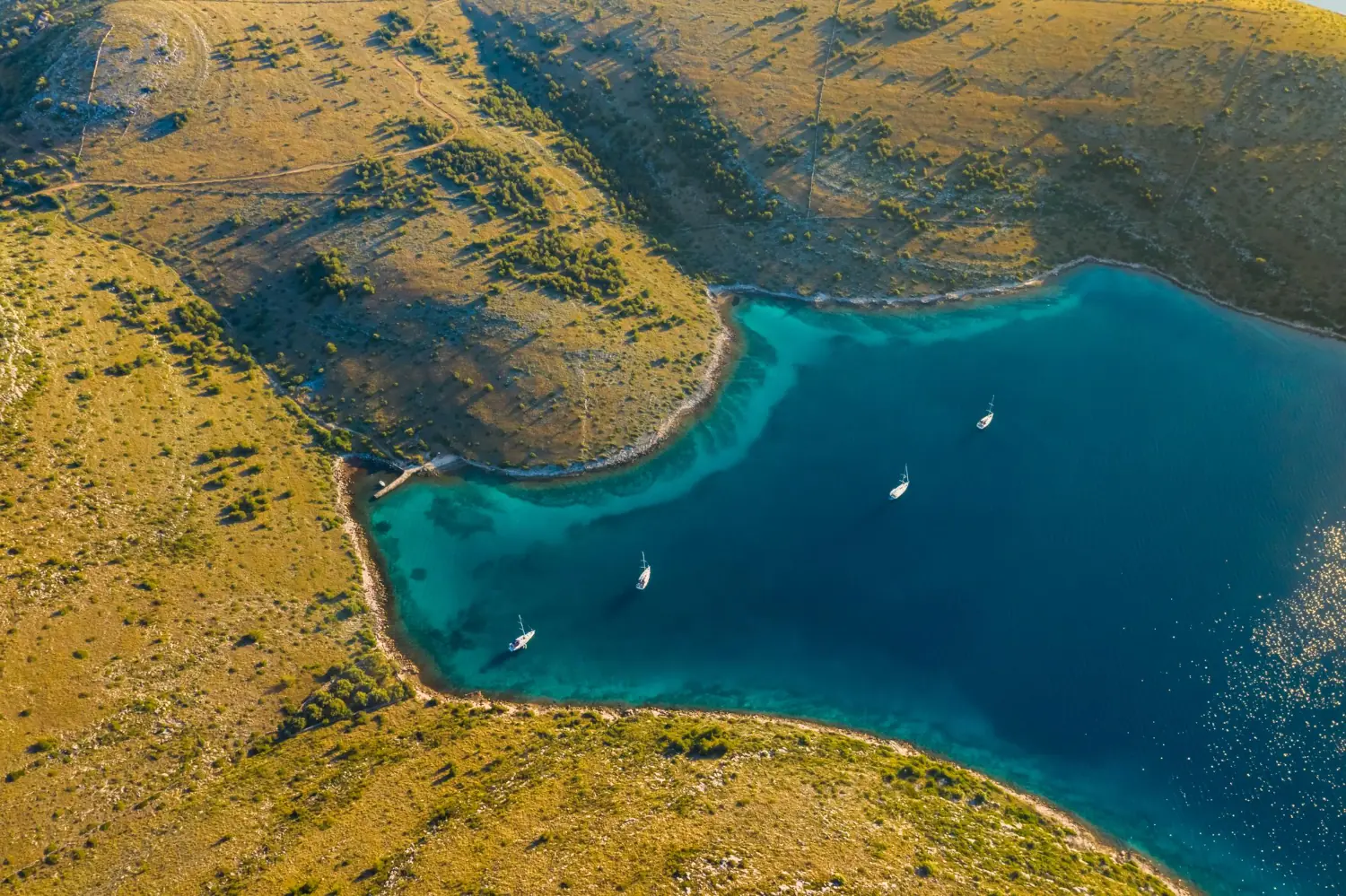
Kornati are the most indented island group in the Mediterranean – about 140 uninhabited islands, islets, and reefs form Kornati National Park in northern Dalmatia. This “stone labyrinth” surrounded by deep-blue sea is known for dramatic high cliffs on the outer islands, rich underwater life, and the untouched, rugged beauty of island landscapes. Kornati is a paradise for sailors, divers, and anyone who wants to experience the authentic island wilderness of the Adriatic.
Location📍 | Central Dalmatia – the Kornati Archipelago lies in the Adriatic Sea, south of Zadar and west of Šibenik. The park covers most of the Kornati island group in Šibenik-Knin County. |
How to get there🚗 | Kornati can be reached only by boat. Organized trips depart from coastal cities such as Zadar, Šibenik, Biograd na Moru, or from Murter (the closest point to the archipelago). A typical trip lasts all day (departure in the morning, return in the late afternoon). You can also visit by private boat (with the purchase of a permit/ticket for the vessel). By car, you first need to reach the departure port (Murter is connected to the mainland by a bridge – about an hour’s drive from Zadar). |
Best time to visit☀️🍂 | The summer season (June–September) is practically the only time to visit Kornati, as regular excursion boats operate then and the sea is typically calm enough for sailing and swimming. July and August bring the most sunny days (but also the most visitors in popular coves), while June and September are a bit quieter and the sea is still pleasant. Outside summer there are almost no organized tours, and weather conditions can be unstable (especially the strong bora wind, which can make sailing difficult). |
Ideal duration and who it’s for⏱ | A full-day trip (8–10 hours) is the only way to properly experience Kornati, with much of the time spent sailing between islands. The experience is suitable for families (kids enjoy the boat ride and swimming), couples, and all sea lovers. For passionate sailors and divers, several days in the archipelago is recommended (on your own plan or via a multi-day charter), but for most visitors one day is enough to get a strong impression of this unique island wilderness. |
Top attractions in Kornati:
- Cliffs on the islands of Klobučar, Mana and others – impressive vertical walls rising up to 80 m above the sea; the most photogenic sights of Kornati.
- Telascica Bay – a neighboring nature park on Dugi Otok, often included in tours; a calm natural harbor and the salt lake Mir.
- The islands of Mana and Levrnaka – beautiful coves for swimming; Mana also has the ruins of a movie set (an abandoned stone “village”) on the island’s top with a view.
- Kornati underwater world – rich coral reefs, fish, and shellfish; divers love sites such as underwater cliffs and the diving park around the islet Purara (diving is possible only with park approval).
- Dry-stone walls and shepherd shelters – the cultural landscape of Kornati is crisscrossed by dry-stone walls built by shepherds to enclose pastures, along with old stone huts (evidence of traditional island life).
Practical tips: You’ll spend several hours on the boat – bring sun protection (cap, sunscreen) and enough water. Most organized tours include lunch on board or in one of the coves, but it’s useful to have snacks too. Swimming is usually planned at stops (bring a swimsuit and towel); keep in mind there’s little shade or infrastructure on the islands themselves. Kornati is notorious for strong winds – if a strong bora is blowing the day before, the trip may be postponed for safety. Drones are allowed in Kornati National Park only with special permission from the park authority. Don’t leave trash or traces – the islands have no permanent residents or waste collection, so whatever you bring, take back with you.
NOTE: Trips to Kornati depend on weather conditions; check the forecast and tour status in advance. If a strong bora is blowing, the trip may be canceled for safety.
National Park Krka
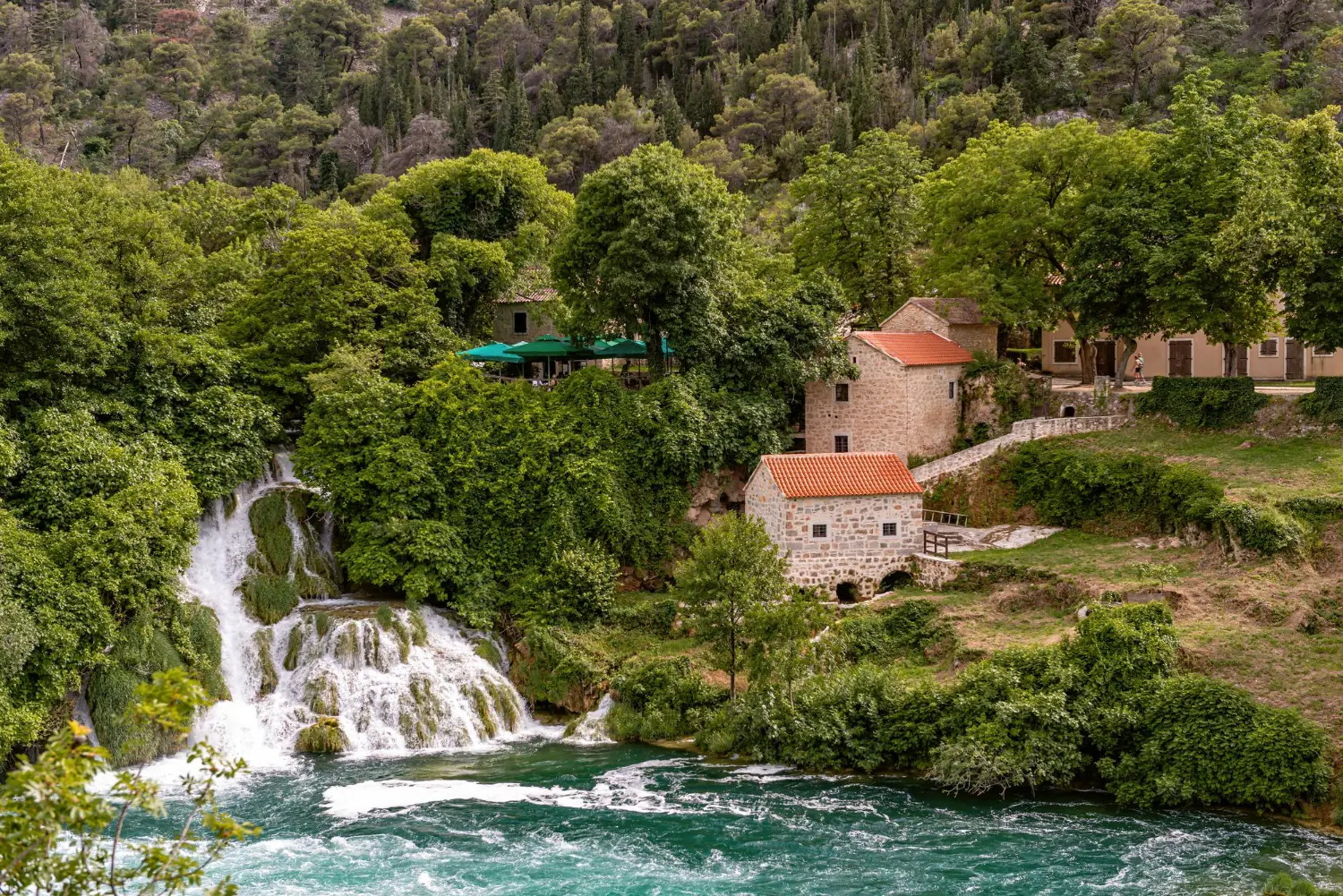

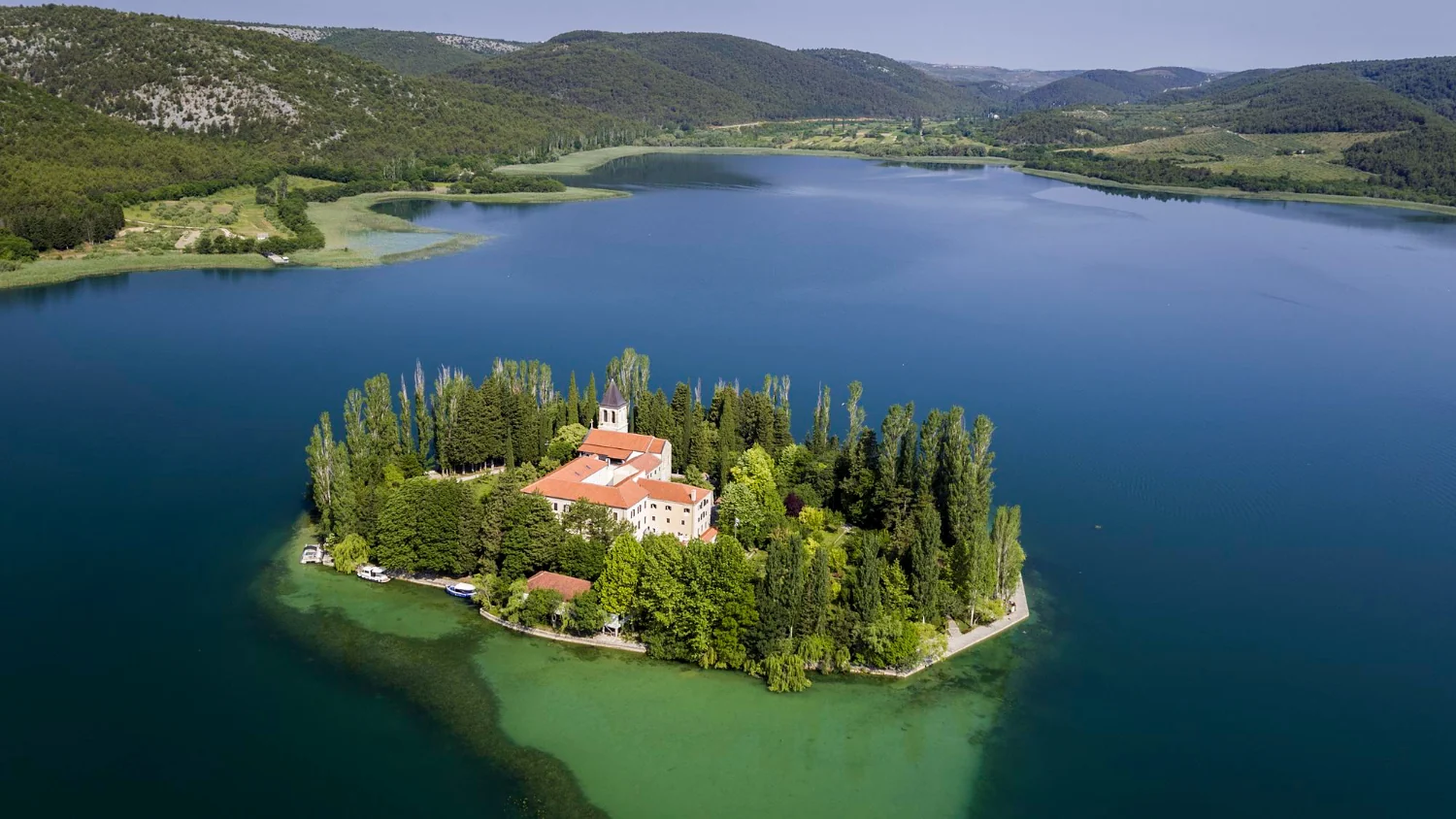
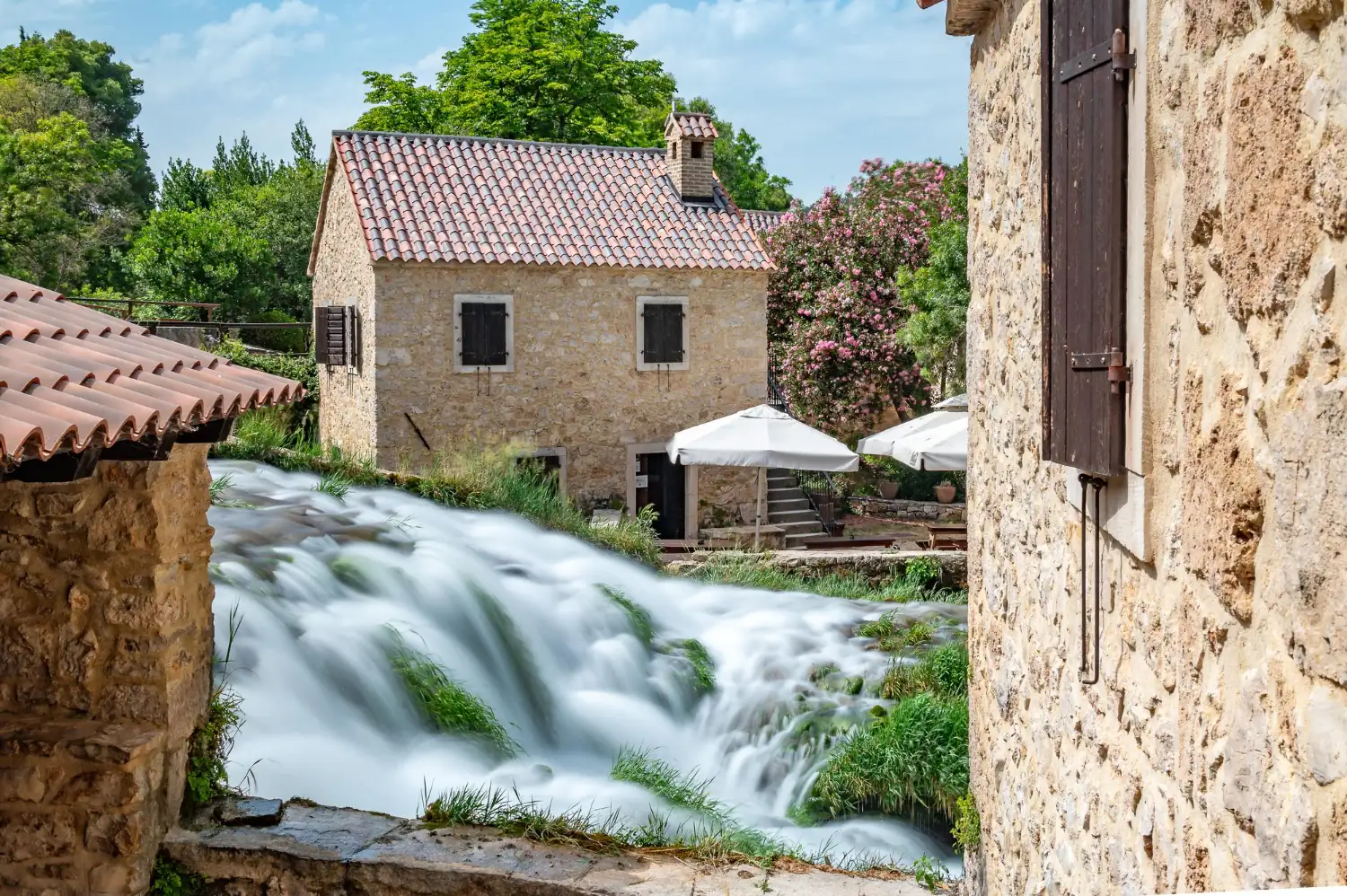
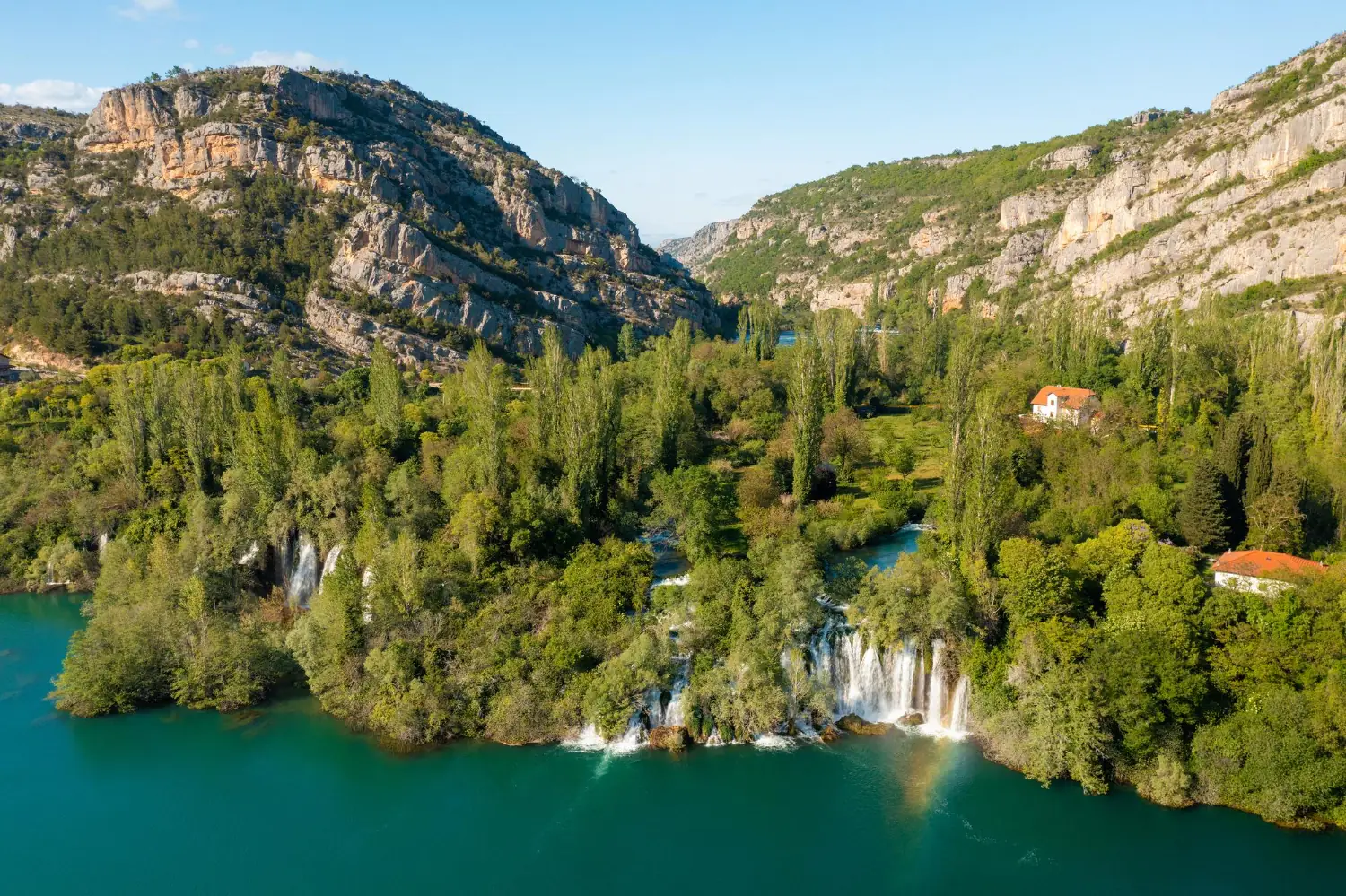
Krka is a river national park in Dalmatia known for seven impressive waterfalls formed by the deposition of tufa, a process similar to Plitvice. The biggest attractions of Krka National Park are the magnificent Skradinski buk waterfall, the picturesque Roški slap waterfall, and the islet Visovac with a historic monastery in the middle of the river. Thanks to its beautiful waterfalls and the ability to explore on foot, by boat, and by bicycle, Krka is a favorite excursion spot near the coast.
Location📍 | Northern Dalmatia – the Krka River runs through Šibenik-Knin County. The park covers the area along the Krka River from Knin (where it springs) to Skradin (where it flows into the sea, near Šibenik). |
How to get there🚗 | There are two main land entrances to Krka National Park – Lozovac (road access from the direction of Šibenik) and Skradin (park boats depart from the town of Skradin). By car: the Lozovac entrance is ~15 minutes from Šibenik or ~1 hour from Split. By bus: regular lines run to Skradin from Šibenik and Zagreb; from Skradin the park boat takes you to Skradinski buk (included in the ticket price). Organized day trips to Krka are available from nearby cities (Split, Zadar, Šibenik). |
Best time to visit☀️🍂 | Spring (April–May) is excellent – the river is full, waterfalls are powerful, and the weather is pleasant. Early summer (June) is also great, before the biggest crowds. In July and August the park is very busy, so it’s best to arrive early in the morning or later in the afternoon to avoid crowds. Autumn (September) offers a nice mix of fewer visitors and still decent water levels. In winter some parts of the park are closed, but visits are possible with a calmer atmosphere. |
Ideal duration and who it’s for⏱ | For the basic Krka experience (Skradinski buk and the ethno village), set aside about 3–4 hours. If you add a boat ride to Visovac or Roški slap, the total visit can be 5–6 hours (a half-day trip). The park suits all ages: families with children, couples, and solo visitors. Nature and photography lovers can easily spend the whole day exploring different corners of the park. |
Top attractions in Krka:
- Skradinski buk – the largest and most famous Krka waterfall with wooden trails and bridges enabling a circular walk below and above the falls.
- Visovac – a small islet in the middle of the river with a Franciscan monastery; excursion boats take you there, and the view is breathtaking.
- Roški slap – a wider, calmer waterfall upstream, known for a series of small cascades called “Necklaces”; a trail climbs stairs to a viewpoint and Oziđana Cave.
- Manojlovac waterfall – the tallest waterfall on the Krka (about 60 m high) located further north; a short trail leads to the viewpoint.
- Eco-village and mills – near Skradinski buk you’ll find restored old watermills and an ethno display of traditional river crafts.
Practical tips: In summer, bring a swimsuit – although swimming under Skradinski buk is prohibited, you can cool off downstream from Skradin or at certain less sensitive spots; check current information when visiting. Trails are wooden and dirt paths – wear comfortable shoes. Food and drinks are available within the park (restaurants near Skradinski buk), but prices are higher; bringing your own water and a light snack is recommended. Avoid peak crowds (10am–2pm in season) – it’s better to visit earlier or later in the day. Protect your skin from sun and mosquitoes (insects can be common near the water).
NOTE: Swimming under Skradinski buk is no longer allowed to protect the tufa barriers. Swimming is permitted only in specially marked areas downstream, so check where it’s possible before you arrive.
National Park Mljet
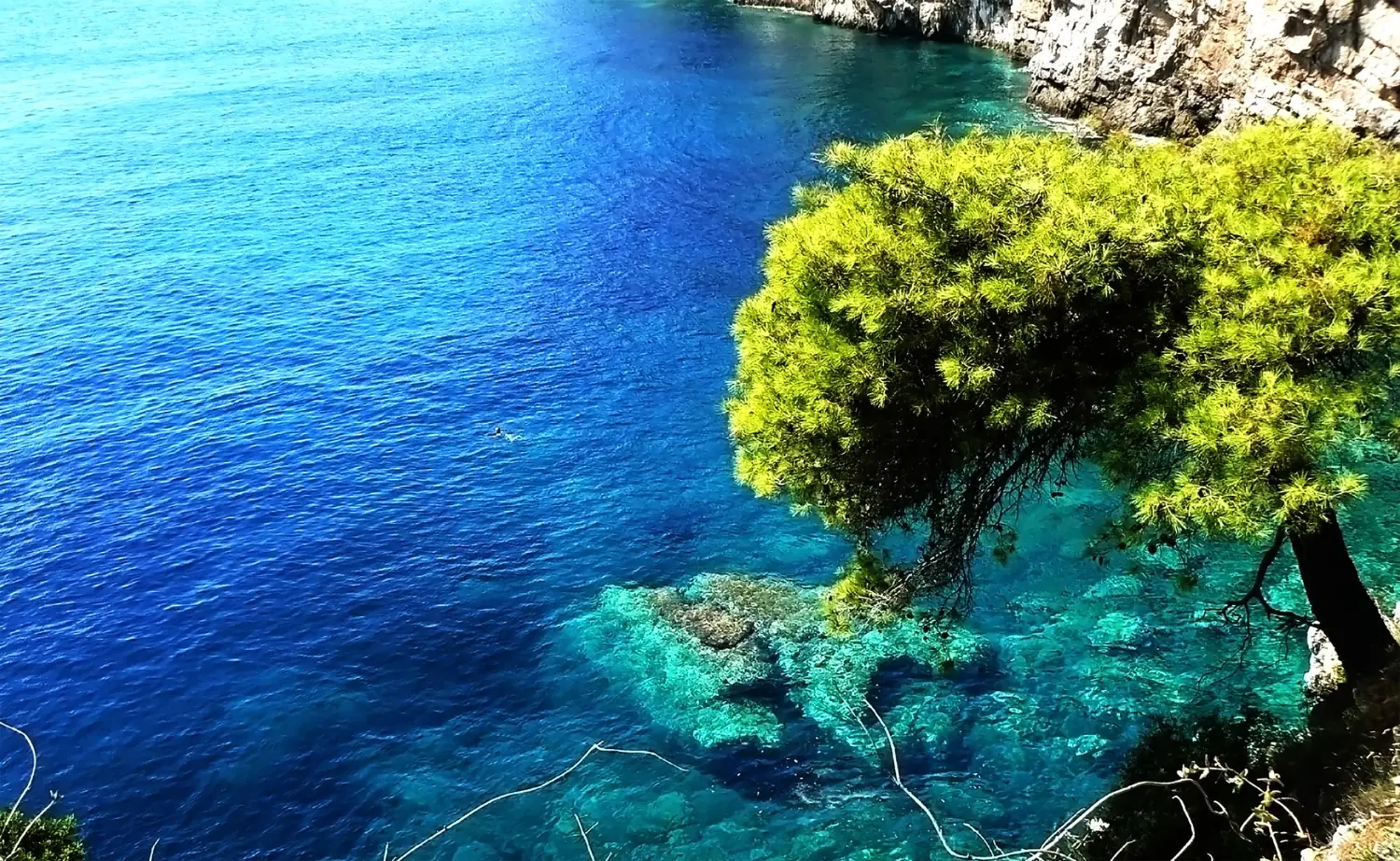
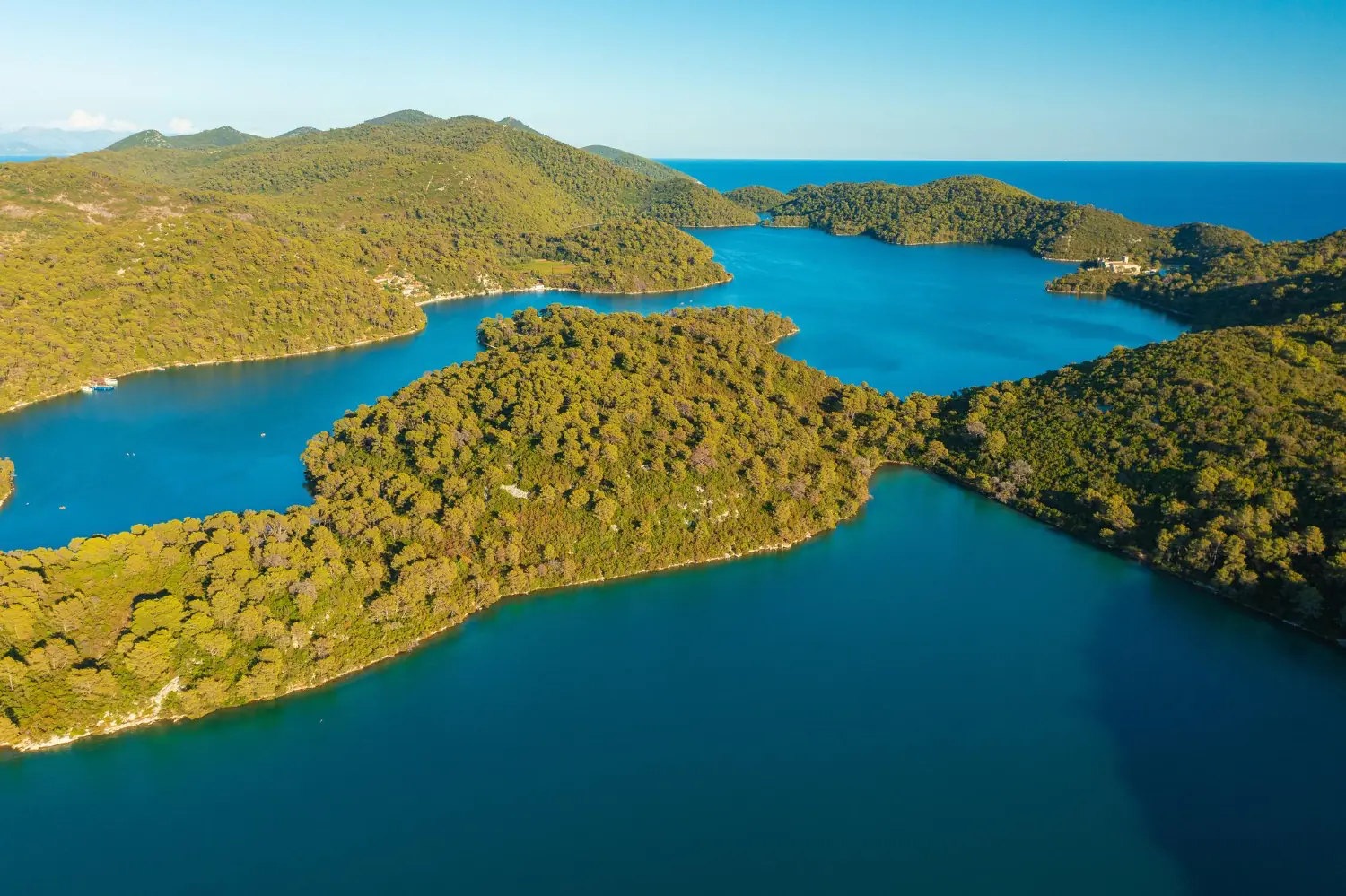
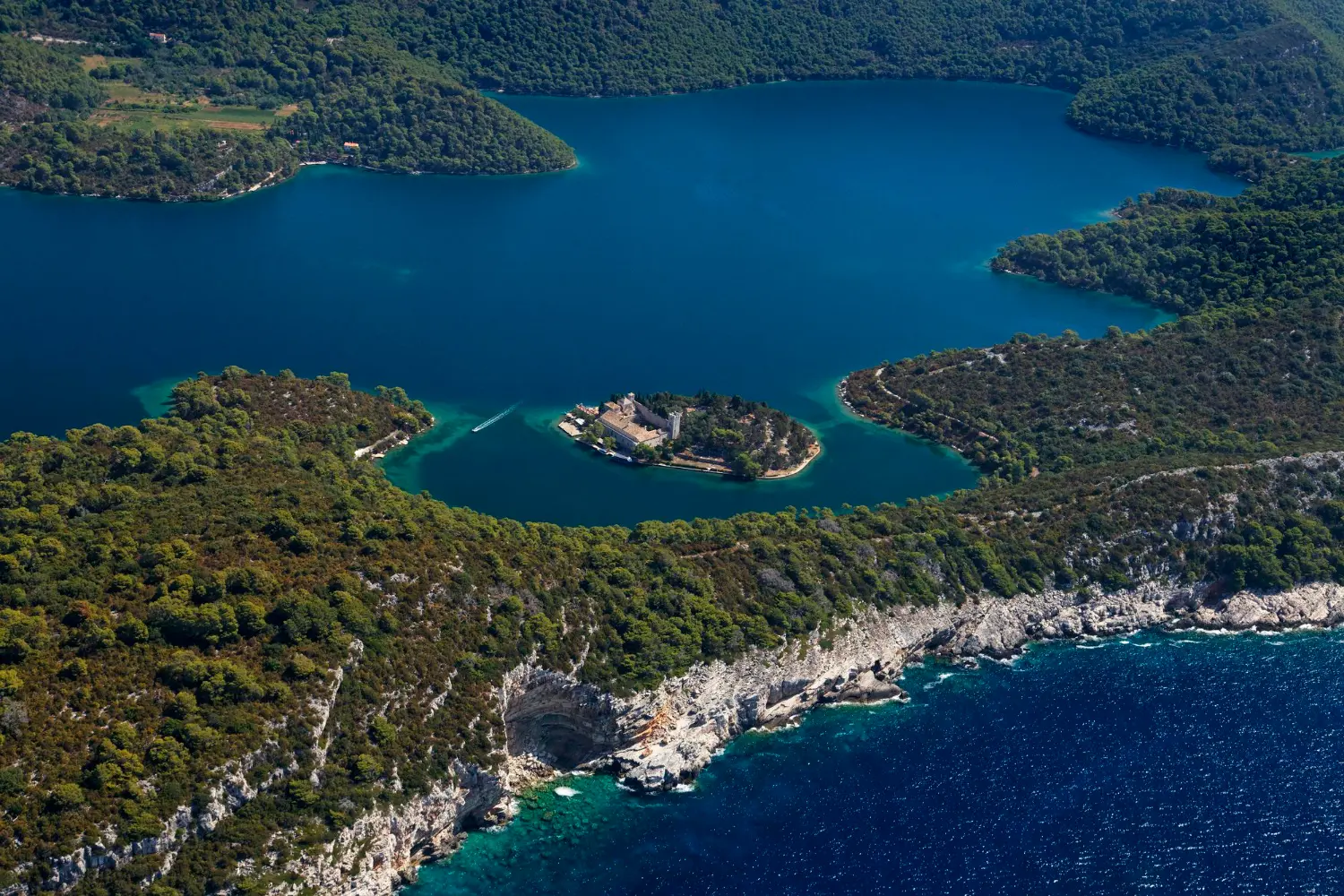

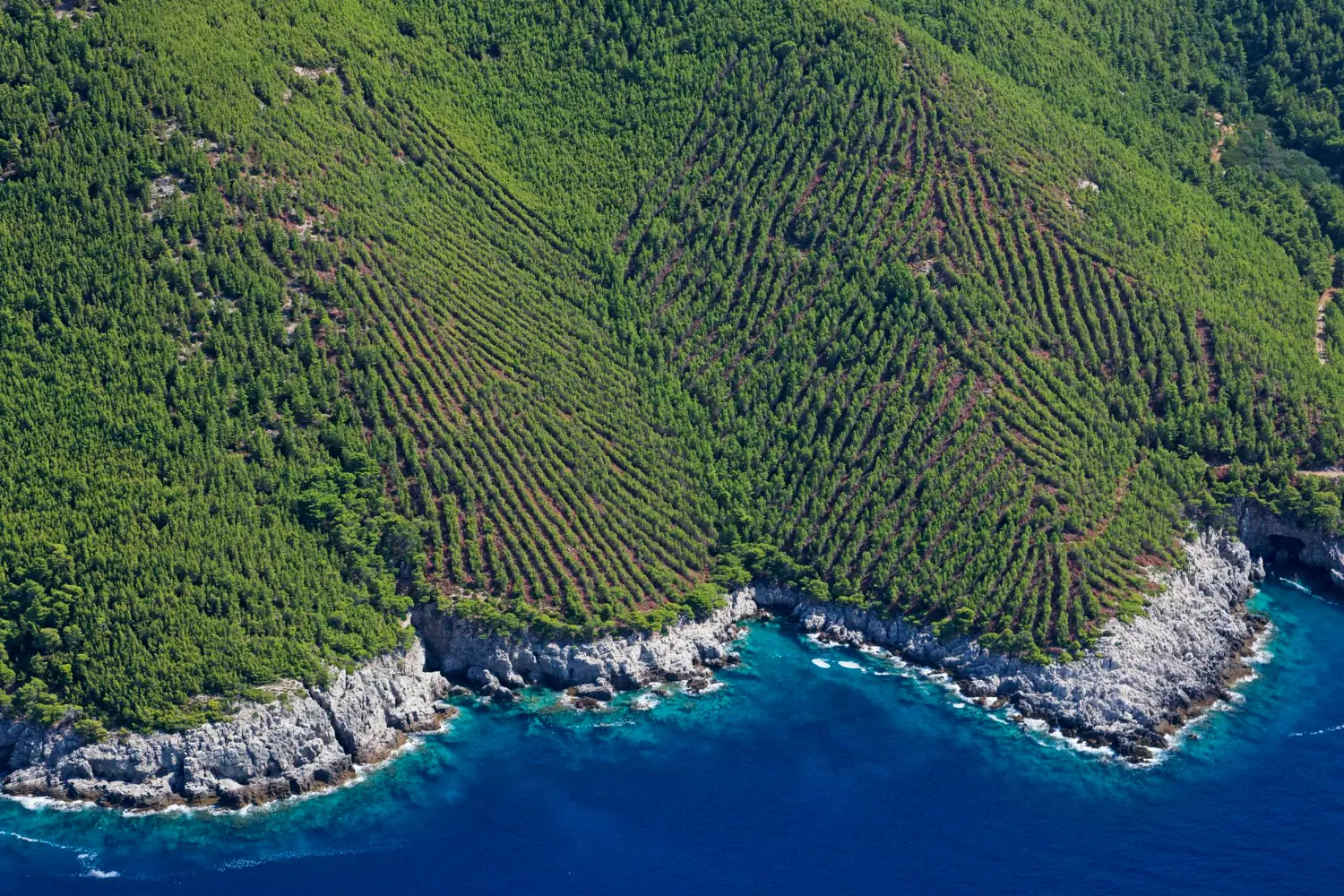
Mljet is one of Croatia’s most beautiful islands, with its western third designated as a National Park. Mljet National Park is known for two magical saltwater lakes – the Great Lake and the Small Lake – surrounded by dense Mediterranean forest, and for its rich cultural heritage (a 12th-century Benedictine monastery on a small islet in the middle of the Great Lake). This “green island” stands out for its calm, unspoiled nature and is ideal for relaxing with swimming, cycling, and exploring forest trails.
Location | Southern Adriatic – the island of Mljet is in Dubrovnik-Neretva County, southwest of the city of Dubrovnik. The national park covers the western part of Mljet, including the settlements of Polače and Pomena. |
How to get there | By boat lines: a catamaran runs from Dubrovnik to Mljet (daily in season, docking in Pomena – the entrance to the NP) in about 1 hour 20 minutes. There are also ferries from the mainland (Prapratno – Sobra line); Sobra is outside the NP boundaries, so from there it’s about a 30-minute drive to the park by car/bus. Within the NP you can get around on foot, by bicycle (rentals available in Pomena and Polače), or by the official electric mini-bus. It’s possible to bring a car by ferry, but roads within the NP are narrow – many prefer to leave the car in Pomena and explore on foot or by bike. |
Best time to visit | Summer (June–September) is peak season on Mljet – sunny and warm, ideal for swimming in the salt lakes (water temperatures in summer can reach 27°C). July and August are the busiest, so June or September are great choices for a quieter experience with fewer crowds. Spring is green and peaceful (the sea is colder for swimming), and autumn remains pleasant until mid-October. In winter, services are limited, but the park can still be visited if you don’t mind cooler weather. |
Ideal duration and who it’s for | It’s recommended to spend at least one full day on Mljet (many choose to stay overnight for the full experience). To cover the main highlights (the lakes, monastery, swimming, cycling), 6–8 hours at an easy pace is enough. Mljet is ideal for couples and anyone seeking peace, families with children, and adventurers who like a mix of activity and relaxation. |
Top attractions on Mljet:
- The Great and Small Lake – two connected saltwater lakes surrounded by pine forest; the Great Lake is especially impressive, with a turquoise color and a small islet in the middle.
- The islet of St. Mary and the monastery – in the middle of the Great Lake is a small islet with a 12th-century monastery and church; a small boat takes you there about once an hour.
- Cycling and walking path around the lakes – well-maintained ~9 km trails follow the shore of the Great and Small Lake; perfect for an easy walk or bike ride with beautiful views.
- Polače Bay – a picturesque bay where one of the park entrances is; the ruins of a 3rd-century Roman palace lie along the coast.
- Odysseus’ Cave – a sea cave outside the NP boundaries; many visit by boat or on foot from Babino Polje, and according to legend it’s where Odysseus stayed.
Practical tips: There are no ATMs within the NP – bring cash for tickets and any purchases. The boat ride to the islet of St. Mary is included in the ticket price – check the schedule so you can plan it (the boat runs roughly once an hour, more often in peak season). Swimming is allowed in the lakes – the water is brackish and very clean. In summer, protect your skin from the sun and drink plenty of fluids, as your visit will include a fair amount of walking/cycling. The island road to the park has many curves; parking in Pomena is limited. To protect the island, follow the rules – don’t take anything from nature, don’t litter, and avoid loud noise.
NOTE: When planning a trip to Mljet, check boat schedules from Dubrovnik and Prapratno; routes change depending on the season. During peak season, buying tickets earlier is recommended.
Paklenica National Park

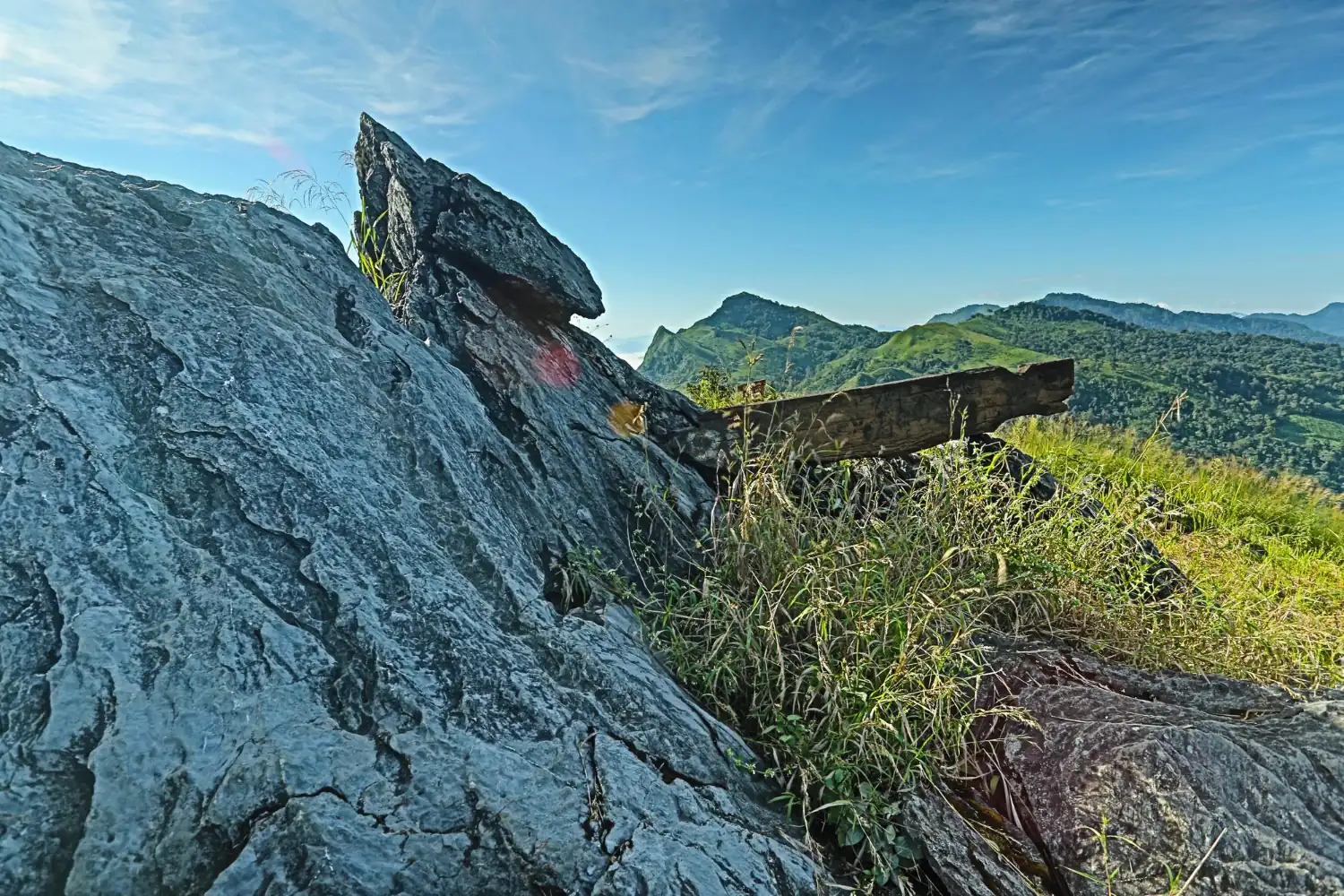
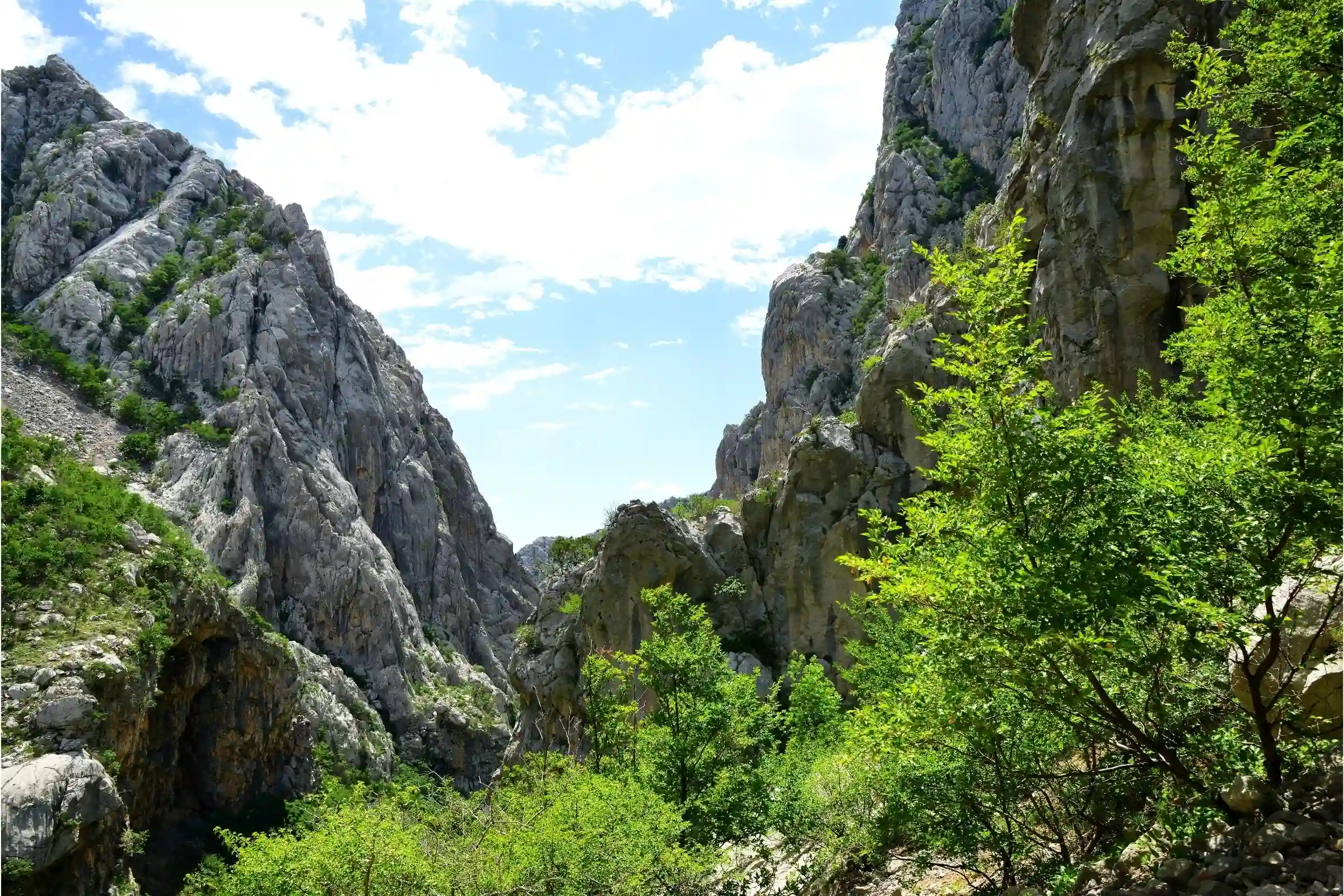

Paklenica encompasses spectacular canyons and mountain peaks of southern Velebit in Northern Dalmatia. The park’s main attractions are two deep canyons, Velika and Mala Paklenica, carved from the sea coast up to the high ridges of Velebit, as well as impressive cliffs such as Anića kuk (a 400 m high rock face popular among climbers). Paklenica is a world-famous climbing destination and a paradise for hikers.
Location | Zadar region (Northern Dalmatia) – Paklenica National Park is located on the southern slopes of Mount Velebit, just above the coast between the towns of Starigrad-Paklenica and Obrovac. The park entrance is in Starigrad (about 45 km northeast of Zadar). |
How to get there | By car: from Zadar the drive takes about 50 minutes (via the A1 motorway to the Maslenica exit, then locally). The main entrance to the park (Velika Paklenica) is located about 2 km from the center of Starigrad. By bus: intercity buses run to Starigrad; from the bus stop in Starigrad it is about a 20-minute walk to the entrance. There is no transport within the park – exploration is exclusively on foot; steep mountain trails ascend from the canyon toward the peaks. |
Best time to visit | Spring (April – June) and autumn (September, early October) are ideal – temperatures are pleasant for hiking/climbing, nature is lush and green (spring) or colorful (autumn), and the streams carry water. In summer (July–August) it is best to start early in the morning due to the heat in the canyon. In winter, the higher areas of Paklenica are covered in snow – hiking is possible with appropriate equipment, but rock climbing is off-season. |
Ideal duration and who it’s for | For a basic experience of Velika Paklenica (a walk to the Mountain Hut and back), 4–6 hours are needed. Hiking enthusiasts can spend the entire day exploring trails and climbing to viewpoints. Paklenica is excellent for adventurers and hikers, but families can also walk through the initial part of the canyon. Climbers often stay several days in Starigrad to climb various routes. |
Top attractions in Paklenica:
- Velika Paklenica Canyon – a dramatic gorge with cliffs rising over 700 m; the canyon walk follows the stream, passing climbing sites and old mills all the way to the Mountain Hut.
- Anića kuk – a monumental 400 m high rock face dominating the canyon; a climbing mecca with over 300 routes of varying difficulty.
- Manita peć – a cave in Velika Paklenica Canyon, arranged for guided visits (30-minute tour); known for its rich stalactites and stalagmites.
- Mala Paklenica Canyon – a narrower and wilder canyon parallel to Velika Paklenica; a more demanding route for experienced hikers, with no fully arranged trail along its entire length.
- Vaganski vrh and Sveto brdo – the highest peaks of Velebit accessible via long hiking tours from Paklenica; offering spectacular views of the sea and mountains.
Practical tips: Be sure to wear sturdy hiking boots or sports shoes – the trails are rocky and ascents demanding. Water: there is a drinking water source at the Mountain Hut, but bring enough with you. In summer, start early to avoid the afternoon heat in the canyon; some parts have little shade. Climbers need their own equipment; check routes and climbing conditions in advance. In case of bad weather (heavy rain), avoid the canyon due to possible flash floods. Overnight stays in the park are allowed only in mountain facilities with prior notice; wild camping is not permitted.
NOTE: During the summer season, try to enter the park as soon as it opens (usually from 6 a.m.) to avoid heat and crowds at the beginning of the trail. In winter, check snow conditions and equipment before planning ascents to the higher parts of Velebit.
Plitvice Lakes National Park
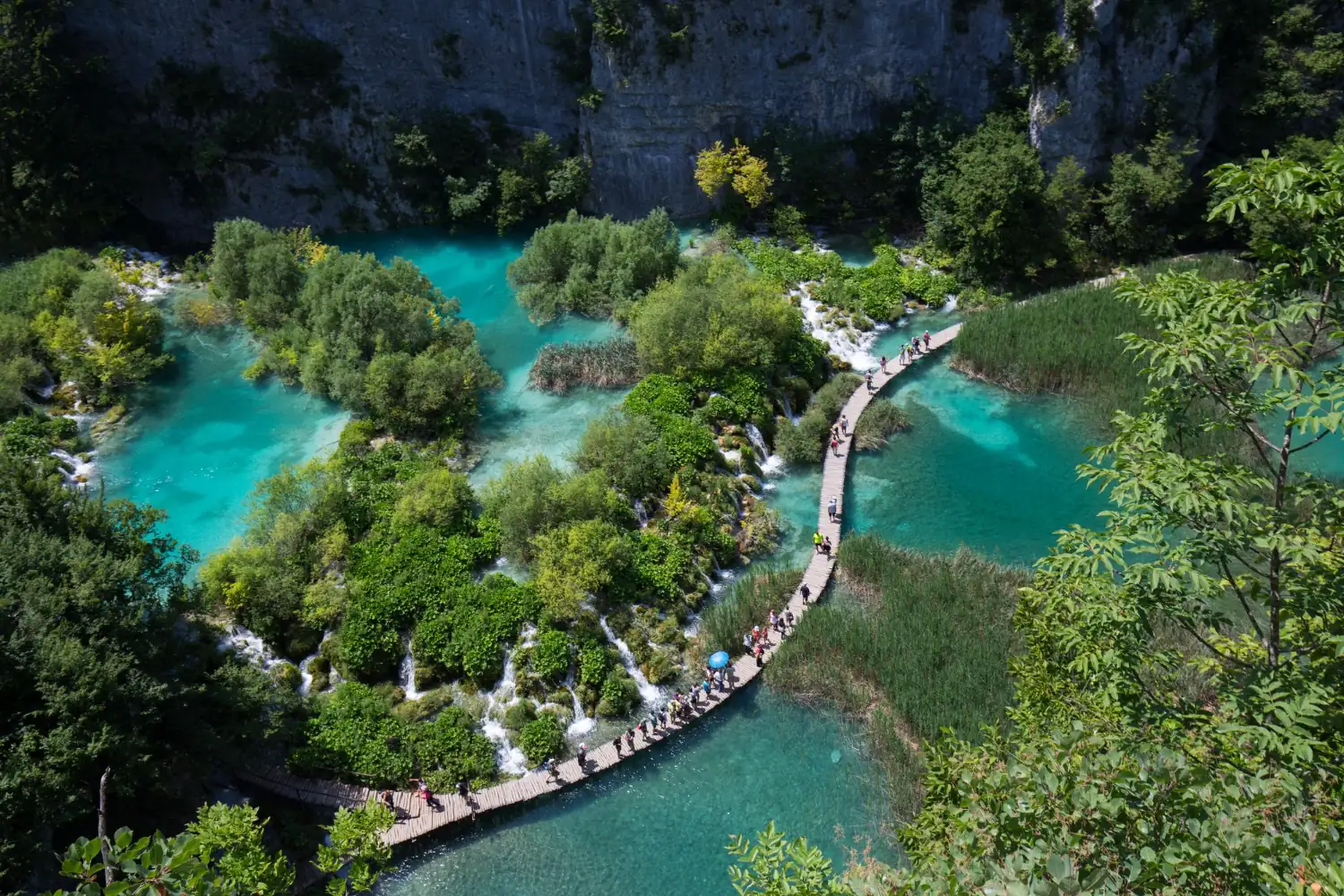
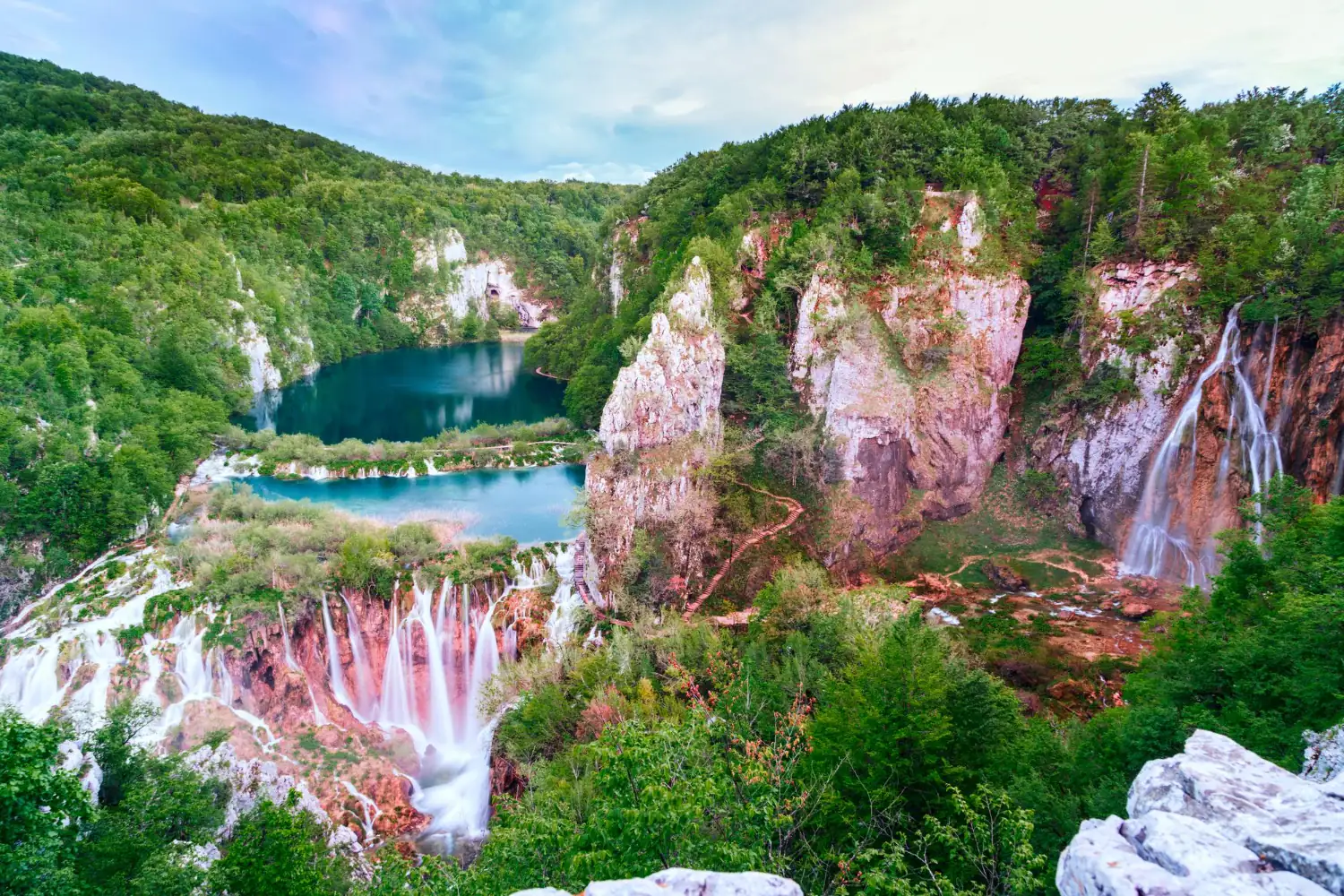

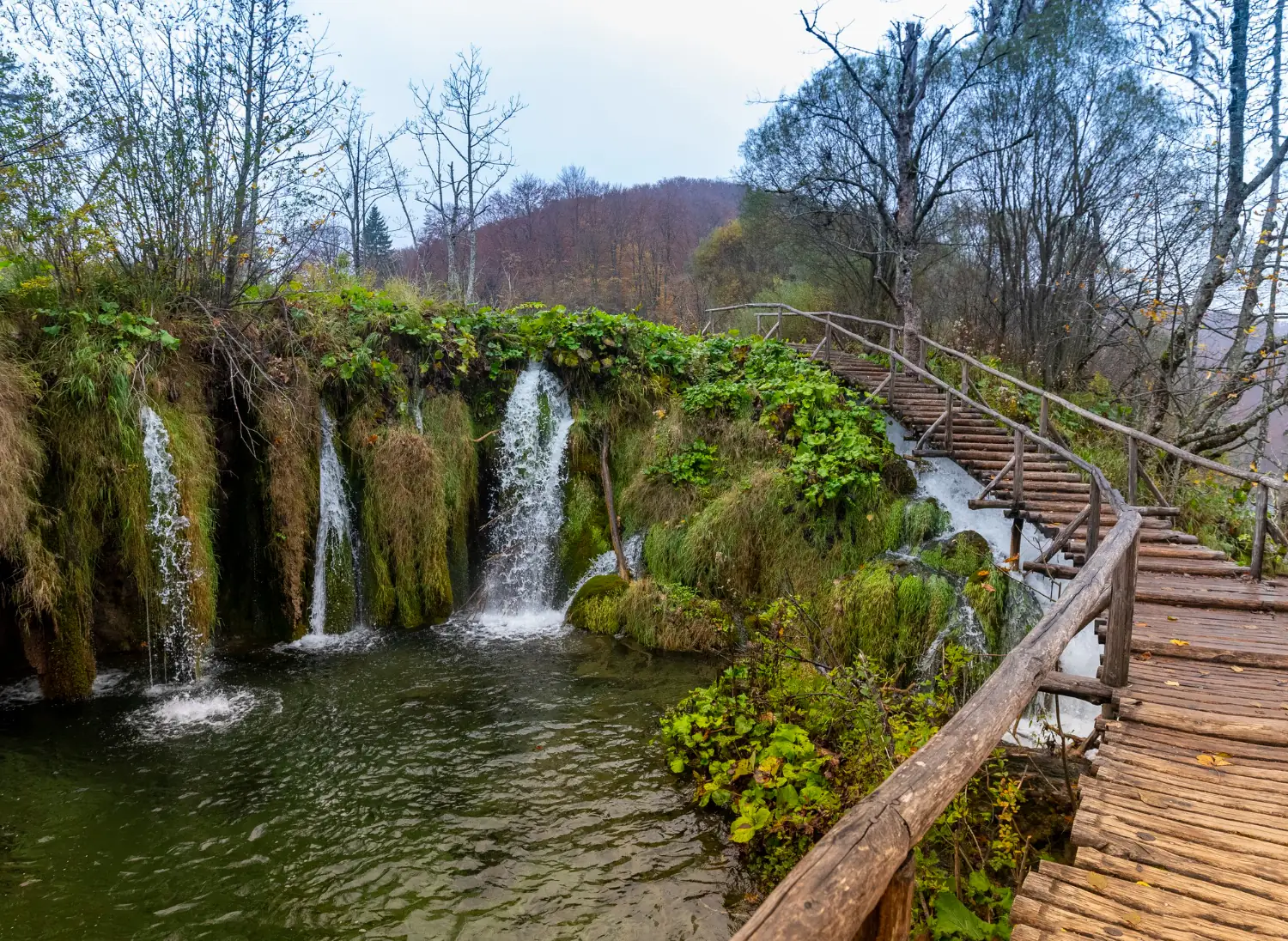
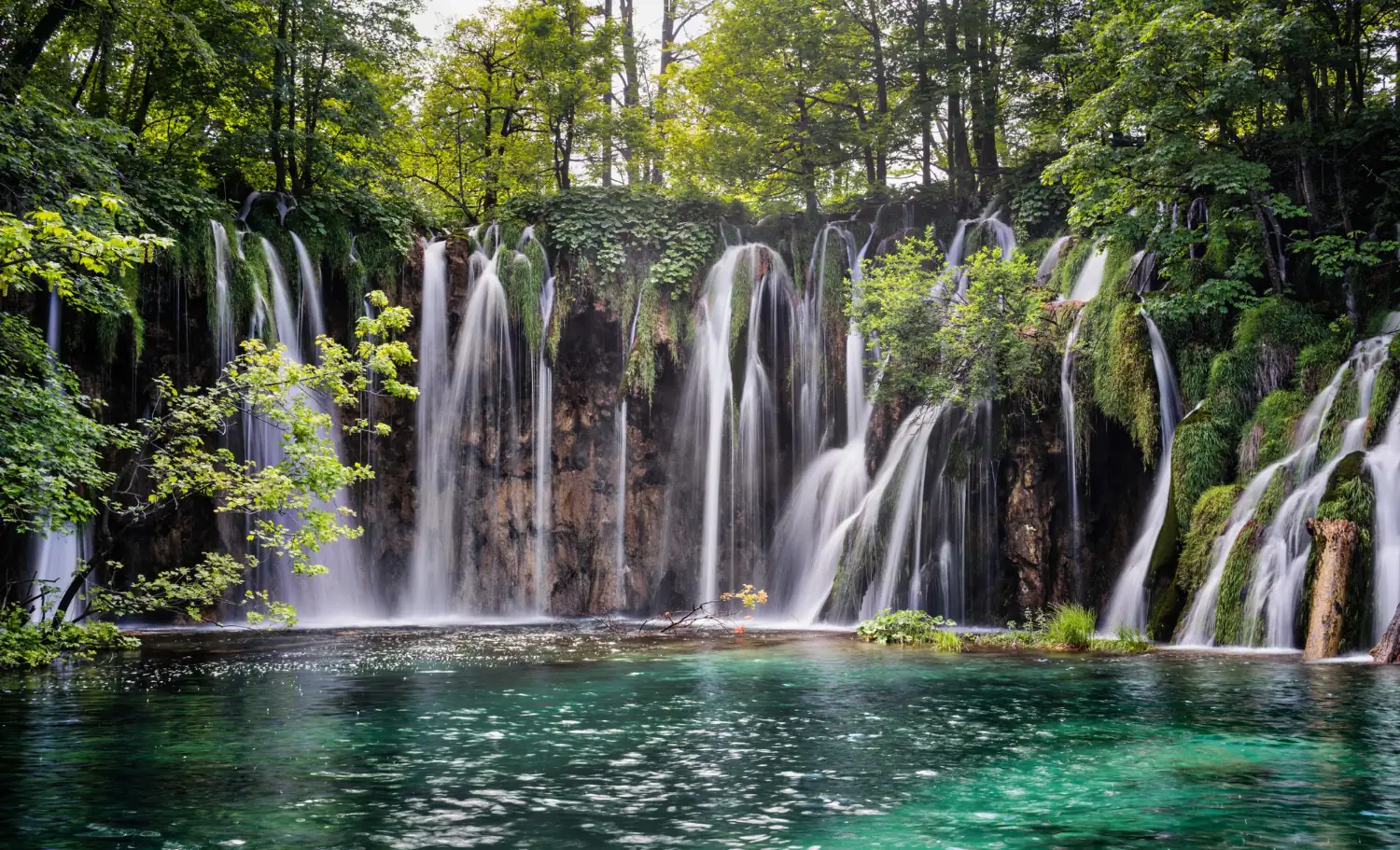
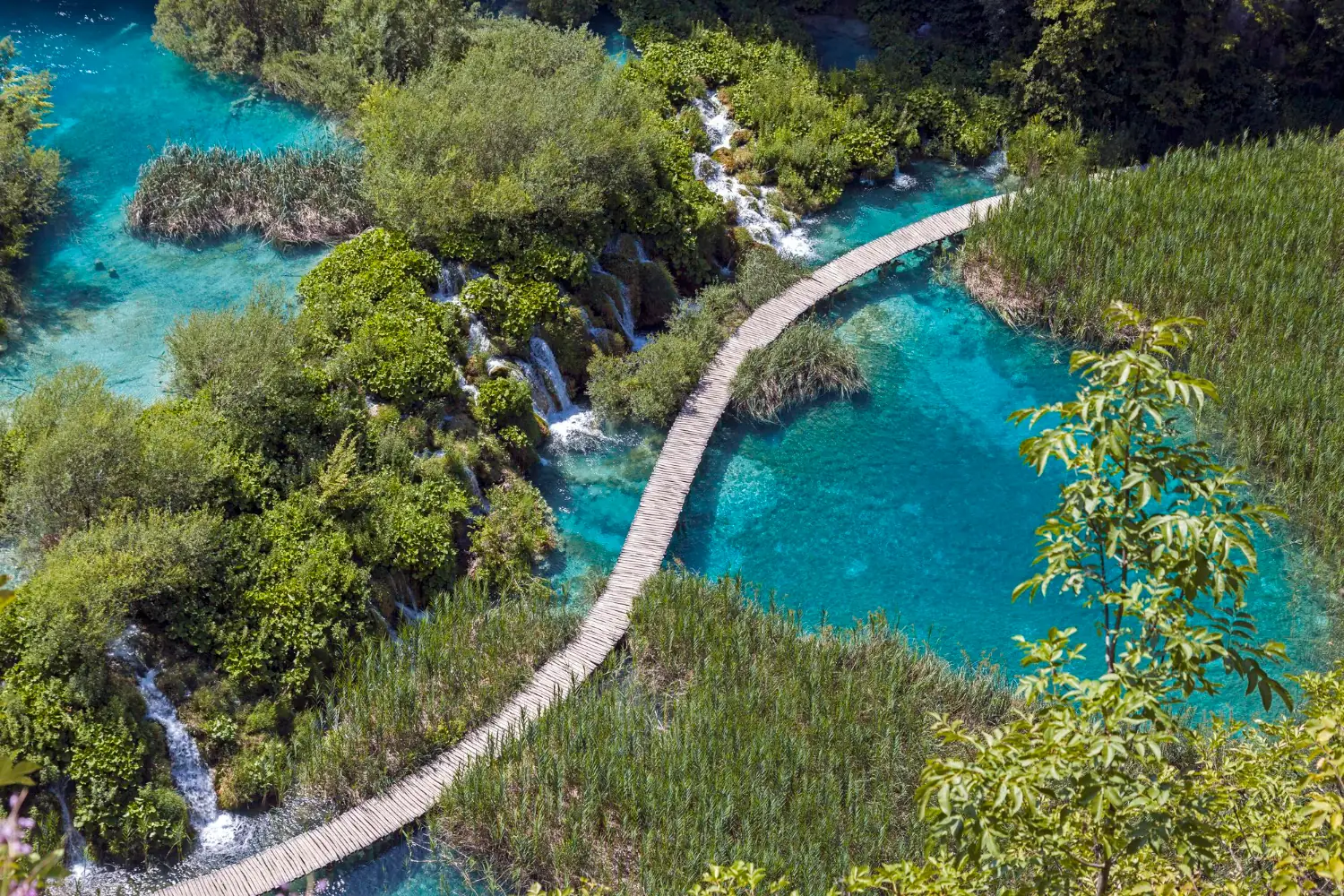
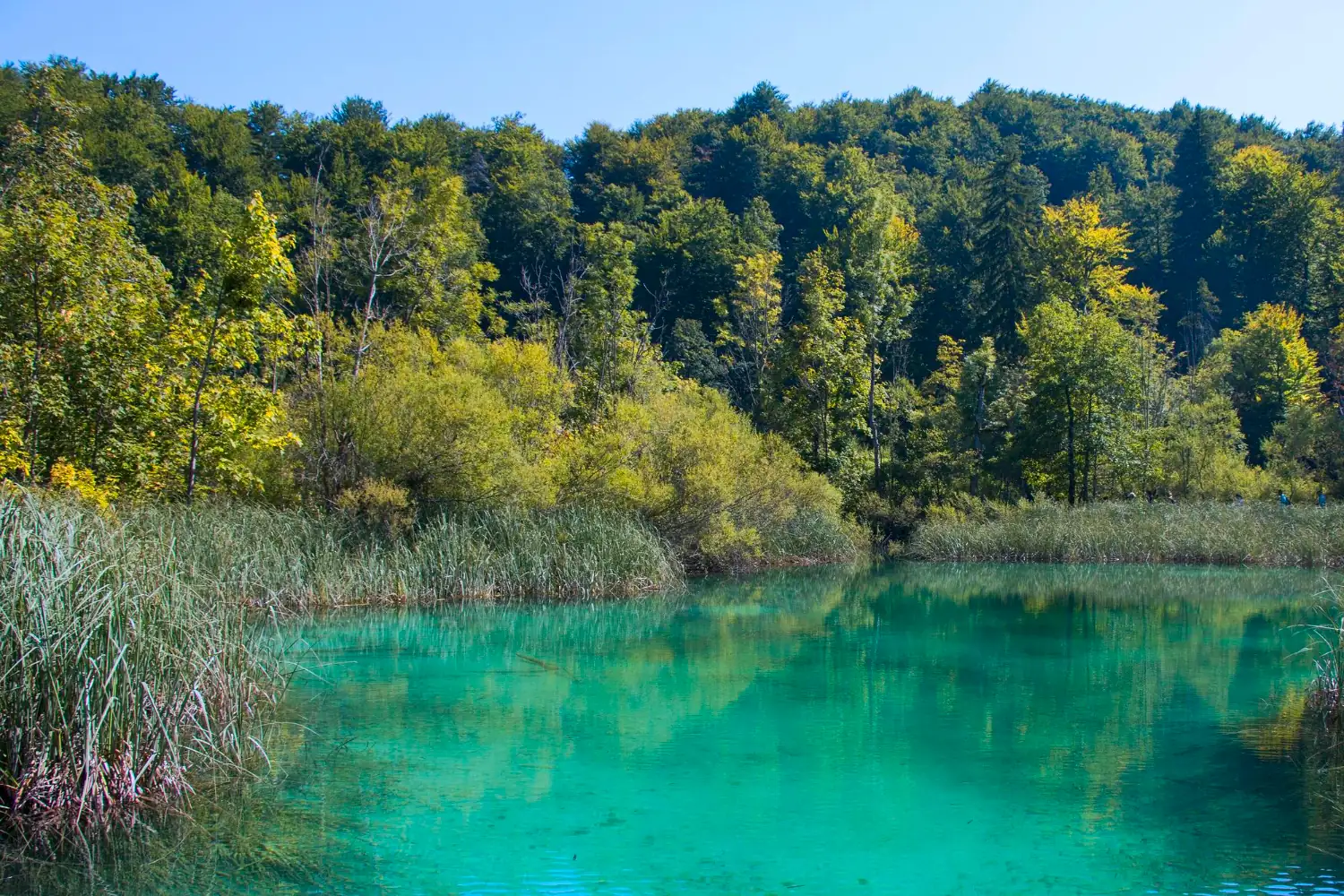

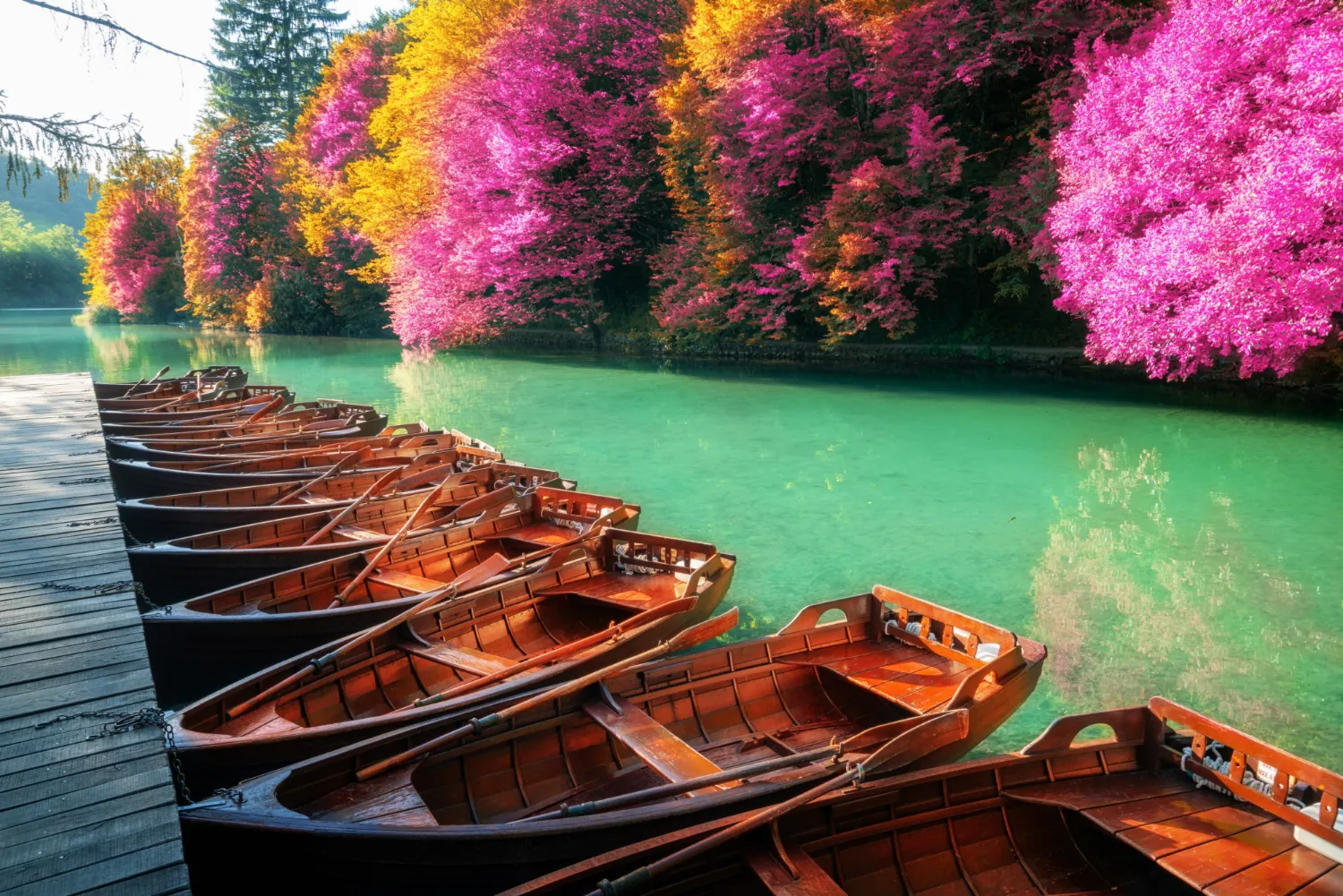
Plitvice Lakes is the oldest, largest, and most visited national park in Croatia (a UNESCO World Natural Heritage site). The park is famous for 16 terraced lakes of crystal-clear turquoise color, connected by a series of more than 90 waterfalls – including the spectacular Great Waterfall (78 m). Surrounded by dense forests, Plitvice Lakes National Park offers visitors a unique experience of walking along wooden paths above the lakes and taking boat rides, creating the feeling of a magical, fairy-tale landscape.
Location | Plitvice Lakes are located in Lika-Senj County. The park lies roughly halfway between Zagreb and Zadar (about 130 km from Zagreb and 120 km from Zadar). The main state road D1 runs alongside the park. |
How to get there | By car: from Zagreb 2–2.5h (via the A1 motorway to Karlovac, then the D1 via Slunj); from Zadar 1h 45min to 2h (via the A1 motorway to the Gornja Ploča exit, then via Udbina). The park has two main entrances with parking (Entrance 1 – Rastovača and Entrance 2 – Hladovina). By bus: regular routes operate from Zagreb, Karlovac, Zadar, and Split. Within the park, transport between the Upper and Lower Lakes is organized by shuttle buses/trains and electric boats. |
Best time to visit | Every season has its own charm. Spring (April–May) brings high water levels at the waterfalls and the awakening of vegetation. Summer (June–August) offers long daylight and warmth, but also the highest number of visitors – it is recommended to visit early in the morning or later in the afternoon. Autumn (September–October) is considered by many to be the most beautiful: the waterfalls are still abundant, and the forests around the lakes glow in golden and red tones. In winter the park takes on a fairy-tale look under snow; parts of the trails may be closed. |
Ideal duration and who it’s for | Plitvice offers several marked routes, from short walks (~2–3 hours) to full-day tours (6–8 hours). Most visitors spend 4–6 hours to see the main attractions. The park is suitable for a wide audience – from families with children to older visitors and photographers. |
Top attractions at Plitvice Lakes:
- Great Waterfall – the highest waterfall (78 m) located at the end of the Lower Lakes; the view from the base is breathtaking, especially in spring when the water curtain is at its most impressive.
- Lower Lakes and canyon – four lower lakes set in a deep canyon; a walk along wooden paths right next to turquoise water and waterfalls that plunge down from the Upper Lakes.
- Upper Lakes – 12 larger lakes surrounded by forest; this area is also home to the beautiful Galovački Buk waterfall.
- Boat ride on Lake Kozjak – a relaxing ride by electric boat across the largest lake in the middle of the park.
- Oči Ćorića viewpoint – a popular lookout above the Great Waterfall and the Lower Lakes canyon; a short, steep path leads to a panoramic spot, ideal for photography.
Practical tips: During the season, tickets should be purchased online in advance for a specific entry time, as daily entry is limited. Choose a route that matches your time and fitness level; route maps are available on the park plan. Wear comfortable sports footwear, and bring water and something to snack on. In summer, bring a hat and sun protection; in winter, dress warmly. Swimming is not allowed in the lakes. Avoiding crowds: the busiest period is 10 a.m.–2 p.m.; enter as soon as the park opens (around 7 a.m. in summer) or later in the afternoon.
NOTE: In high season, online ticket reservations are recommended at least a few days in advance; without a reservation, you may not be able to enter the park on your desired day.
Nacionalni park Risnjak


Risnjak is a forested mountain national park in Gorski Kotar, named after the lynx — a rare wild cat that inhabits this area. The park includes the Risnjak massif (peak 1528 m) and Snježnik, as well as the source area of the Kupa River. Risnjak National Park is known for its preserved mountain forests, exceptional biodiversity, and attractive viewpoints, making it a favorite among hikers and wilderness lovers.
Location | Gorski Kotar (Primorje-Gorski Kotar County) — the park is located about 15 km east of the town of Delnice and 30 km north of Rijeka, close to the border with Slovenia. |
How to get there | By car: from Zagreb ~2h (A6 motorway to Delnice, then local road 12 km to the village of Crni Lug — the park’s main headquarters), from Rijeka ~45 min. By bus: there is no direct line to Crni Lug, but buses run to Delnice; from there a taxi is needed. There is no public transport inside the park — movement is via hiking trails. |
Best time to visit | Summer (June–August) is the most popular — temperatures in Gorski Kotar are pleasant. Spring and autumn are also beautiful: spring brings blooming meadows and high water levels of the Kupa, while autumn offers spectacular foliage colors. Winter creates an idyllic snowy landscape but is demanding for hikers (snowshoes or touring skis are required). |
Ideal duration and who it’s for | If you’re not climbing to the peak, 2–3 hours are enough for walks along the Leska educational trail and visiting the source of the Kupa River (which requires driving to another location). For climbing Risnjak and returning, expect 5–6 hours of hiking — a full-day trip. The park is most appreciated by hikers and experienced nature lovers, though shorter routes exist for families. |
Top attractions in Risnjak:
- Veliki Risnjak peak (1528 m) — a prominent summit with panoramic views of Kvarner, the Alps, and continental Croatia; the trail leads from Crni Lug (via the mountain hut, ascent 3–4h).
- Source of the Kupa River — an emerald-green spring, one of the deepest sources in Croatia; reached by a trail from the village of Razloge (about 30–40 minutes walk).
- Risnjak Mountain Hut (Schlosser’s Hut) — located just below the peak; a favorite resting spot for hikers.
- Leska Educational Trail — an easy trail (4.2 km) through the forest starting from the park administration in Crni Lug, presenting Risnjak’s natural features.
- Snježnik (1506 m) — the park’s second peak accessible from the Risnjak hut or from Platak; offers views of Risnjak and the Slovenian Alps.
Practical tips: Always check the weather forecast before hiking — weather in Gorski Kotar can change quickly. Start trails early enough to return before dark. Bring layered clothing (it can be windy and cool at the summit), as well as enough water and food — basic refreshments are available at Risnjak mountain hut. The descent to the Kupa source requires good fitness. Be cautious of wildlife: lynx and wolves avoid people, while it’s wise to make noise when hiking to alert bears of your presence.
NOTE: In winter months, hikers should have proper winter equipment (snowshoes or touring skis) and follow advice from the Croatian Mountain Rescue Service. Snow can remain on the Risnjak peak until late spring.
Nacionalni park Sjeverni Velebit


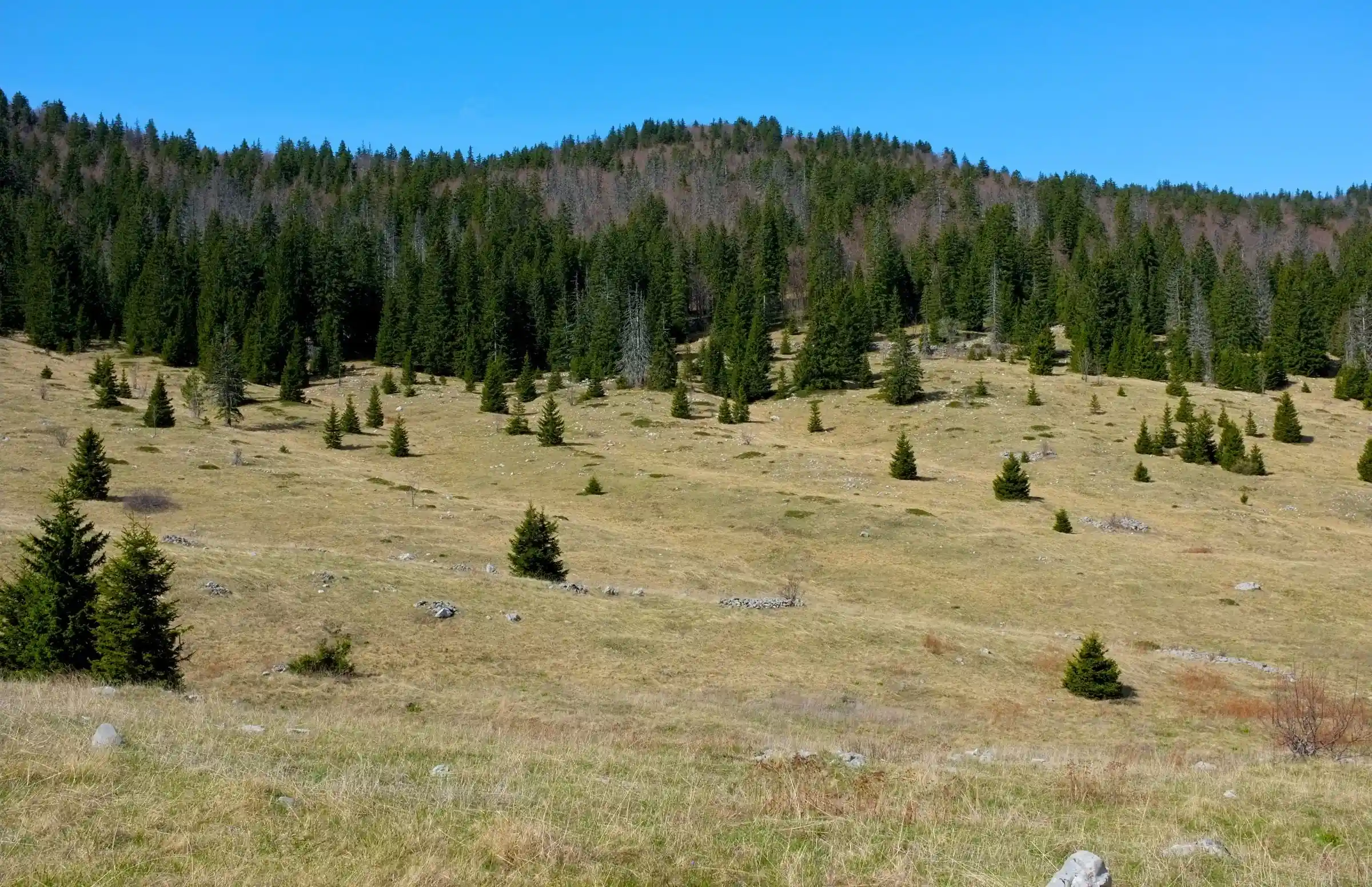
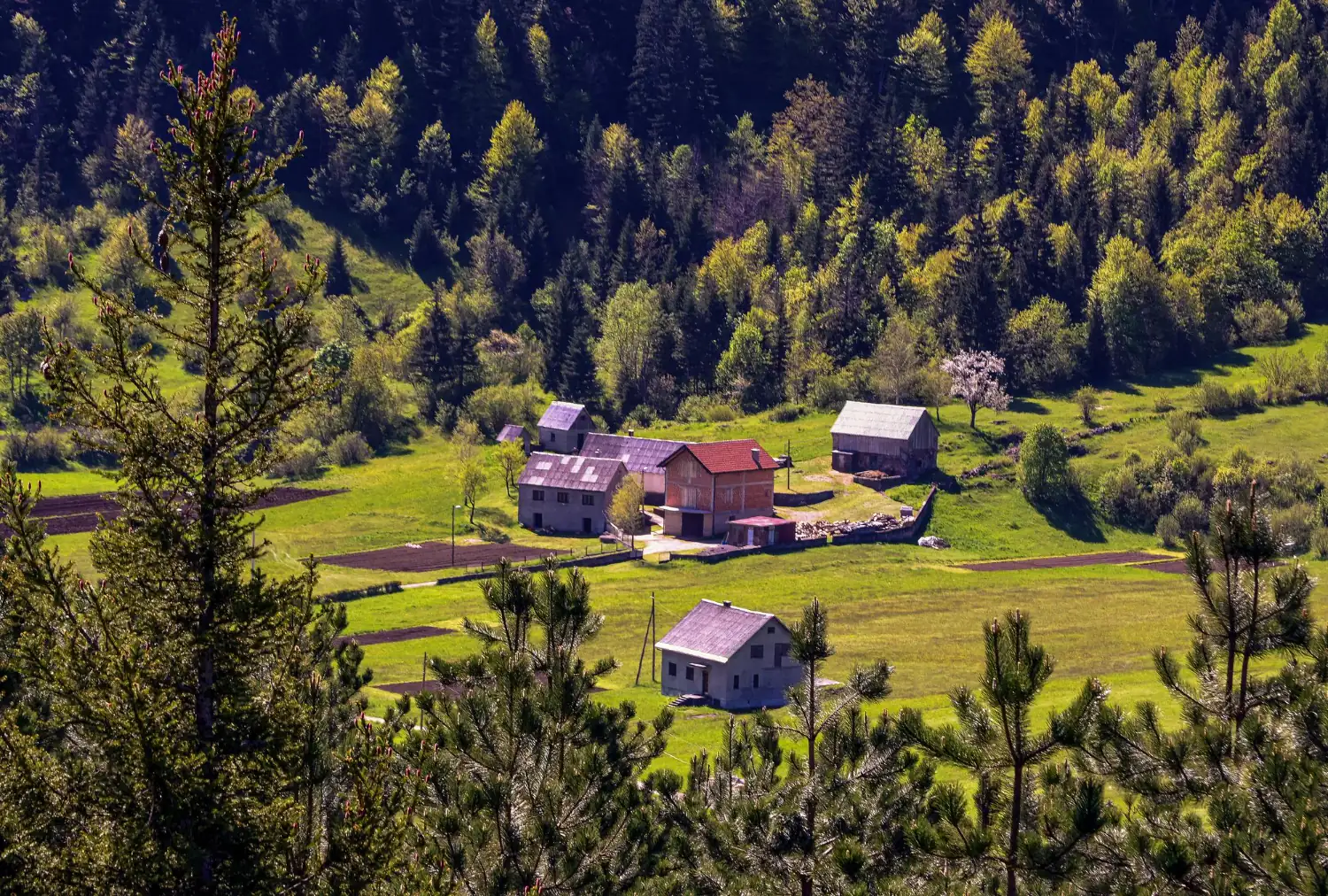

Northern Velebit is Croatia’s youngest national park, established in 1999 on the northernmost part of the Velebit mountain. The park is known for spectacular karst phenomena (the strict reserve Hajdučki and Rožanski Kukovi — a cluster of bizarre rock formations and towers), the unique Alpine Botanical Garden, and the famous Premužić Trail — a scenic hiking path running through the most beautiful parts of Velebit. Northern Velebit offers an authentic experience of wild mountains, untouched nature, and silence, as it is the least visited and most remote of Croatia’s national parks.
Location | Lika — the park covers the northern part of the Velebit massif above the Gacka region. The main entrance Babić Siča is located above the village of Krasno (20 km from Otočac). The park is about 150 km from Zagreb, around 60 km from Senj, and borders Velebit Nature Park to the south. |
How to get there | By car: from Zagreb take the A1 motorway to Otočac (1h 45min), then local roads to Krasno and further to Zavižan mountain hut (last kilometers gravel). From the coast: from Senj about 1 hour on a winding road to Krasno. By bus: there is no direct line to Krasno; the nearest towns are Otočac or Senj, from where a taxi is required. There is no transport inside the park — it is explored on foot via hiking trails. |
Best time to visit | Summer (June–August) is most popular — mountain temperatures are pleasant and days are long. Autumn (September) is also beautiful but nights are colder. Spring (May) often still has snow, but late May/early June brings blooming alpine plants. In winter the road to Zavižan is not accessible. |
Ideal duration and who it’s for | If you drive to Zavižan, in one day you can visit the Botanical Garden, climb nearby peaks, and walk part of the Premužić Trail. For hiking enthusiasts, two days are ideal: with overnight stays at Zavižan hut or Alan shelter you can explore a larger part of the Premužić Trail and experience sunrise/sunset on Velebit. The park mainly attracts hikers and experienced nature lovers — visiting requires more effort than parks like Plitvice or Krka. |
Top attractions in Northern Velebit:
- Zavižan — a mountain hut and the oldest high-mountain meteorological station on Velebit (1594 m); next to the hut is the famous Velebit Botanical Garden showcasing Velebit’s endemic plants.
- Premužić Trail — a masterpiece of trail building, a 57 km hiking path constructed in the 1930s that runs through the heart of Northern Velebit with minimal steep climbs; the most scenic section is within the national park.
- Hajdučki and Rožanski Kukovi — a strict reserve inside the park, an area of fantastic karst forms: hundreds of stone towers, crags, and fissures. This is also where Lukina Jama is located — one of the deepest caves in the world.
- Peaks — several accessible summits offer views: Veliki Zavižan (1676 m), Veliki Pivčevac (1676 m), Alančić (1611 m), etc.
- Flora and fauna — Northern Velebit is home to many rare plants (e.g., Velebit degenia). Wildlife includes bears, wolves, lynx, and numerous bird species.
Practical tips: Take mountain conditions seriously — bring sturdy hiking boots, layered clothing (even in summer a jacket), a map and compass/GPS. Bring enough water and food into the park; the Zavižan hut offers simple refreshments, but don’t rely on full supplies. Weather on Velebit can deteriorate quickly — if fog or a downpour sets in, it’s best to return to safety. Overnight stays: apart from Zavižan hut and Alan shelter, there is no accommodation inside the park. Wild camping is not allowed.
NOTE: The road to Zavižan is gravel and may be closed after heavy rain or snow. Check road conditions and the weather before you go. Always leave your route plan with someone in the valley so they know where you headed.
Best trip combinations – itineraries
Want to visit more than one park in a single trip? Here are three sample itineraries — for 3, 5, and 7 days — connecting parks with minimal backtracking.
3-day itinerary (Northern Dalmatia):
Day 1: Paklenica National Park — hike through the Velika Paklenica canyon early in the morning; return in the afternoon and spend the evening in Zadar.
Day 2: Kornati National Park — a full-day boat excursion from Zadar or Murter.
Day 3: Krka National Park — explore the waterfalls and Visovac from Šibenik, finishing the trip in the afternoon. This combination delivers waterfalls, mountains, and islands in a short time.
5-day itinerary (from Zagreb to Split):
Day 1: depart from Zagreb, visit Plitvice Lakes (a full day of sightseeing, overnight near Plitvice).
Day 2: continue toward the coast — in the morning visit Northern Velebit (Zavižan, botanical garden) or alternatively Paklenica; in the afternoon descend to the seaside (overnight Zadar/Šibenik).
Day 3: a more relaxed day with Kornati (boat trip from Murter or Zadar).
Day 4: Krka waterfalls (half-day visit), then continue south in the afternoon (overnight in Ston or Dubrovnik).
Day 5: a full-day trip to the island of Mljet from Dubrovnik — tour the park, return to Dubrovnik.
7-day itinerary (the big loop):
Day 1: Zagreb — Plitvice Lakes (sightseeing), then continue toward Zadar by evening.
Day 2: Paklenica in the morning, beach time on the coast in the afternoon.
Day 3: Kornati or Krka (depending on whether you want an island adventure or waterfalls).
Day 4: travel toward Dubrovnik, with an optional stop in Split.
Day 5: Mljet — a full-day boat trip.
Day 6: return north — drive to Rijeka, evening arrival.
Day 7: from Rijeka, a day trip to Risnjak or, alternatively, a boat trip from Fažana to Brijuni, then head back toward Zagreb.
Visitor tips: tickets, rules, safety, and sustainability
Tickets and reservations: Entry to all national parks in Croatia is charged. Tickets are purchased at official entrances, and many parks also offer online purchase or reservation. Plitvice Lakes requires an online reservation for a specific entry time in the summer peak season — the number of visitors per hour is limited. Similarly, Krka offers online tickets that can speed up entry in high season. Prices and opening hours vary by season — it’s recommended to check the latest info on official park websites before traveling. In the off-season, some facilities may operate on shorter hours or be unavailable.
Rules of conduct: National parks are protected areas — strict rules apply to preserve nature. Movement is allowed only on marked trails. Don’t leave litter — whatever you bring in, take back out. Picking plants, taking stones, or catching animals is prohibited. Camping and lighting fires are strictly forbidden outside designated zones due to wildfire risk and nature protection. Swimming is allowed only in some parks and only in specific areas (e.g., in Mljet’s salt lakes and the sea, but not at Plitvice). Dogs are welcome in most parks, but must be on a leash.
Visitor safety: Nature comes with certain risks — be prepared and cautious. Dress and wear footwear suitable for the terrain. Check the weather forecast and carry enough water. If you encounter a wild animal, stay calm, don’t approach, and don’t feed it. In the event of a bear encounter, slowly back away without turning your back and make noise. In mountain parks, it’s good to have the emergency number for HGSS (112) — the service is free, but call only in a real emergency.
Sustainable visiting: Visit parks in a way that minimizes your impact on nature. Use public transport or carpool when possible. Support local communities by purchasing local products and services. Don’t disturb animals — observe quietly and don’t leave the path for photos. Help spread awareness about the importance of nature conservation.
In short
- Croatia has 8 national parks: Plitvice Lakes, Krka, Brijuni, Kornati, Mljet, Paklenica, Risnjak, and Northern Velebit — each is a protected area of exceptional natural value.
- Landscape diversity: the national parks include spectacular waterfalls and lakes (Plitvice Lakes, Krka), island scenery and marine riches (Brijuni, Kornati, Mljet), as well as mountain canyons and forests (Paklenica, Risnjak, Northern Velebit).
- Best time to visit: spring and autumn are ideal for most parks (pleasant temperatures, lush nature, fewer crowds), while in summer it’s worth visiting coastal parks like Kornati and Mljet for swimming and boating (while avoiding the strongest midday sun). In winter, mountain parks like Risnjak and Velebit are quiet, but harder to access due to snow.
- Top highlights: Plitvice Lakes impress with cascading lakes and waterfalls in a fairytale forest; Krka features seven waterfalls and the picturesque Visovac islet; Brijuni combines a safari park with exotic animals and ancient Roman remains; Kornati amazes with over 140 islets, crystal-clear sea, and dramatic cliffs.
- More highlights: Mljet enchants with its salt lakes and an old Benedictine monastery in the middle of the Great Lake; Paklenica offers the dramatic canyons of Velika and Mala Paklenica and world-famous climbing routes; Risnjak protects the primeval landscapes of Gorski Kotar and the source of the Kupa River; Northern Velebit attracts hikers with wilderness, unique karst forms, and the famous Premužić Trail.
- Practical tips: park tickets are required (some, like Plitvice, require an online reservation in peak season). Always bring comfortable footwear, enough water, and sun protection. In parks it’s forbidden to leave marked trails, litter, or swim where it’s not allowed (e.g., at Plitvice). Plan to arrive early to avoid crowds and make the most of your day in nature.
FAQ – National Parks in Croatia
How many national parks does Croatia have?
Croatia has a total of 8 national parks: Brijuni, Kornati, Krka, Mljet, Paklenica, Plitvice Lakes, Risnjak, and Northern Velebit. Each of these parks is a protected natural area.
Which is the best national park in Croatia?
The “best” national park depends on personal interests. Plitvice Lakes is often considered the most impressive due to its waterfalls and lakes, while adventurers prefer Paklenica or Northern Velebit for hiking. Krka is popular for its mix of waterfalls and cultural heritage, and Mljet and Kornati for their unique island atmosphere.
Which national parks are closest to Split?
Split is close to several national parks: Krka (~1h drive), Plitvice Lakes (~2.5h drive), Paklenica (~2h 15min), and Mljet (by catamaran ~2.5h). For a day trip, Krka is the most practical, while Plitvice and Paklenica require a longer drive or an organized tour.
Which national parks in Croatia have waterfalls?
Plitvice Lakes and Krka are famous for waterfalls. Plitvice has 16 lakes connected by numerous waterfalls (the tallest is the 78 m Great Waterfall), while Krka protects the Krka River with seven tufa waterfalls (Skradinski buk, Roški slap, etc.). Other parks do not have major waterfalls.
Is camping possible in Croatian national parks?
Within national park boundaries, wild camping is generally not allowed to protect nature. However, campsites are available near each national park (e.g., Camp Korana near Plitvice, camps in Starigrad for Paklenica, and in Skradin for Krka). Mljet and Kornati have no campsites within the park, and camping is prohibited.
Do I need a reservation to visit national parks?
For most parks, a reservation is not required — it’s enough to buy a ticket at the entrance. The exception is Plitvice Lakes during peak season, when entry must be reserved online for a specific date and time. For Krka in summer, buying tickets in advance is also recommended.
Which is the largest national park in Croatia?
The largest national park is Plitvice Lakes, covering about 296 km². Next are Kornati (~220 km², mostly sea area) and Paklenica (~96 km²). Brijuni is the smallest (about 34 km²).
Are dogs allowed in national parks?
Yes, in most national parks dogs are allowed, but only on a leash and under the owner’s supervision. Dogs may not enter indoor facilities, and the owner is responsible for cleaning up after them. Before visiting, check the park’s specific rules.
Can I swim in national parks?
Swimming is allowed only in some parks — primarily those on the coast, such as Mljet and Kornati. In freshwater parks like Plitvice Lakes and Krka, swimming is prohibited to protect the ecosystem, except in specifically designated areas downstream from Skradin. Always follow signs and ranger instructions.
How much time do I need to visit Plitvice Lakes?
It’s recommended to set aside at least 4–6 hours for Plitvice Lakes. The shortest routes cover the Lower Lakes and take 2–3 hours, medium routes take 4–5 hours including the boat ride, while the longest loop can take 7–8 hours if you walk the full circuit.
How much time do I need to visit Krka?
A half-day visit (4–5 hours) is enough to see Skradinski buk and Visovac, and possibly Roški slap. The walk around Skradinski buk itself takes about 2 hours, while adding a boat ride extends the visit.
What’s the difference between a national park and a nature park?
A national park is an area of exceptional natural value with the strictest protection; only activities that do not endanger the ecosystem are allowed. A nature park is also a large protected area, but with a lower level of protection — it may include settlements and certain economic activities. Croatia has 8 national parks and 12 nature parks.