Luxury villas in Croatia: exclusive locations for the perfect seaside holiday
March 30, 2026
Restaurants in Croatia: a complete guide
April 22, 2026Contents
Show- How to get around Dalmatia
- When to go — the best month
- Budget estimate
- Day 1 – Split, Old Town
- Day 2 – Split, trip and Marjan
- Day 3 – Krka and the road to Makarska
- Day 4 – Makarska and Biokovo
- Day 5 – road to Dubrovnik
- Day 6 – Dubrovnik
- Day 7 – Mljet or final day
- Quick hour-by-hour overview
- Variations for couples, families, budget
- What to pack
- Frequently asked questions
If you're planning 7 days in Dalmatia and looking for an itinerary that actually makes sense — without constantly packing your suitcase, dealing with long transfers, and rushing from one attraction to another — this route is for you. The itinerary takes you through Split, Makarska, and Dubrovnik, three destinations that together create the full southern coast experience: a Roman palace in the middle of the city, beaches beneath Biokovo, and medieval walls at the end.
There’s no need to try squeezing all of Croatia into one week. It’s smarter to choose one logical coastal route and experience it without stress: 2 nights in Split, 2 in Makarska, and 2 to 3 nights in Dubrovnik or the surrounding area. If this is your first visit to Croatia, this is probably the best balance of city life, sea, and nature you can fit into 7 days.
What you’ll get in 7 days
- Route: Split (2 nights) → Makarska (2 nights) → Dubrovnik / surrounding area (2–3 nights)
- Main destinations: Diocletian’s Palace, Marjan, Krka, Skywalk Biokovo, city walls, Mljet
- Best transportation: car (most flexible), bus (works well), catamaran (for islands)
- Best season: June and September – warm sea, prices 25–40% lower than peak season
- Estimated budget for two: €800–1500 for a mid-range version during the shoulder season
How to get around Dalmatia: car, bus, or catamaran
Before diving into the day-by-day itinerary, the main question is how you’ll get around. On the Split – Makarska – Dubrovnik route, there are three realistic options, and your choice affects what you’ll realistically have time to see.
Car (rent-a-car)
The most flexible option. During the season, car rentals cost around €30–60 per day, and most companies allow one-way rentals between Split and Dubrovnik with a small additional fee (€15–40). A car gives you access to places that are impractical without one: Krka National Park, Skywalk Biokovo, Pasjača Beach south of Dubrovnik, and Nugal Beach. Also factor in toll roads (~€25) and parking fees (Dubrovnik €5–8/hour within the zone). Check road conditions on HAK before departure, especially if driving the coastal road in July and August.
Bus
A solid and affordable alternative. FlixBus, Arriva, and Promet Makarska operate all sections: Split–Makarska takes around 1.5 hours (€10–15), while Makarska–Dubrovnik takes 3 to 3.5 hours (€15–25). Services are frequent during the season. Without a car, you won’t reach hidden beaches or some remote attractions, but for visiting the three main cities — Split, Makarska, and Dubrovnik — buses are more than enough.
Catamaran (for the islands)
Krilo and Jadrolinija operate fast ferry routes Split – Hvar – Korčula – Dubrovnik during the season. Prices range from €25–45 per leg. This is a great option if you want to turn part of the route into an island-hopping cruise instead of driving — for example, taking a catamaran through Hvar instead of driving from Split to Dubrovnik.
When to go — the best month for 7 days in Dalmatia
The month you choose determines how relaxed your trip will feel, how much you’ll pay for accommodation, and how much you’ll deal with crowds.
- June and September – the best balance. The sea is 22–25 °C, the days are long, everything is open, and crowds are manageable. Accommodation prices are 25–40% lower than in July and August. If you can choose, these are the ideal months.
- July and August – peak season. Everything is open, the sea is warm (25–27 °C), but there are crowds, temperatures above 35 °C, and the highest prices. Dubrovnik’s Old Town between 11 AM and 4 PM can become almost impossible to walk through.
- May and October – ideal for city-focused trips. Krka, the city walls, Biokovo, Mljet — everything is open and much more enjoyable without huge crowds. The sea is still too cold for most people, but mid-May and early October can still surprise you (19–21 °C).
- November to April – off-season. Most islands and tours operate on a limited schedule. Dubrovnik and Split function year-round, but the experience is different — more suitable for a city break than for “7 days around Dalmatia.”
How much does 7 days in Dalmatia cost: estimated budget for two
A realistic budget depends on the season and your travel style. Here are three scenarios for two people over 7 days, including accommodation, food, fuel or tickets, and entrance fees.
| Category | Budget | Mid-range | Comfort |
|---|---|---|---|
| Accommodation (6 nights) | €300–400 | €500–800 | €1000+ |
| Food | €150–200 | €250–350 | €500+ |
| Transportation | €80–120 (bus) | €200–280 (car) | €300–400 |
| Entrance fees & excursions | €70–100 | €150–200 | €300+ |
| TOTAL | €600–820 | €1100–1630 | €2100+ |
The biggest variable cost is accommodation in Dubrovnik. Staying in Lapad, Zaton, or Sustjepan instead of inside the city walls can easily save you €300–500 over 2–3 nights, while the Old Town is still quickly accessible by bus or car. In July and August, add 30–50% to all the prices above.
Day 1 – Split: Diocletian’s Palace, the Riva, and your first sunset

Start your first day in Split as soon as you arrive — without too much rushing, but with a plan that follows the city’s natural rhythm. If it’s your first time here, it’s worth reading Top 15 things you need to know about Split before your trip — a few practical details that make getting around much easier.
The best option is to stay in an apartment close to the center because Split is smaller than it looks and most places are easily walkable. If you don’t feel like walking, city buses run frequently; buy tickets through the Promet Split app — they’re cheaper there, and the app is also practical for airport transfers.
Morning: Diocletian’s Palace
Right after arriving, start exploring Diocletian’s Palace, the heart of Split and one of the best-preserved Roman complexes in the Mediterranean. Walk through the Peristyle, explore the basement halls, visit the Cathedral of Saint Domnius, and stop by the statue of Gregory of Nin — legend says touching the toe brings good luck.
After the palace, continue toward the Riva, the city’s main seaside promenade, and further to Marmont Street, the best-known shopping area in Split. Perfect timing for a relaxed walk, coffee, or gelato.
Lunch
For lunch, stick to proven spots in the center: Bokamora, Konoba Fetivi, Villa Spiza, or Adriatic Grašo. A solid introduction to Dalmatian cuisine.
Afternoon: beach time
The closest beach to the center is Bačvice — shallow water, sand, lively atmosphere. Kašjuni on Marjan is a better choice if you’re looking for cleaner water and a calmer setting. Both work perfectly for your first Mediterranean reset.
Sunset and evening
In the evening, walk along the West Coast promenade toward Sustipan — one of the best viewpoints in the city. For dinner, choose Konoba Matejuška (seafood), Villa Spiza, or Basta (pizza). For drinks: Fabrique Pub, Central Club, or one of the bars hidden inside Diocletian’s Palace itself. Split at night has a special energy, and there’s no need to rush through it.
Day 2 – A trip, Marjan, and evening Split from a different perspective
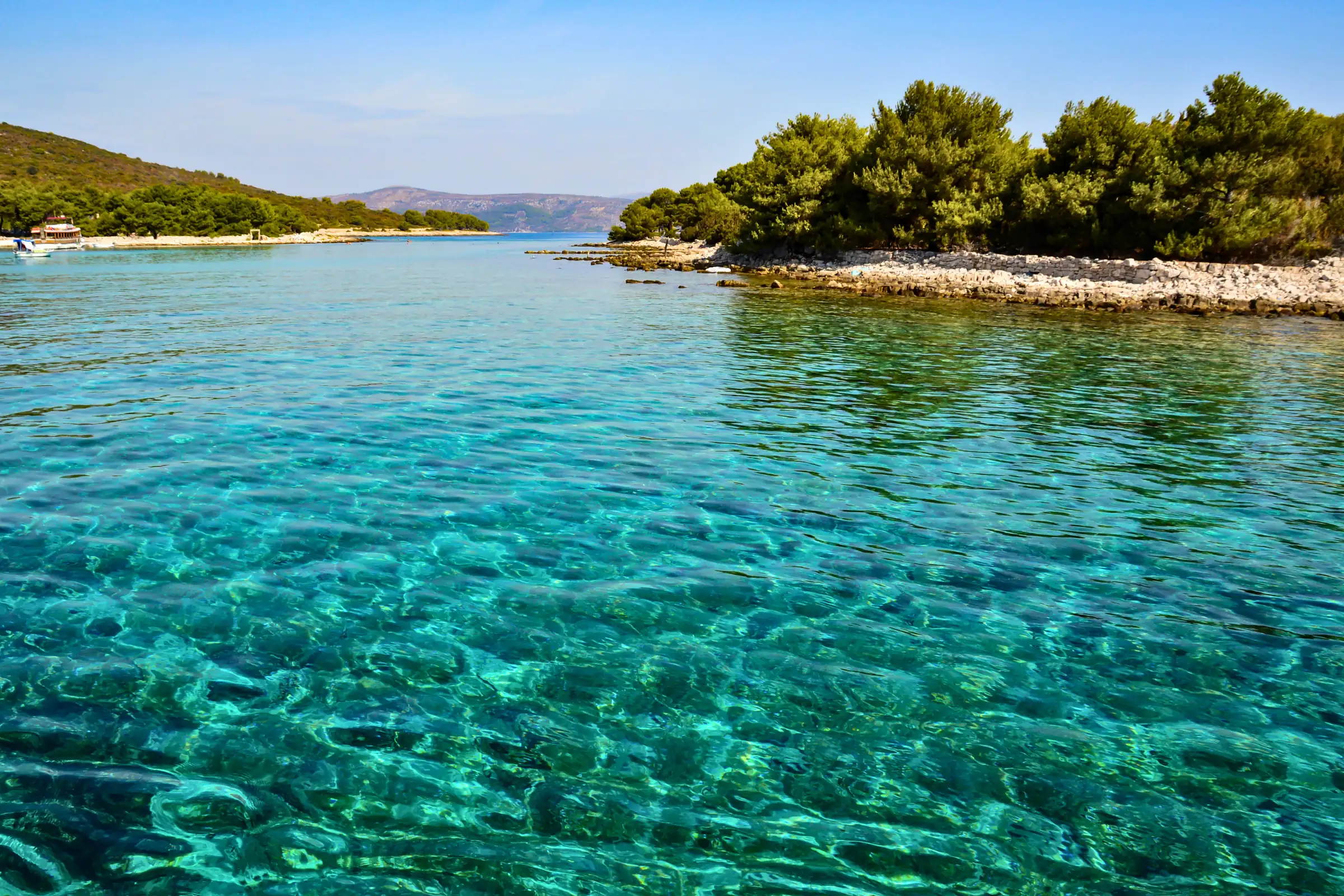
Start the second day a bit more actively. The most popular option is a half-day trip to 3 islands (09:30 – 14:00), which includes Trogir, swimming in the Blue Lagoon near Drvenik, and a stop in Maslinica on Šolta. It’s a quick and attractive way to experience the islands even with limited time.
If you prefer staying on land, the alternative is Salona, the former Roman capital of Dalmatia, or Klis Fortress — known for its views and scenes from Game of Thrones.
Lunch after returning
In the center, go with reliable choices again: Uje Oil Bar, Bokeria. If you have a car and want something more local, try Familija restaurant in Žrnovnica near Split — after lunch, take a walk along the Žrnovnica River, which has a completely different rhythm from the city.
Early evening: Marjan
In the early evening, return to Split and head to Marjan Forest Park. A walk through the pine forest and the view from the lookout over the city and islands is one of the most beautiful moments in Split. For more ideas on how to spend your time actively, check out how to spend time actively in Split.
Evening: Žnjan
End the day at Žnjan, the newly renovated city plateau that becomes one of the liveliest parts of the city in the evening. Dinner, drinks in modern bars, night swimming, or beach volleyball under the floodlights.
Tip: temperatures are high in summer. Plan activities for the early morning and early evening, and use the hottest part of the day for the sea or resting in the shade.
Day 3 – Krka or a direct route toward Makarska

You can do the third day in two ways, depending on your pace.
More active option: Krka + Šibenik
If you want a more active day, take a trip to Šibenik and Krka National Park. From Split, it’s about a 1-hour drive, and organized tours and bus lines take a similar amount of time. Krka leaves a strong impression — well-maintained trails, waterfalls, and a different rhythm from the previous two city days. For a more detailed overview: 4 reasons why Krka National Park is worth visiting.
Slower option: directly to Makarska
If a slower pace suits you better, head straight toward Makarska. The drive is around 1 hour, but in season and with traffic on the coastal road, it can easily stretch to 1 hour and 30 minutes. The route along the sea is scenic, so the journey itself becomes part of the experience.
In Makarska, the recommended accommodation area is Donja Luka or near the waterfront — you’ll be closest to the beach, restaurants, and evening events. After check-in, drop off your things and head straight to the sea.
First day in Makarska
For the first day, Donja Luka Beach is ideal because it’s close to the center, while Cvitačka is the choice if you want a quieter atmosphere and clearer sea. Spend the afternoon swimming without too much planning — that’s exactly the best introduction to the Makarska rhythm.
In the early evening, take a walk along the Makarska waterfront — cafés, pastry shops, restaurants, a lively but relaxed atmosphere. For dinner, choose Hrpina, Konoba Kalalarga, or Restaurant Riva. After dinner, stay for a drink by the sea.
Day 4 – Makarska, beaches, and Skywalk Biokovo
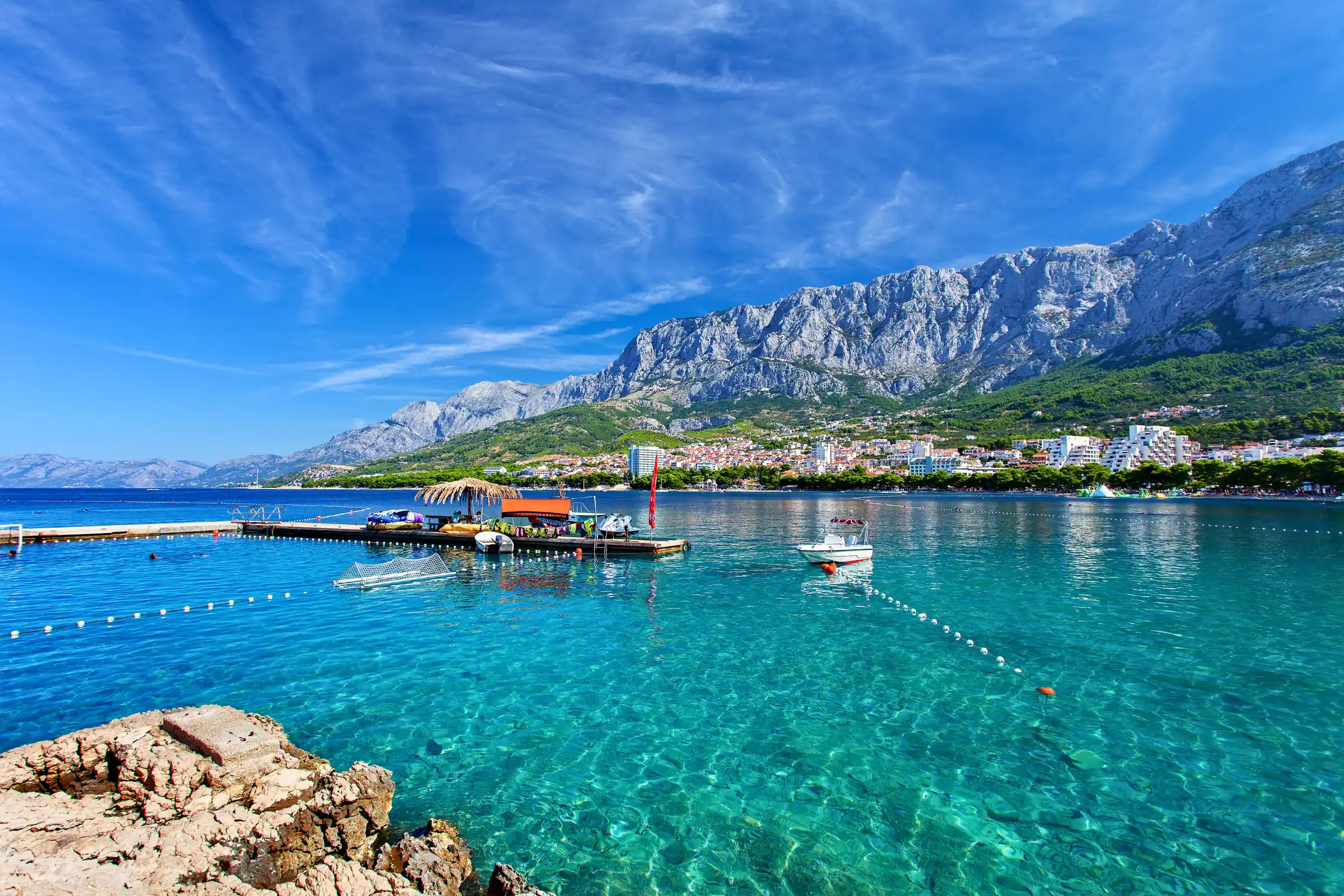
The fourth day is for complete relaxation and the sea. A day without a strict schedule — focused on swimming, sun, and the slower pace that Makarska naturally sets.
Head to the beach early to avoid the strongest heat and crowds. Combine swimming with resting in the shade, and around noon take a lunch break at one of the beach bars or seaside restaurants.
Beaches
The easiest options are Cvitačka and Biloševac. Cvitačka has a nicer setting and a calmer atmosphere, while Biloševac is practical if you want everything close at hand. If you want to explore, the walk to Nugal is worth it — one of the most beautiful and most hidden beaches in the area. For peace without crowds, go to Ramova, while Tučepi is the choice for long, well-maintained beaches with plenty of space. You’ll find more options in the guide to the 5 most beautiful beaches of the Makarska Riviera.
Afternoon: Skywalk Biokovo
Use the afternoon to visit Skywalk Biokovo, a glass platform overlooking the Makarska Riviera and the islands. The road to the top leads through the landscape of Biokovo Nature Park, and the drive takes about 30 minutes. Check opening hours and entrance conditions in advance on the official website of Biokovo Nature Park (most often until 19:00). You can also switch the schedule and visit the Skywalk in the morning, leaving the beach for later.
In the early evening, walk through the town and along the waterfront, and for a sweet break stop by for pancakes at Romana — among the best-known in Makarska.
End the evening with a light dinner and drinks by the sea. Along the waterfront and beach, there is often music and events, but you can still easily find a quieter corner to relax. Makarska is ideal precisely for this kind of day — not too much planning, the sea within reach, and the feeling of a real summer holiday.
Day 5 – The road to Dubrovnik and a relaxed start

The drive from Makarska to Dubrovnik takes roughly 2.5 to 3 hours. It’s one of the more beautiful coastal sections, so it’s worth leaving without rushing and making a short stop along the way (Ploče, Neum, Ston).
For the final part of the trip, you don’t need to sleep inside the historic core. In practice, it’s often more pleasant to choose accommodation in the surrounding area, especially if you want quieter evenings, easier parking, and slightly more affordable stays. Good choices: Sustjepan, Zaton, Lapad, or the wider area with good bus connections.
After arrival, have lunch at Orsan, Konoba Veranda, or Panorama, depending on whether you want something more relaxed by the sea or a more special view.
Afternoon: first encounter with Dubrovnik
Use the afternoon for swimming. Good options: Danče, Šulić, Buža or Banje. Each offers a slightly different experience — from swimming beneath the city walls to some of the best views of the historic core.
Later, take a walk through the Old Town, have gelato on Stradun, and enjoy a drink in one of the narrow side streets. Dubrovnik has a different feel in the evening than during the day: it’s less scorching, the lights are softer, and the city feels cinematic.
Day 6 – Dubrovnik in all its glory: the city walls, Srđ, and Lovrijenac

The sixth day is reserved for Dubrovnik and the classics worth experiencing on a first visit. Start early to avoid the biggest crowds and the strongest sun.
What to see in Dubrovnik the first time
- City walls — 1.5 to 2 hours for the walk
- Stradun — the main street of the Old Town
- Rector’s Palace — the former seat of the Republic of Ragusa
- Old Pharmacy in the Franciscan monastery (one of the oldest in Europe, operating since 1317)
- Lovrijenac Fortress — outside the walls, one of the best views
- Mount Srđ — cable car, view of the entire city and islands
Start the day with a walk along the city walls before the big crowds and heat arrive. After that, head down to Stradun and slowly explore the Old Town — walk through the narrow streets, take a look inside the Rector’s Palace, and visit the Old Pharmacy.
If you plan to visit several attractions, it’s worth getting the Dubrovnik Pass — it often offers better value and simpler organization, especially on a first visit when you want to see more in one day.
Around midday, take a lunch break — choose something lighter inside the Old Town or just outside it to avoid the biggest crowds. After lunch is the ideal time for a break or an escape from the heat.
Afternoon: the sea
Save the afternoon for the sea. The closest option is Banje Beach, with views of the Old Town, while Sveti Jakov is a better choice if you want a calmer atmosphere and cleaner water. If you’re ready for a short drive outside the city, set aside time for Pasjača Beach — a hidden gem south of Dubrovnik, known for its steep cliffs and views.
Late afternoon and sunset: Lovrijenac + Srđ
Use the late afternoon to visit Lovrijenac, the fortress outside the city walls. The view of Dubrovnik and the open sea is outstanding, and the atmosphere is often calmer than at the main attractions.
In the early evening, take the cable car up to Srđ. The view of Dubrovnik from above is one of the best in Croatia, perfect for photos before sunset. Quite often, this is the strongest image people remember from the entire trip.
In the evening, return to the city for dinner. You can stay inside the Old Town for the atmosphere or go just outside the walls for a more relaxed experience. After dinner, walk along Stradun — at night, Dubrovnik has a calmer, almost cinematic atmosphere.
Tip: walk the city walls early in the morning or later in the afternoon, and use the hottest part of the day for lunch, the sea, and rest. Dubrovnik is much more enjoyable when you don’t try to “tick it off,” but actually experience it.
Day 7 – Mljet or one more day by the sea

Leave the last day flexible and adjust it to the pace that suits you. A day for a relaxed ending — without rushing or too much planning.
Option 1 – Mljet National Park
If you have time and still have some energy, the best choice is exploring Mljet National Park, one of the most beautiful day trips from Dubrovnik. More details are available in the guide for a day trip to Mljet from Dubrovnik.
Most often, people go by catamaran or organized trip from Dubrovnik. Fast boats usually depart from Gruž Port in the morning between 8:00 and 9:00, and the ride takes around 1.5 to 2 hours to Pomena or Polače, which are inside or right next to the National Park. Check the current timetable on Jadrolinija or Krilo.
The return is usually in the afternoon, between 16:00 and 18:00, which leaves you enough time to explore. The exact departure time depends on the season and carrier, so check the schedule in advance. If you want a simpler option without worrying about timing, organized trips from Dubrovnik usually include transport and entrance tickets.
Spend the day combining swimming, an easy walk, or cycling around the Great and Small Lakes. A special experience is visiting the islet of St. Mary, located in the middle of the Great Lake; a short boat ride to it is included in the entrance ticket.
This part of Mljet is known for its peace, crystal-clear sea, and untouched nature — ideal for a relaxed ending.
Option 2 – One more day in Dubrovnik
If you want a quieter ending without extra movement, stay in Dubrovnik and dedicate the day to the sea and relaxation.
For a more relaxed, local atmosphere, head toward Lapad and Babin Kuk. Spend the day at Copacabana Beach, one of the more developed beaches in Dubrovnik, or at Coral Beach Club — sunbeds, drinks, and the right setting for an easy final day by the sea.
Whichever option you choose, keep the last day simple — one more swim, an easy walk, and the feeling that you’ve rounded off the trip without stress.
Quick hour-by-hour trip overview
Day 1 – Split
| 09:00 | Arrival and check-in / dropping off luggage |
|---|---|
| 10:00 – 13:00 | Tour of Diocletian’s Palace (Peristyle, cathedral, basement halls, Gregory of Nin) |
| 13:00 – 14:00 | Walk along the Riva and Marmont Street + coffee/gelato |
| 14:00 – 15:30 | Lunch: Bokamora, Fetivi, Villa Spiza |
| 15:30 – 19:00 | Beach: Bačvice or Kašjuni |
| 19:30 – 20:30 | Sunset: West Coast promenade + Sustipan |
| 21:00 → | Dinner: Matejuška, Basta + drinks: Fabrique, Central, pubs in the palace |
Day 2 – Split and surroundings
| 08:30 – 09:00 | Breakfast |
|---|---|
| 09:30 – 14:00 | Half-day 3-island trip (Trogir, Drvenik – Blue Lagoon, Šolta) Alternative: 09:30 – 13:00 Salona and Klis |
| 14:30 – 16:00 | Lunch: Uje, Bokeria or Žrnovnica – Familija |
| 16:00 – 17:30 | Rest / easy walk |
| 18:00 – 20:00 | Marjan – walk + lookout |
| 20:30 → | Žnjan – dinner, drinks, night swimming |
Day 3 – Split → Makarska
| Option 1 | Krka + Šibenik, then continue toward Makarska and an evening walk along the waterfront. |
|---|---|
| Option 2 | Directly toward Makarska, lunch, Donja Luka or Cvitačka beach, and dinner by the sea. |
Day 4 – Makarska
| Morning | Beach and swimming: Cvitačka or Biloševac |
|---|---|
| Afternoon | Visit Skywalk Biokovo |
| Evening | Walk through town, dinner, and pancakes at Romana |
Day 5 – Makarska → Dubrovnik
| Morning | Coastal drive toward Dubrovnik |
|---|---|
| Afternoon | Swimming: Danče, Šulić, Buža, Banje |
| Evening | Walk through the Old Town and drinks in the center |
Day 6 – Dubrovnik
| Morning | City walls, Stradun, Rector’s Palace, and the Old Pharmacy |
|---|---|
| Afternoon | Swimming: Pasjača or nearby city beaches |
| Sunset | Lovrijenac and Srđ |
Day 7 – Ending
| Option 1 | Mljet — National Park, Great and Small Lakes, St. Mary, swimming, walking |
|---|---|
| Option 2 | Lapad / Babin Kuk — Copacabana Beach + Coral Beach Club |
| After that | Return / departure |
Itinerary variations: couple, family with children, budget
Itinerary for a couple
Fewer trips, more taverns, and a slower rhythm. Skip the half-day trip on Day 2 — instead, extend the morning in the palace, have lunch in Žrnovnica, and spend the afternoon on Marjan. In Makarska, replace the Skywalk with an evening boat ride at sunset. In Dubrovnik, choose Pasjača instead of Banje, and make dinner on Srđ before sunset a must. Put the emphasis on accommodation with a view — it’s worth the extra €30–50 per night.
Itinerary with children
Beaches with shallow water: Bačvice in Split, Donja Luka in Makarska, Copacabana in Lapad. Avoid the Dubrovnik city walls between 11 AM and 4 PM — the heat is brutal and there is no shade. Plan your visit for 8:30 AM or after 5 PM. Krka works well for families because the paths are flat and there is enough shade. Skywalk Biokovo is OK with children aged 6+. Choose accommodation with a pool — an apartment without a pool in July and August can be tiring because beaches are not always an option during the hottest part of the day.
Budget version
Bus instead of rent-a-car (save €200–300). Accommodation 5–10 km outside the center (Split — Stobreč, Solin; Makarska — Tučepi, Brela; Dubrovnik — Zaton, Mokošica). Breakfast and one meal cooked in the apartment. Organized trips only (Krka as an organized tour is cheaper than going by car + parking + ticket). Free beaches instead of beach clubs — Buža, Sveti Jakov, Cvitačka.
Practical tips for the whole trip
- Drink plenty of water — summer temperatures are high and it’s easy to get dehydrated on the city walls and Marjan.
- Use SPF 50+; the Mediterranean sun burns more strongly than it seems, especially by the sea.
- Avoid direct sun between 12 PM and 4 PM. That’s the time for lunch, shade, or swimming.
- Choose apartments close to the sea or the center to reduce driving and parking.
- For Split and Dubrovnik, bring comfortable shoes — stone pavements and lots of walking.
- Don’t try to see everything. Leave room for enjoyment and spontaneity.
- Croatia has been in the eurozone since 2023, so euros are used everywhere. For small taverns, beaches with sunbeds, and local parking, bring some cash.
What to pack for 7 days in Dalmatia
- SPF 50+ sunscreen (sun exposure on the open sea is stronger)
- Water shoes — most beaches are pebbly, not sandy
- Comfortable sneakers for the city walls, Marjan, and the Old Town
- A light jacket or long sleeves for evenings — it can get cooler by the sea
- Eco water bottle — public fountains work in Split and Dubrovnik, saving money and plastic
- Sunglasses + hat
- Adapter if you’re coming from outside the EU (type F/C sockets)
- Cash in euros for small taverns, parking, and sunbeds
- Power bank — lots of photos + navigation drain the battery
- Motion sickness tablet if you plan to take a catamaran to Mljet or an island trip
Frequently asked questions
How many days are enough for Dalmatia?
For a first visit, 7 days is a solid minimum that lets you experience three main destinations — Split, Makarska, and Dubrovnik — without constantly packing. If you have 5 days, skip Makarska and focus more on Split. If you have 10+ days, add the islands (Hvar, Brač, or Korčula) and one day in Trogir.
Which order should you visit the destinations in: Split → Dubrovnik or the other way around?
Logistically, either works, but if you fly into Split and leave from Dubrovnik, go Split → Dubrovnik. It saves you 5–6 hours of driving back. Most rent-a-car companies allow one-way rentals between the two cities with a small additional fee (€15–40).
Do you need a car for 7 days in Dalmatia?
A car is the most flexible option, especially for Krka, Skywalk Biokovo, and hidden beaches like Nugal or Pasjača. Without a car, everything is possible — bus lines between Split, Makarska, and Dubrovnik are frequent — but you depend on organized tours and have less time at the locations themselves.
When is the best time to travel to Dalmatia?
June and September are the sweet spot: the sea is warm (22–25 °C), the days are long, crowds are manageable, and accommodation prices are 25–40% lower than in July and August. May and October work if the sea isn’t your main priority — cities and national parks are better without the crowds.
How much does a week in Dalmatia cost for two?
In the shoulder season (June, September), a realistic budget for two is €1100–1500 — accommodation, food, fuel, entrance tickets, and trips. A budget version is around €700, while comfort is €2000+. In July and August, expect 30–50% more, especially for Dubrovnik. The biggest cost is accommodation in Dubrovnik; staying in Zaton or Lapad significantly lowers the total.
Which beach on the route is the best?
Three concrete suggestions: Kašjuni in Split (walkable from the center, clean sea), Nugal in Makarska (hidden, natural setting, fewer crowds), and Pasjača south of Dubrovnik (dramatic setting beneath cliffs). For families with children: Bačvice, Donja Luka, Copacabana.
Do I need cash or can I pay everything by card?
Croatia has been in the eurozone since 2023. Restaurants, hotels, supermarkets, and gas stations accept cards. For small taverns, beaches with sunbeds, local markets, and some parking areas, it’s better to have cash. ATMs are everywhere in Split, Makarska, and Dubrovnik.
Can I book everything last minute, or should I book in advance?
For July and August, book accommodation at least 2–3 months in advance, especially for Dubrovnik. June and September can still be arranged 3–4 weeks ahead. Trips (Mljet, Krka, Blue Cave) often have availability a day or two in advance, except in peak season. Rent-a-car should definitely be booked 4–6 weeks earlier.
Final tip: don’t try to “do” Dalmatia
The biggest mistake on a first trip to Croatia isn’t missing an attraction, but trying to see too much in too little time. This route works precisely because it’s realistic. In one week, you’ll get Split, part of the Makarska Riviera rhythm, a calmer stay by the sea, and a finale in Dubrovnik — without feeling like you’re constantly in the car or repacking your suitcase.
If you want a first visit to Dalmatia that combines cities, beaches, seaside apartments, local details, and enough freedom, these 7 days can be exactly the kind of trip that makes you want to return to Croatia.