


Diocletian’s Palace — visitor guide
A Roman imperial palace that is now the vibrant heart of Split. Find out what is free, what requires a ticket and the best way to explore it.
- UNESCO World Heritage Site (1979)
- Built around 295–305
- Free entry to the historic centre
Everything you need to know before your visit
The key thing to remember: this is not an enclosed museum with a single admission ticket, but a living city centre.
Old Town, Split
Late 3rd / early 4th century
around 295–305
UNESCO World Heritage Site
inscribed in 1979
~215 × 180 m
villa + fortified castrum
Open 24/7, free of charge
Admission is charged for the cellars and cathedral
prices 🔶 check
Early morning or late afternoon
fewer crowds and tour groups
1 hr for the essentials, 3–4 hrs for a more in-depth visit
A palace you walk through, not queue for
Diocletian’s Palace is not an ordinary landmark, but the living heart of Split. People still live, stroll, drink coffee and enter spaces that once formed part of the emperor’s residence within its Roman walls.
Emperor Diocletian had it built in the late 3rd and early 4th centuries as a combination of a luxurious villa and a fortified military camp (castrum). The southern, seafront section served as the imperial residence, while the northern section housed soldiers and servants.
After the decline of nearby Salona, its inhabitants settled within the walls, and the palace gradually developed into a genuine town during the Middle Ages. Roman, medieval, Gothic, Renaissance and Baroque layers coexist here today — which is why the entire historic centre is listed as a UNESCO World Heritage Site.
From imperial residence to living city
Key moments from 1,700 years of the palace’s history.
Construction of the palace
Built as the residence to which Emperor Diocletian retired after stepping down from power.
The mausoleum becomes a cathedral
The emperor’s mausoleum was converted into the Cathedral of Saint Domnius — today one of the oldest cathedrals in the world.
The palace becomes a city
People settled within the walls, and the Roman structure was adapted to suit the medieval city.
Western cellars opened
The western section of the underground halls (substructures) was opened to the public.
UNESCO inscription
The historic centre of Split with Diocletian’s Palace was inscribed on the World Heritage List.
Eastern cellars opened
Following restoration, the eastern section of the cellars was also opened to visitors.
What to see inside the palace
The label on each card shows whether admission is free or ticketed.

Peristyle
The palace’s ceremonial square, where the emperor appeared before his subjects. Red granite columns, an Egyptian sphinx and a unique atmosphere.
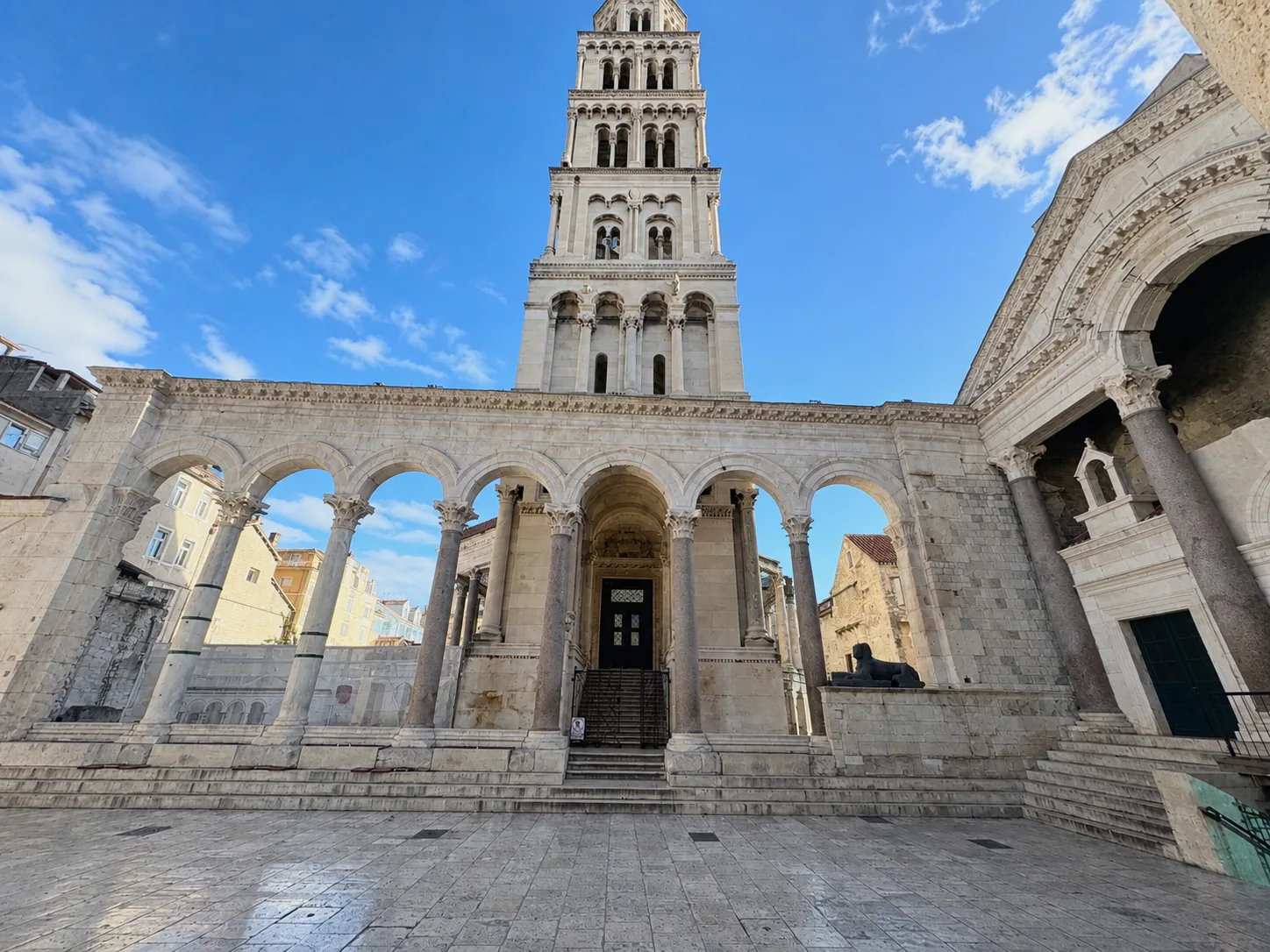
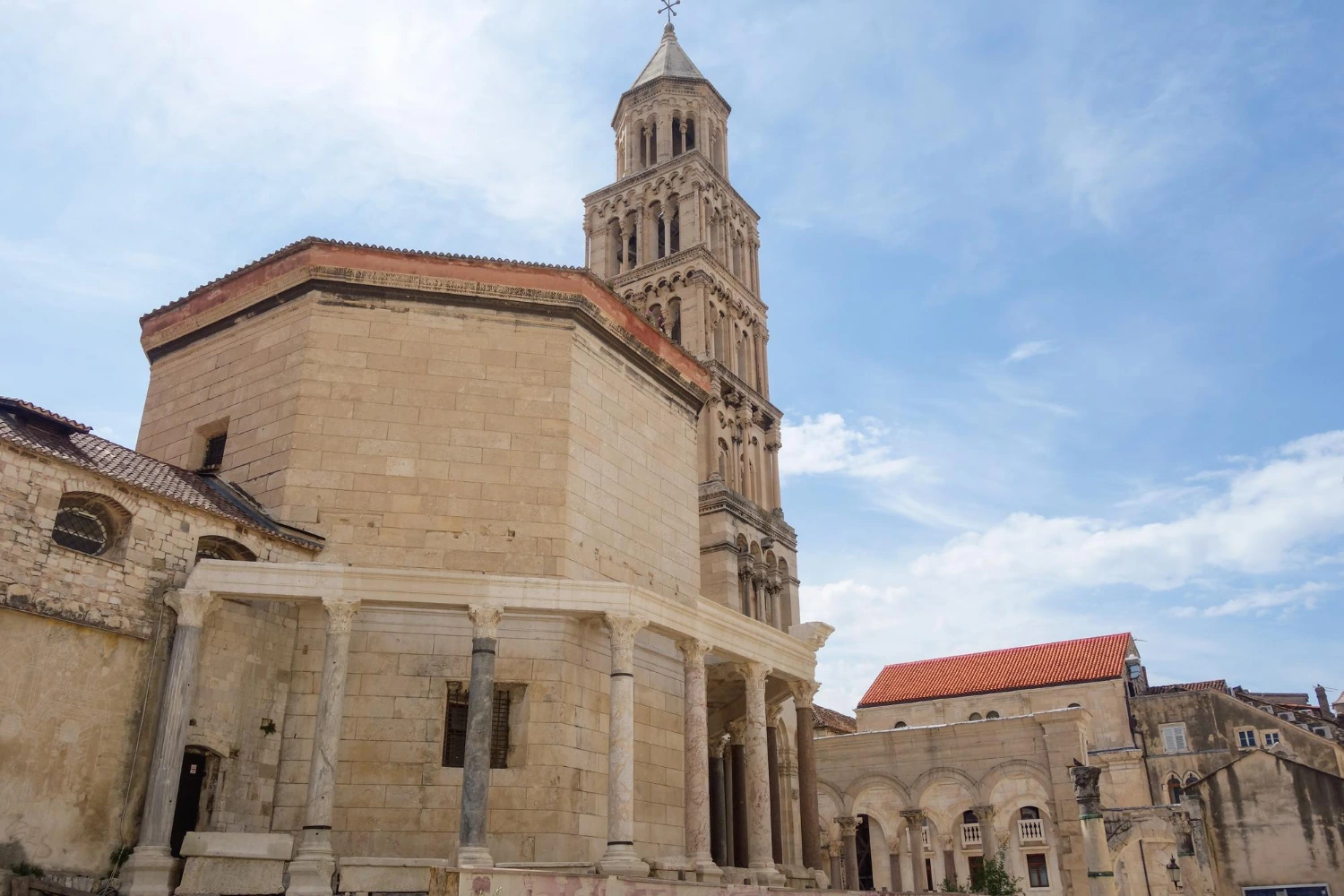
Cathedral of Saint Domnius
Diocletian’s former mausoleum, converted into a cathedral in the 7th century. Highlights include the valuable wooden doors carved by Master Buvina in 1214 and the richly decorated interior.
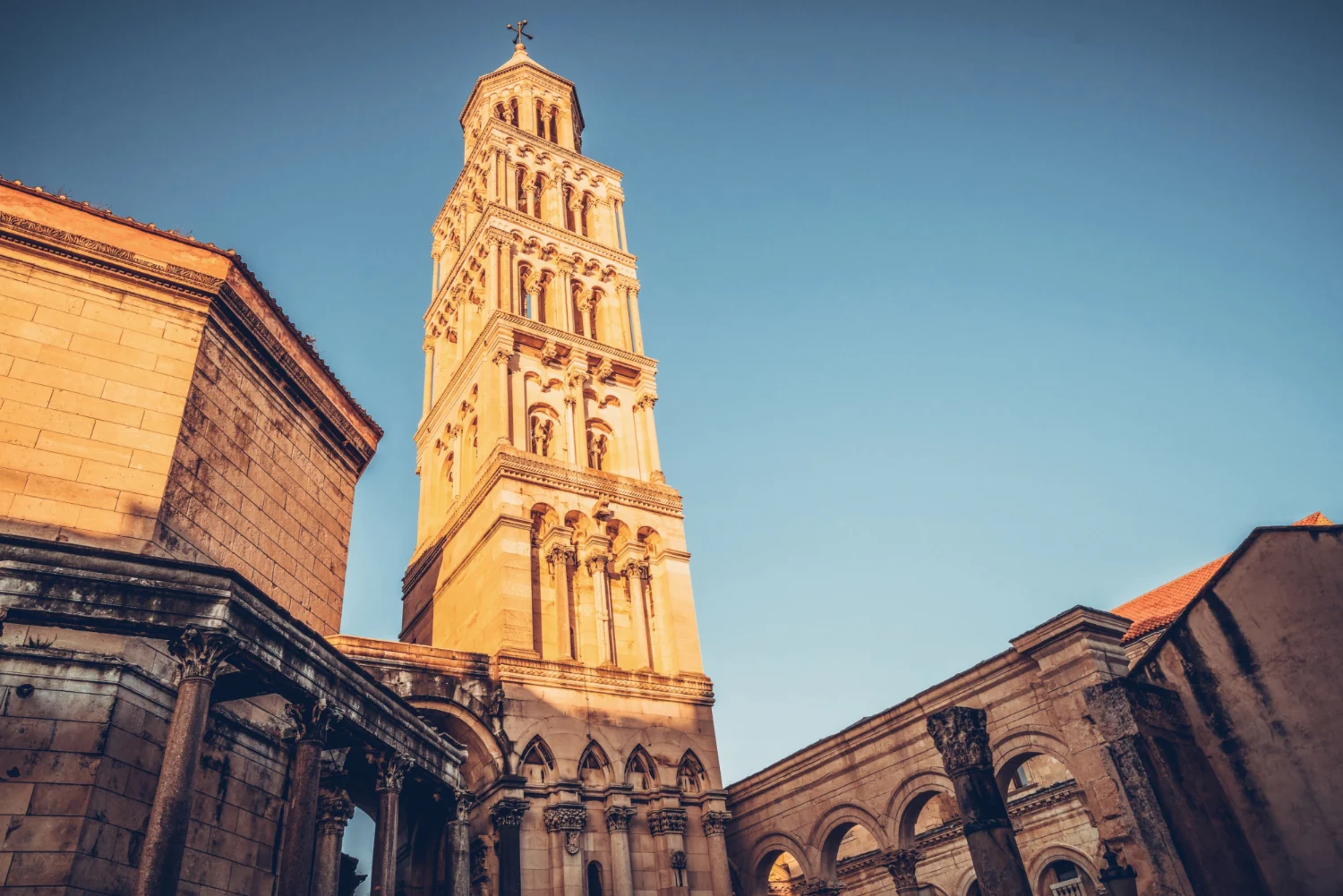
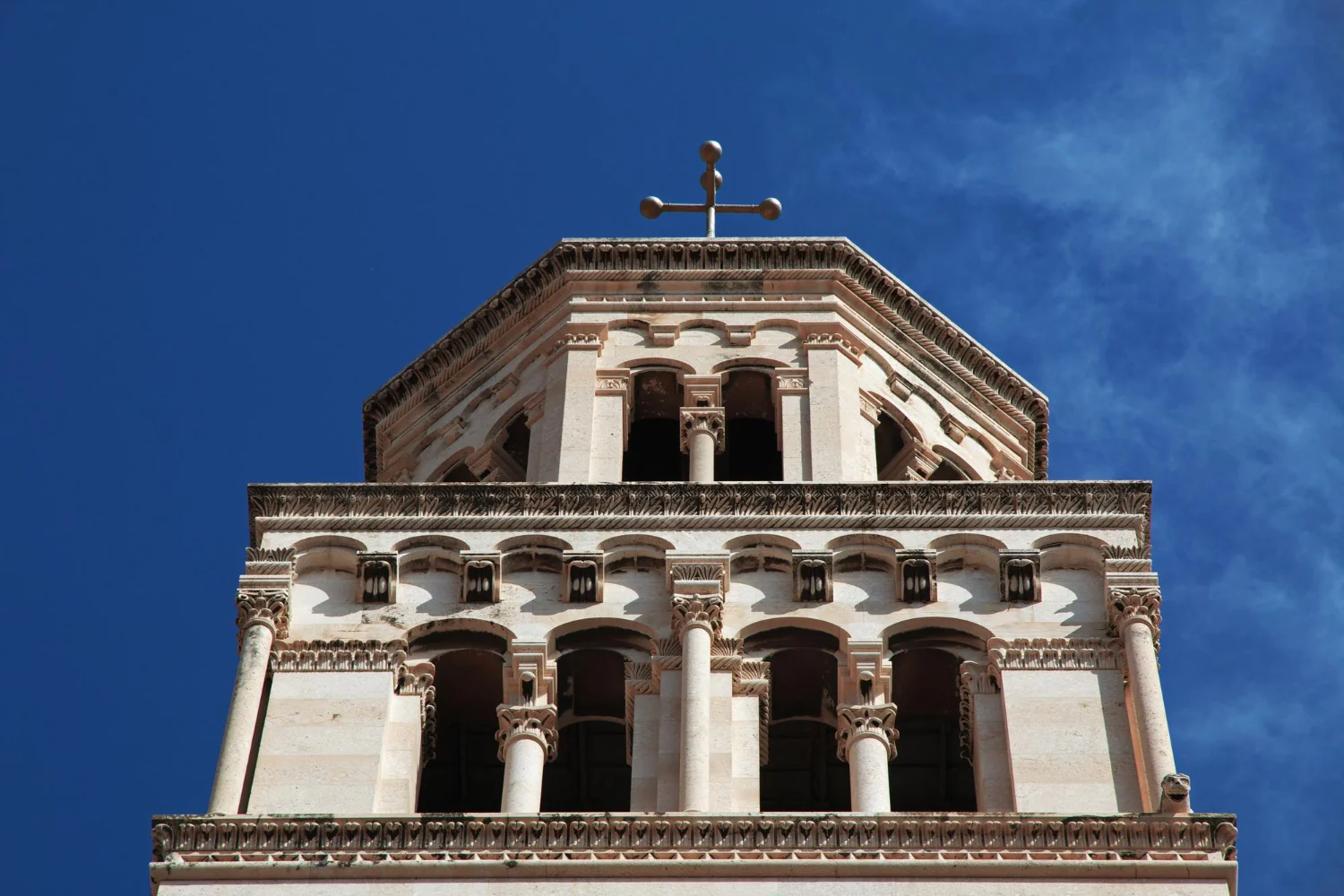
Cathedral bell tower (57 m)
Split’s most recognisable silhouette. The climb up the steep steps is rewarded with views across the entire city and the sea.

Vestibule
The domed entrance hall leading to the imperial apartments, known for its exceptional acoustics — traditional Dalmatian a cappella groups often perform here.
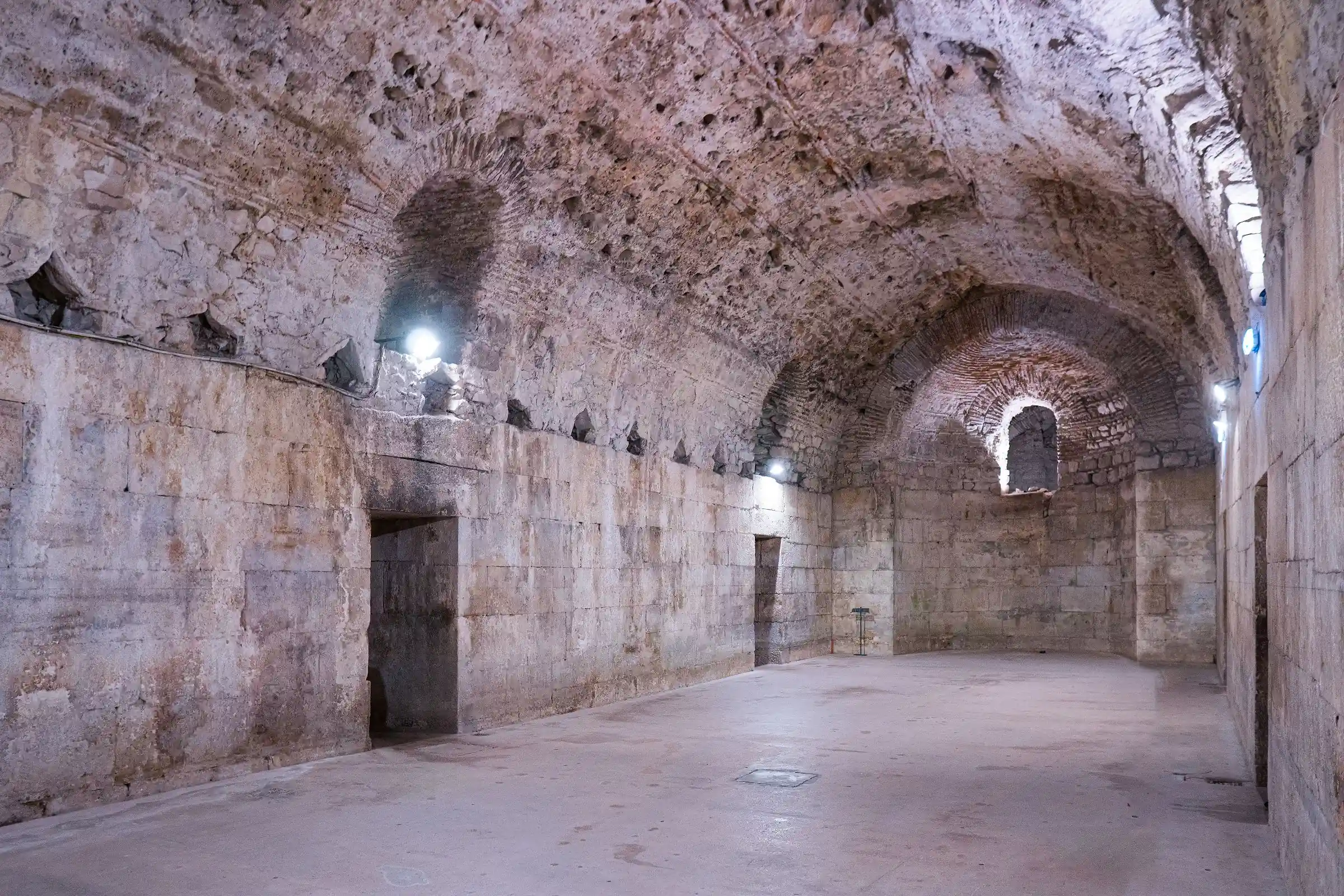
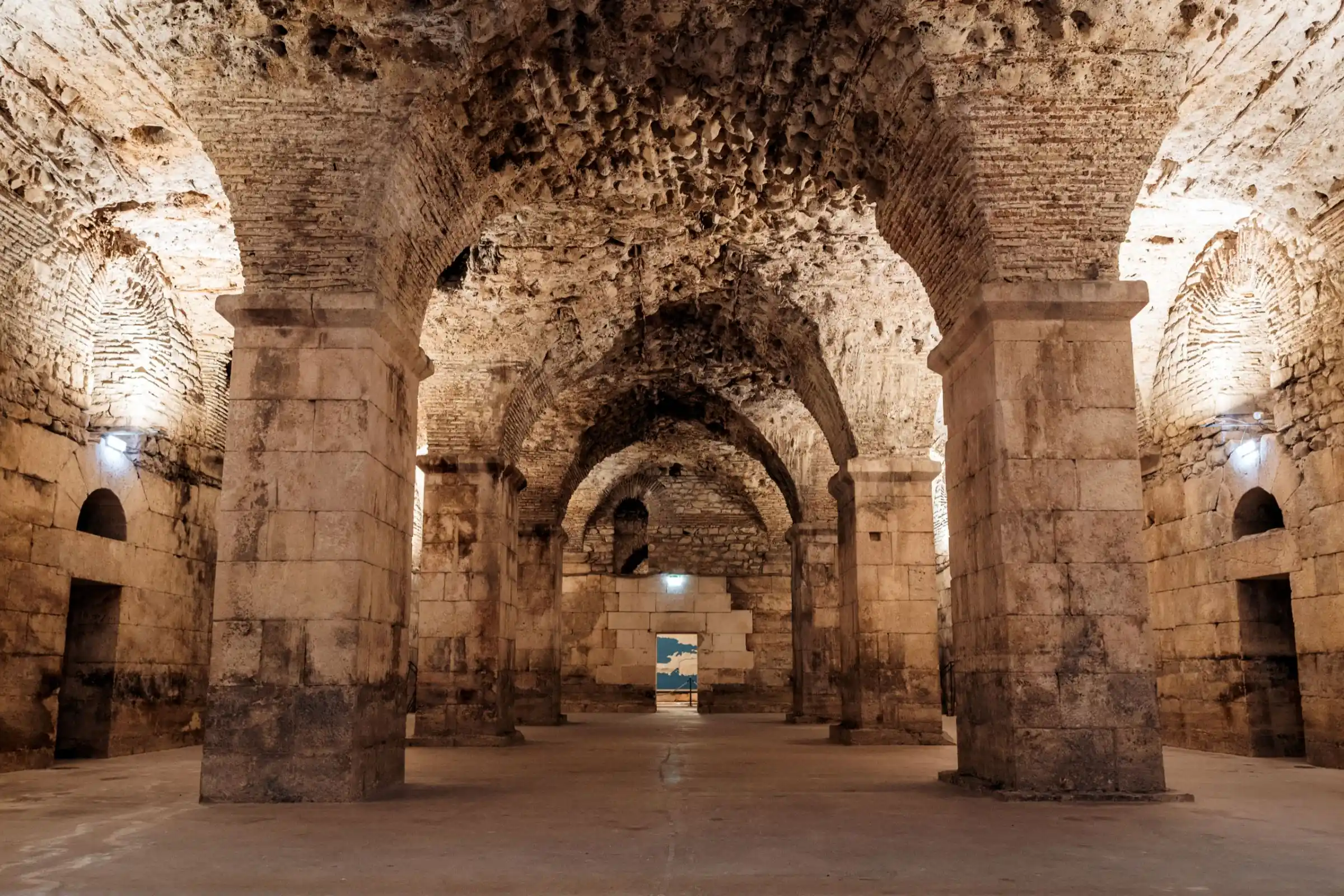
Cellars (substructures)
Underground halls that faithfully reflect the layout of the emperor’s former apartments. The main passage is free; admission is charged for the exhibition halls.
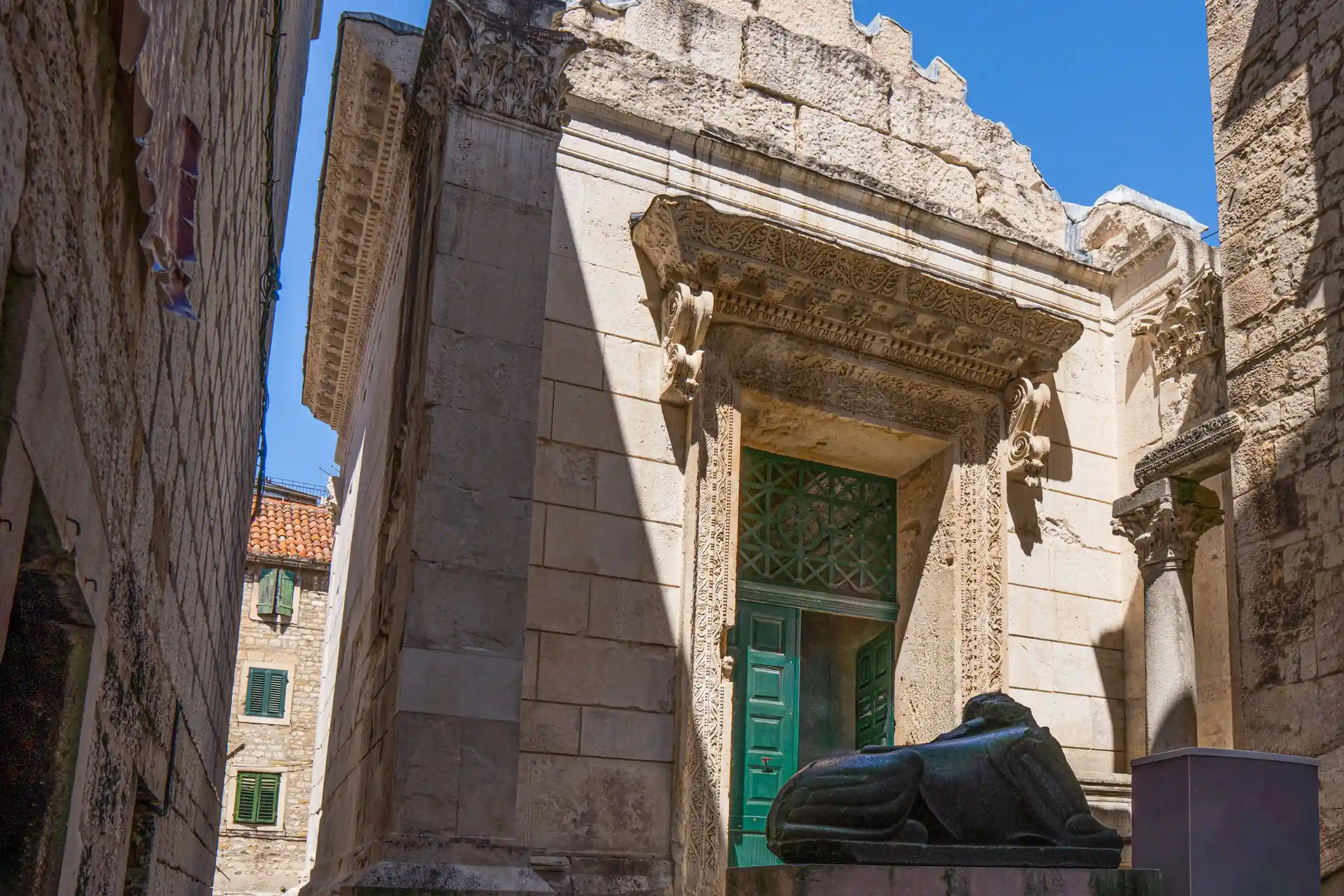
Temple of Jupiter (Baptistery)
A Roman temple dedicated to Jupiter, later converted into the Baptistery of Saint John. Part of the cathedral complex.
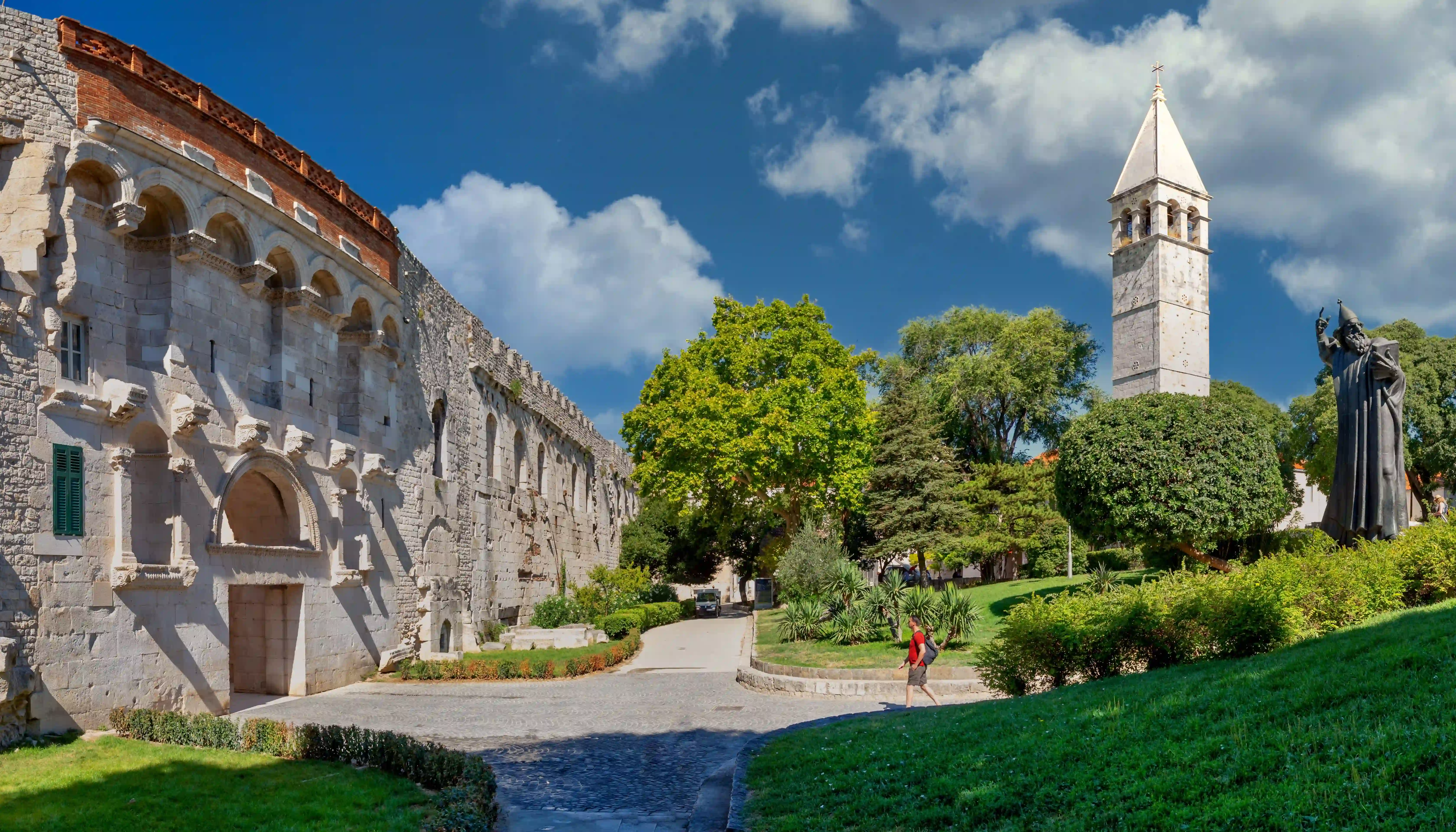
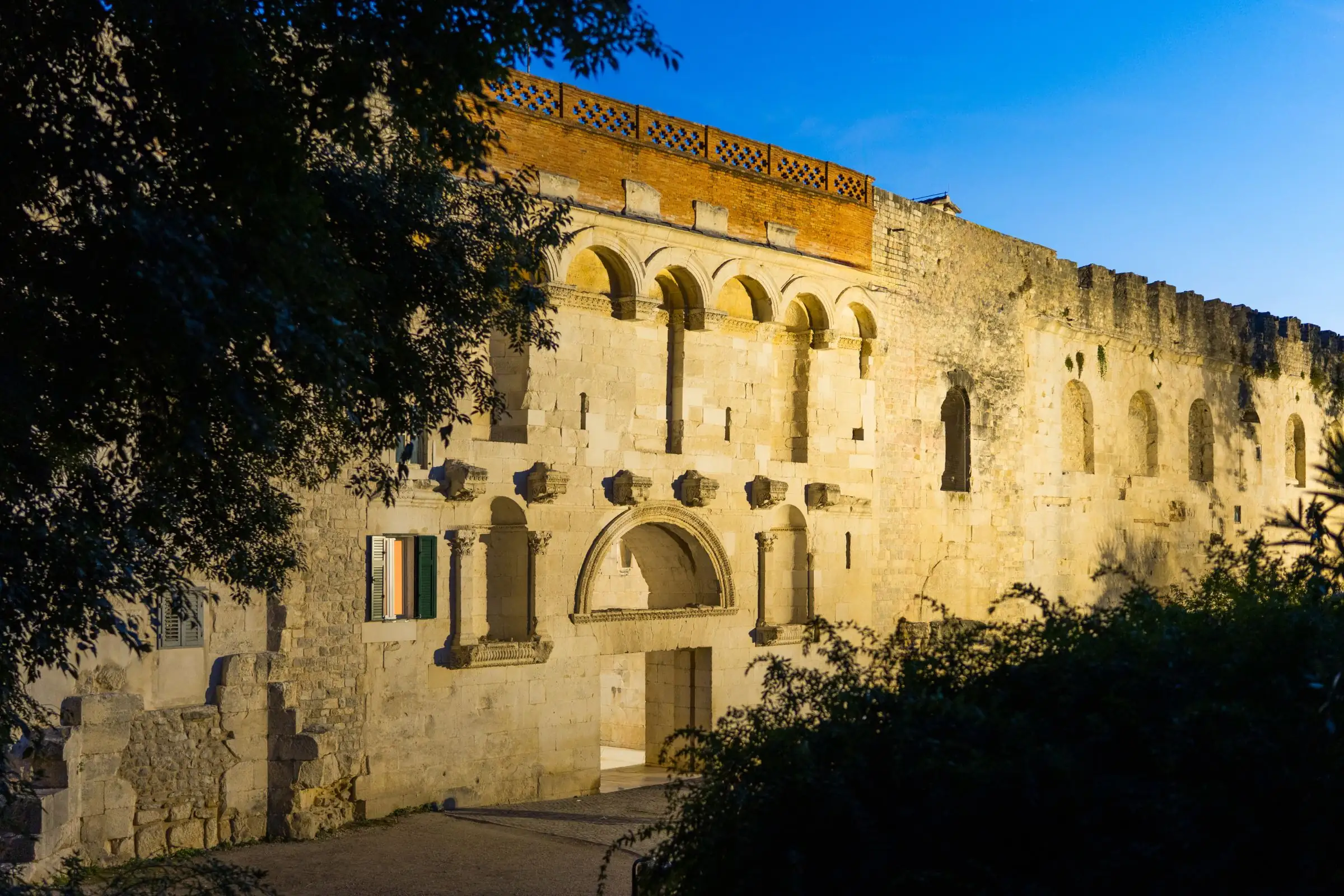
Golden Gate
The palace’s grandest northern gate. It leads to the statue of Gregory of Nin, whose big toe is touched “for good luck”.
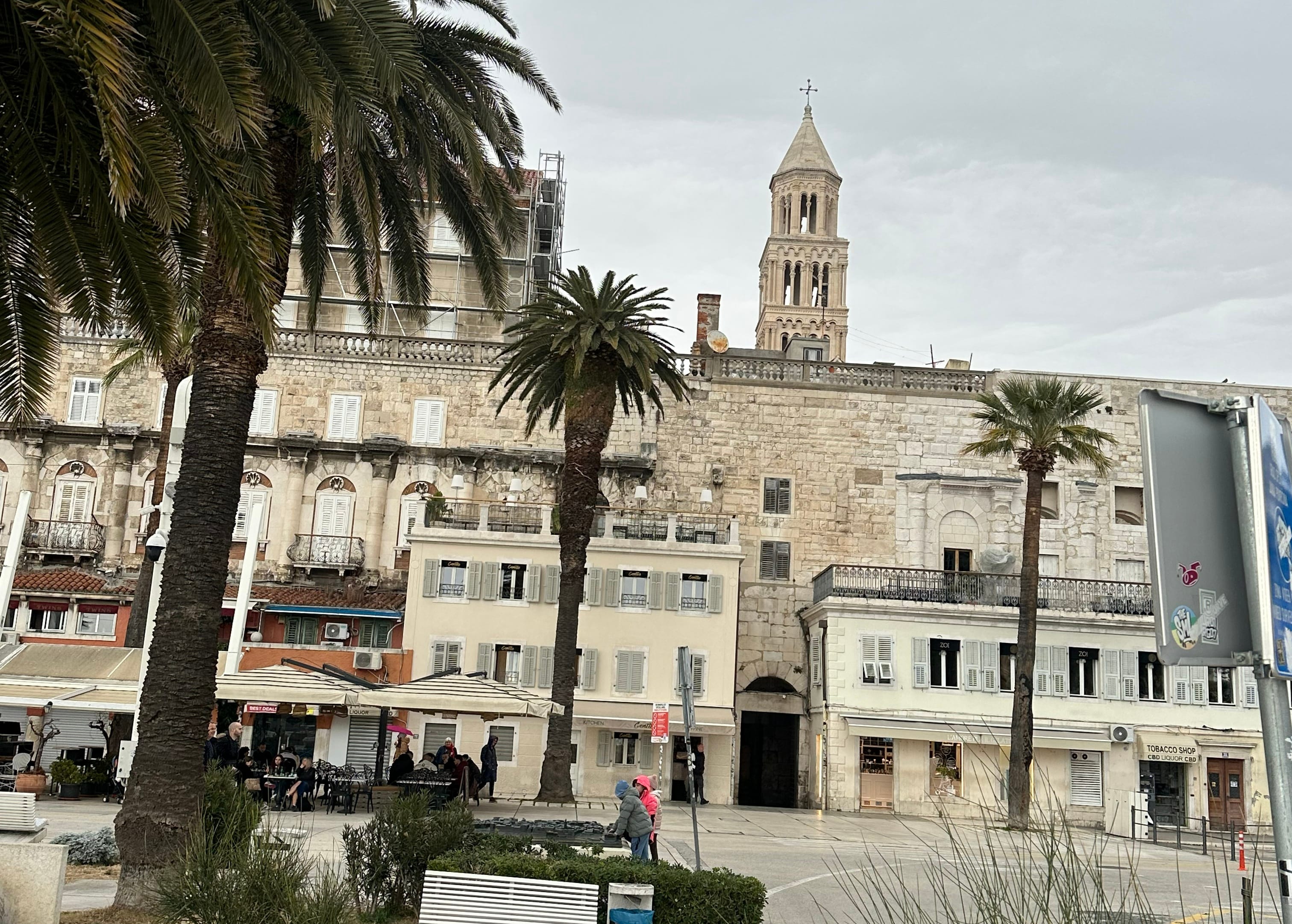
Brass Gate and the other gates
The southern Brass Gate leads directly from the Riva into the cellars — the best entrance for a first visit. The Silver Gate (east) and Iron Gate (west) are also nearby.
Diocletian’s Palace in pictures
Click a photograph to enlarge it.




What is free and what requires a ticket
Much of the palace can be explored without a ticket. Admission is charged for the underground exhibition halls and the cathedral complex.
Free
- All palace streets and passageways €0
- All four city gates €0
- Peristyle (main square) €0
- Vestibule €0
- Main passage through the cellars €0
- Cathedral during Mass €0
Tickets 🔶
- Cellars — exhibition halls from €10
- Cathedral of Saint Domnius ~€5
- Cathedral bell tower ~€7
- Baptistery (Temple of Jupiter) ~€3
- Crypt ~€3
- Combined ticket (all sites) ~€15
🔶 Must be checked before publishing: prices and opening hours for the cathedral complex and cellars vary by season. The cellars (Split City Museum) are generally open from 08:30 to 20:00; the cathedral and bell tower usually close at 17:30. Free admission to the cathedral may be available during Mass and for certain groups (e.g. local worshippers) — check the conditions on site.
Practical information
Where to enter and where to start
The best option is to enter from the Riva through the Brass Gate on the south side — this takes you straight into the cellars and out onto the Peristyle. From there, the natural route continues towards the cathedral, the Vestibule and the Golden Gate to the north.
Opening hours
The palace streets, squares and gates are open 24/7 and free to visit. Individual monuments have their own opening hours: the cellars are generally open from 08:30 to 20:00, while the cathedral and bell tower usually close at 17:30. 🔶 Check the current opening hours before your visit.
Accessibility
The main routes are mostly level, but the ancient stone paving can be uneven and slippery. Some lanes and interiors have steps, particularly the climb up the bell tower. Accessibility varies from one monument to another. 🔶 Check each interior individually.
How to reach the palace
The palace is in the heart of the Old Town. The ferry port, bus station and railway station are all just a few minutes’ walk away along the Riva. Split Airport (SPU) is connected to the city centre by shuttle and local bus services. 🔶 (timetables)
Brass Gate in Split
The southern entrance to Diocletian’s Palace from the Riva, leading through the cellars towards the Peristyle.
The palace in 1 hour, half a day or a full day
Quick tour
Just the highlights, with no tickets required.
- StartBrass Gate + cellar passage
Entrance from the Riva.
- NextPeristyle and Vestibule
The heart of the palace, the sphinx and exceptional acoustics.
- FinishGolden Gate + Gregory of Nin
Northern exit.
Including the interiors
Add the ticketed sights.
- 1Quick tour (above)
Peristyle, Vestibule and gates.
- 2Cathedral + bell tower
Climb up for views of the city.
- 3Cellars + Baptistery
Exhibition halls.
Palace + surroundings
Combine it with the Old Town.
- MorningThe entire palace
Explore the interiors without rushing.
- MiddayRiva, Pazar, Marmontova
Take a break and enjoy some local food.
- AfternoonMarjan or Salona/Klis
A viewpoint or an excursion.
What to combine with a visit to the palace
Everything is within walking distance or a short drive from the palace.

Statue of Gregory of Nin
Meštrović’s statue right beside the Golden Gate; touch the big toe “for good luck”.
More Coming soon
Riva and Pazar
The main seafront promenade and the city market beside the palace’s eastern wall.
More Coming soon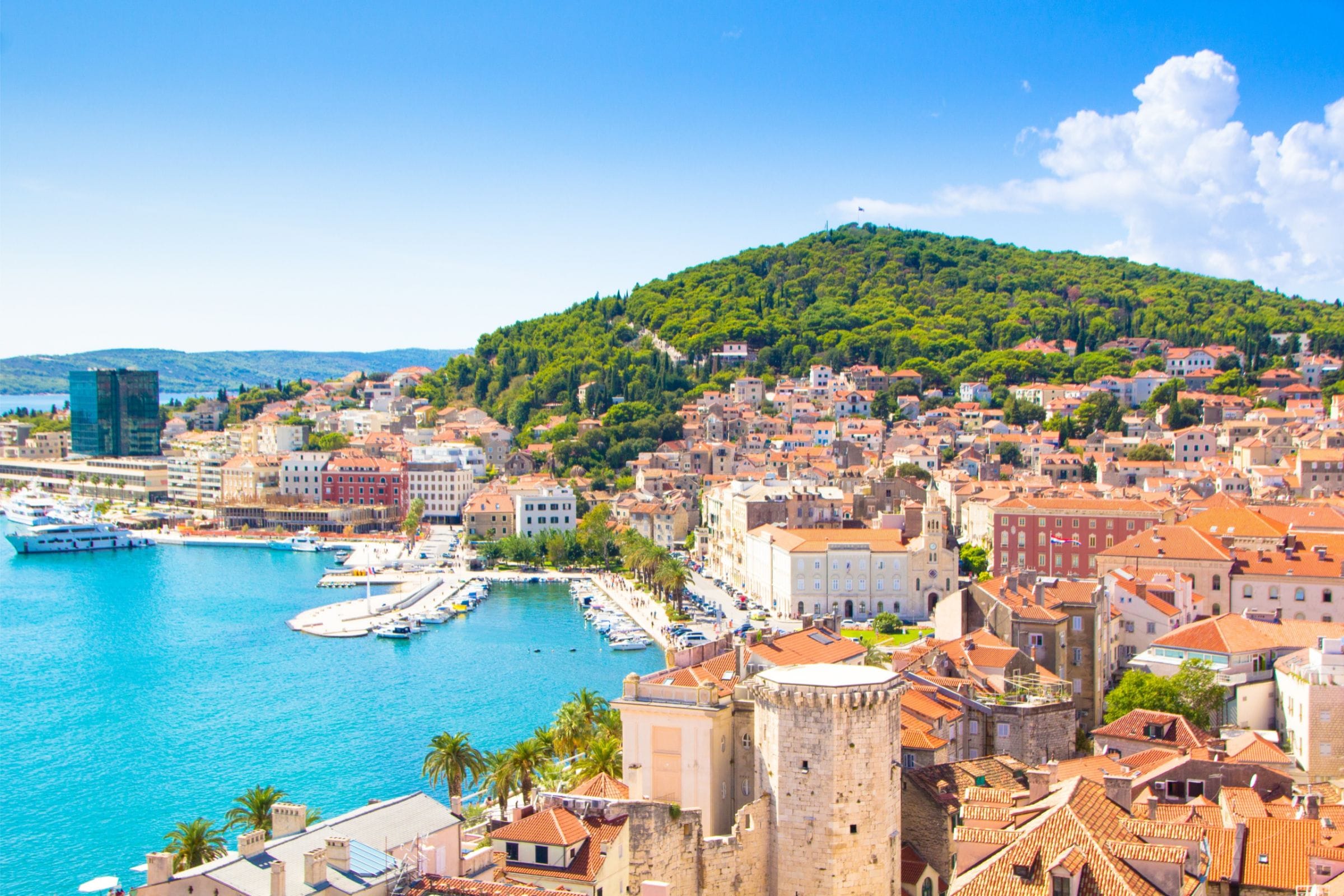
Marjan
A forest park with viewpoints, around a 15-minute walk from the palace.
More Coming soon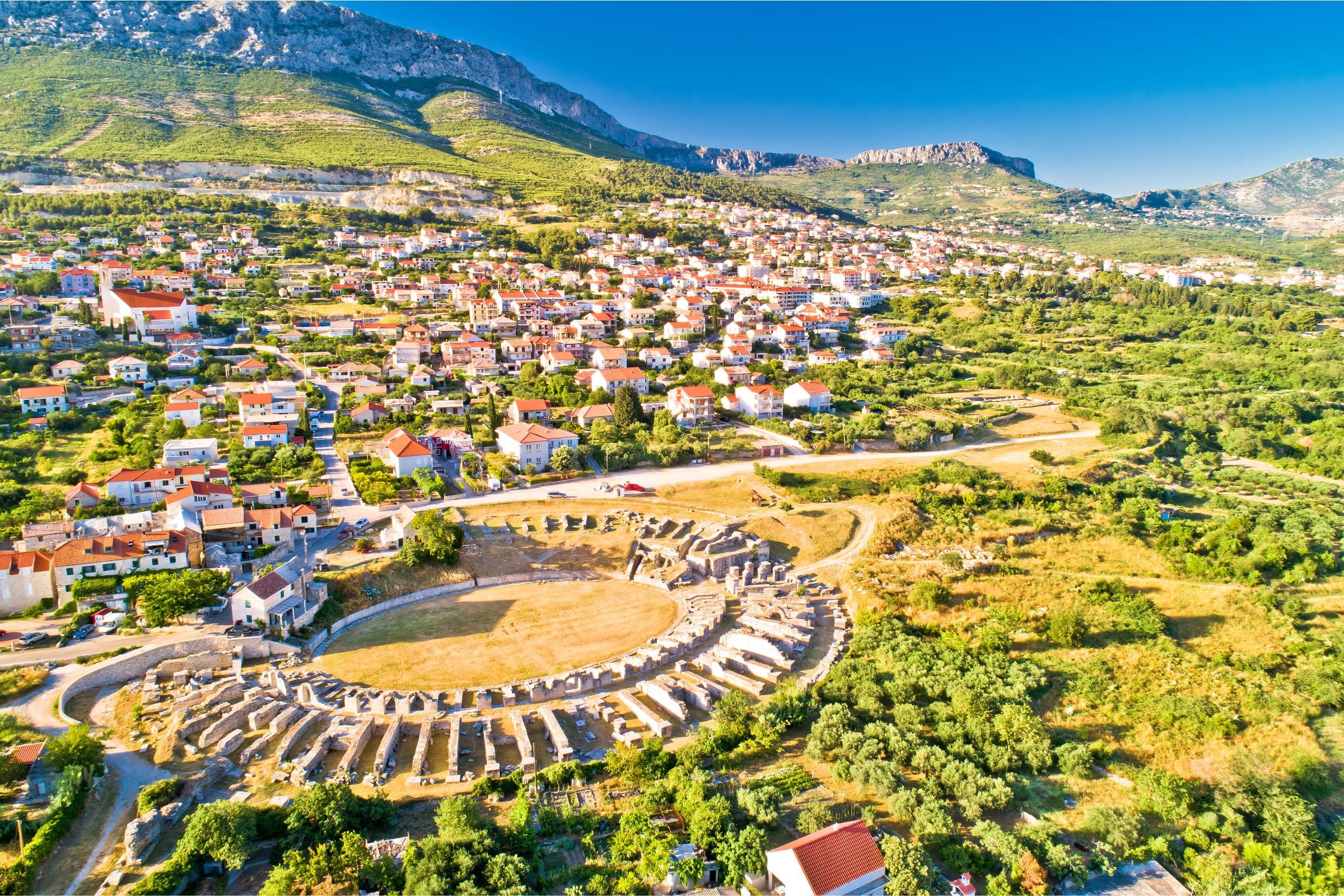
Salona (Solin)
The remains of the ancient city associated with Diocletian, a short drive from Split.
More Coming soon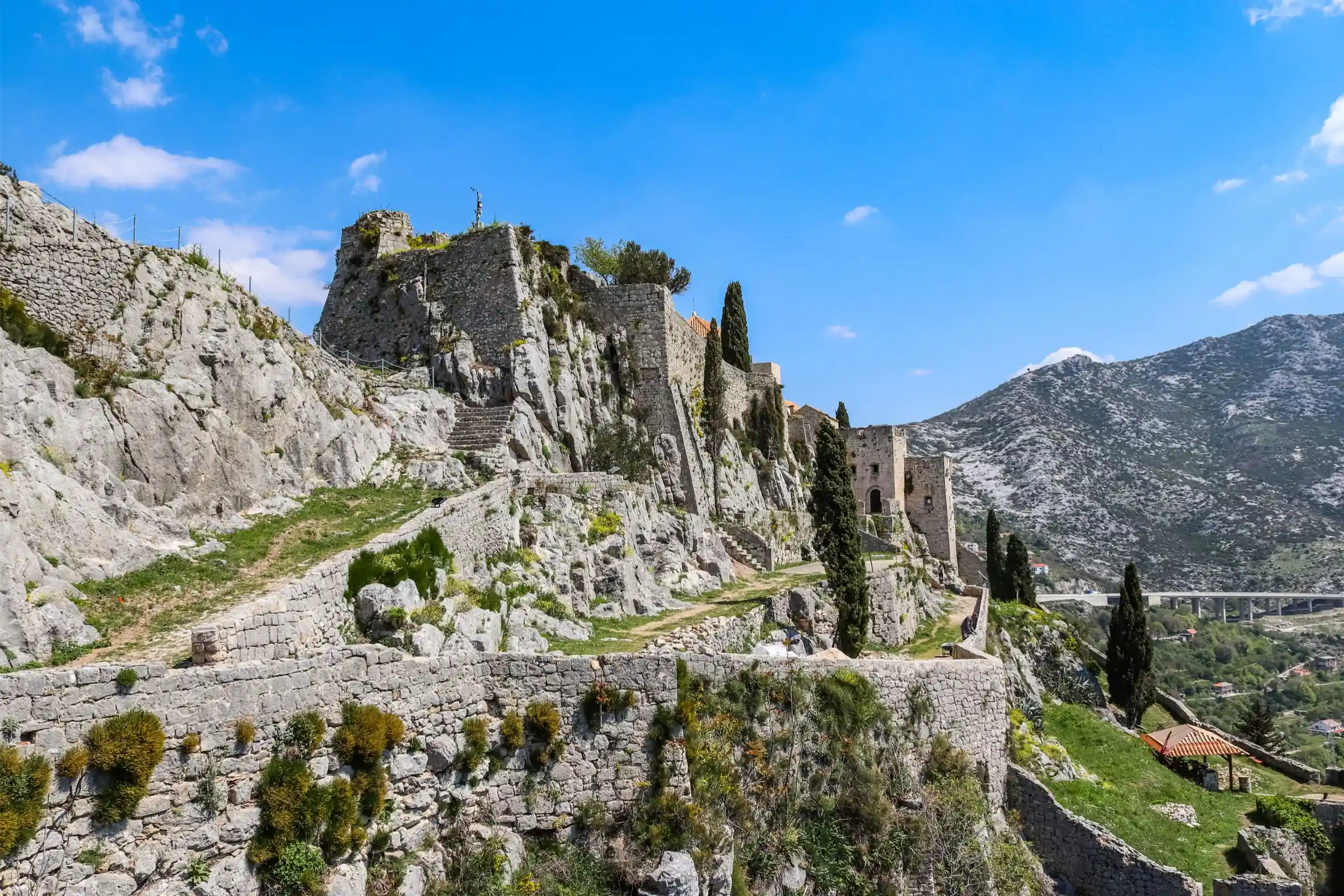
Klis Fortress
A historic fortress overlooking Split, known from “Game of Thrones”.
More Coming soon
Trogir
A UNESCO-listed town around 30 minutes from Split, easy to combine with a trip to the airport.
More Coming soonEverything people most often ask about the palace
Is entry to Diocletian’s Palace free?
Yes — the streets, squares, gates, Peristyle and Vestibule are free and open 24/7. Admission is charged for the underground exhibition halls and the cathedral complex (cathedral, bell tower, baptistery and crypt).
Do I need a ticket?
Not for simply walking through the palace. You only need a ticket if you want to enter the exhibition cellars or visit the cathedral, bell tower and baptistery. 🔶 Check prices before your visit.
What should I see if I only have 1 hour?
Enter from the Riva through the Brass Gate, walk through the cellar passage to the Peristyle, see the Vestibule and leave through the Golden Gate towards the statue of Gregory of Nin.
Is the cathedral included in the palace ticket?
There is no single “palace ticket”. The cathedral complex has its own tickets, available individually or as combined tickets, and these are separate from admission to the cellars. 🔶
When is it least crowded?
Early in the morning or late in the afternoon, when organised tours and cruise passengers are less common. In summer, the middle of the day is the busiest time.
Is it suitable for children?
Yes — children usually find the cellars and narrow streets interesting. Take care on the uneven stone paving and steps, especially when climbing the bell tower.
Is it accessible with a pushchair or wheelchair?
The main routes are mostly level, but the stone paving is uneven and some interiors have steps. Accessibility varies by monument. 🔶 Check each entrance individually.
Which gate should I use for my first visit?
Use the southern Brass Gate from the Riva — it leads directly into the cellars and towards the Peristyle, making it the most logical place to begin your visit.
Can I explore without a guide?
Yes, the palace is easy to explore independently. Guided tours, audio guides and VR experiences are available if you would like more context.
What is nearby?
The Riva, the statue of Gregory of Nin, Pazar city market and Marjan are right beside the palace; Salona, Klis and Trogir are a short drive from Split.
Related guides

Complete guide to Split
Read
Cathedral of Saint Domnius — guide
Read Coming soon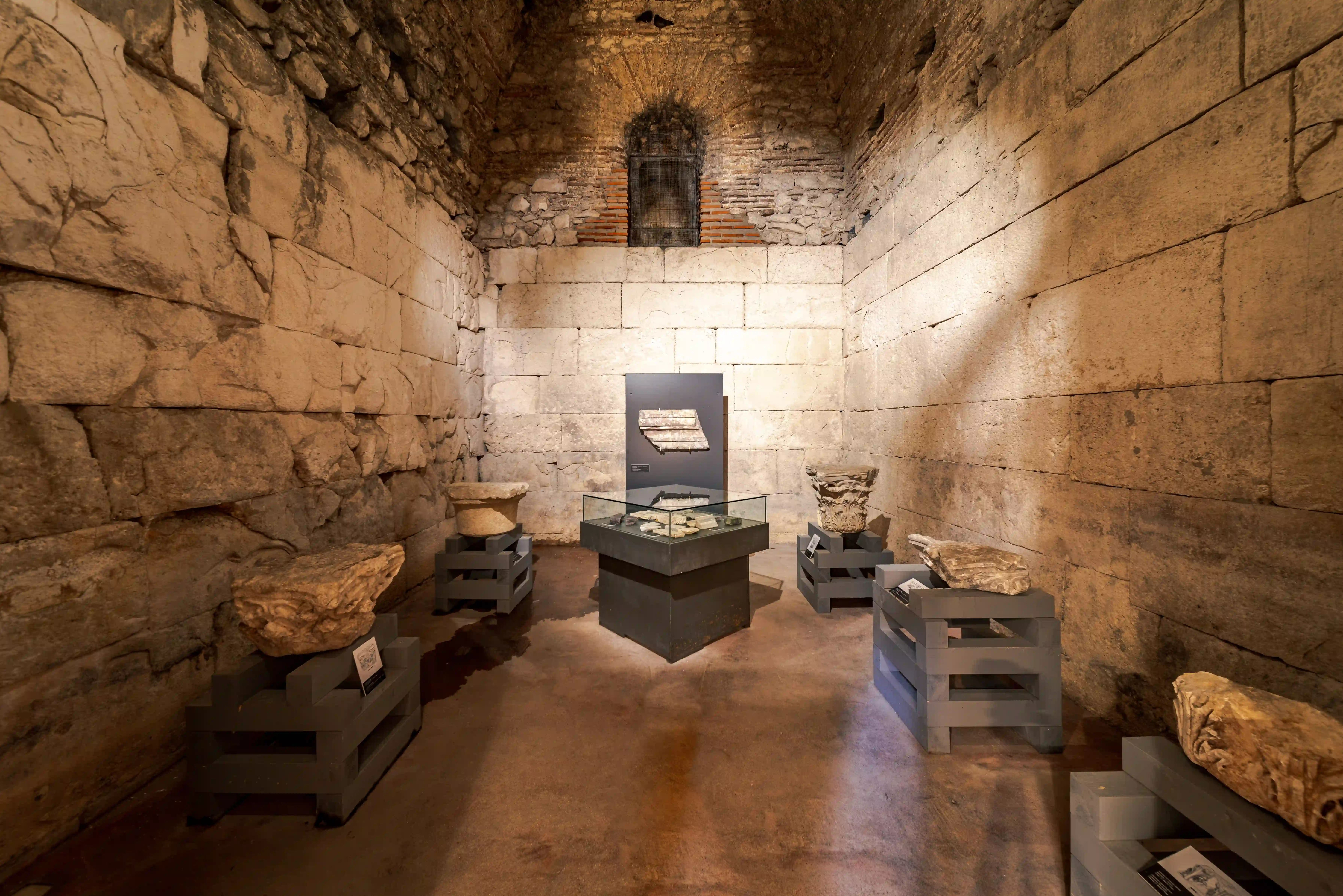
Palace cellars — what to see
Read Coming soon
Day trips from Split
ReadStay in the heart of Split, just steps from the palace
Apartments and rooms within and around Diocletian’s Palace — wake up in the historic centre and start sightseeing before the crowds arrive.