


Split — a complete city guide
What to see, the best beaches, where to stay, how to get there and tried-and-tested day trips — all in one place.
- Diocletian’s Palace (UNESCO)
- Beaches and islands within easy reach
- Ideal for 2–3 days
Everything you need for planning in 30 seconds
Essential information before you go into the details.
Central Dalmatia, Croatia
May–June and September
2–3 days (+ day trips)
Diocletian’s Palace (UNESCO)
Split (SPU), ~24 km 🔶
Couples, families, culture lovers
City + sea + day trips
Euro (€)
Where it is and what it is known for
Split is the largest city in Dalmatia and the second-largest urban area in Croatia, located on a peninsula between the sea and the mountainous hinterland, with a harbour offering ferry connections to the central Dalmatian islands.
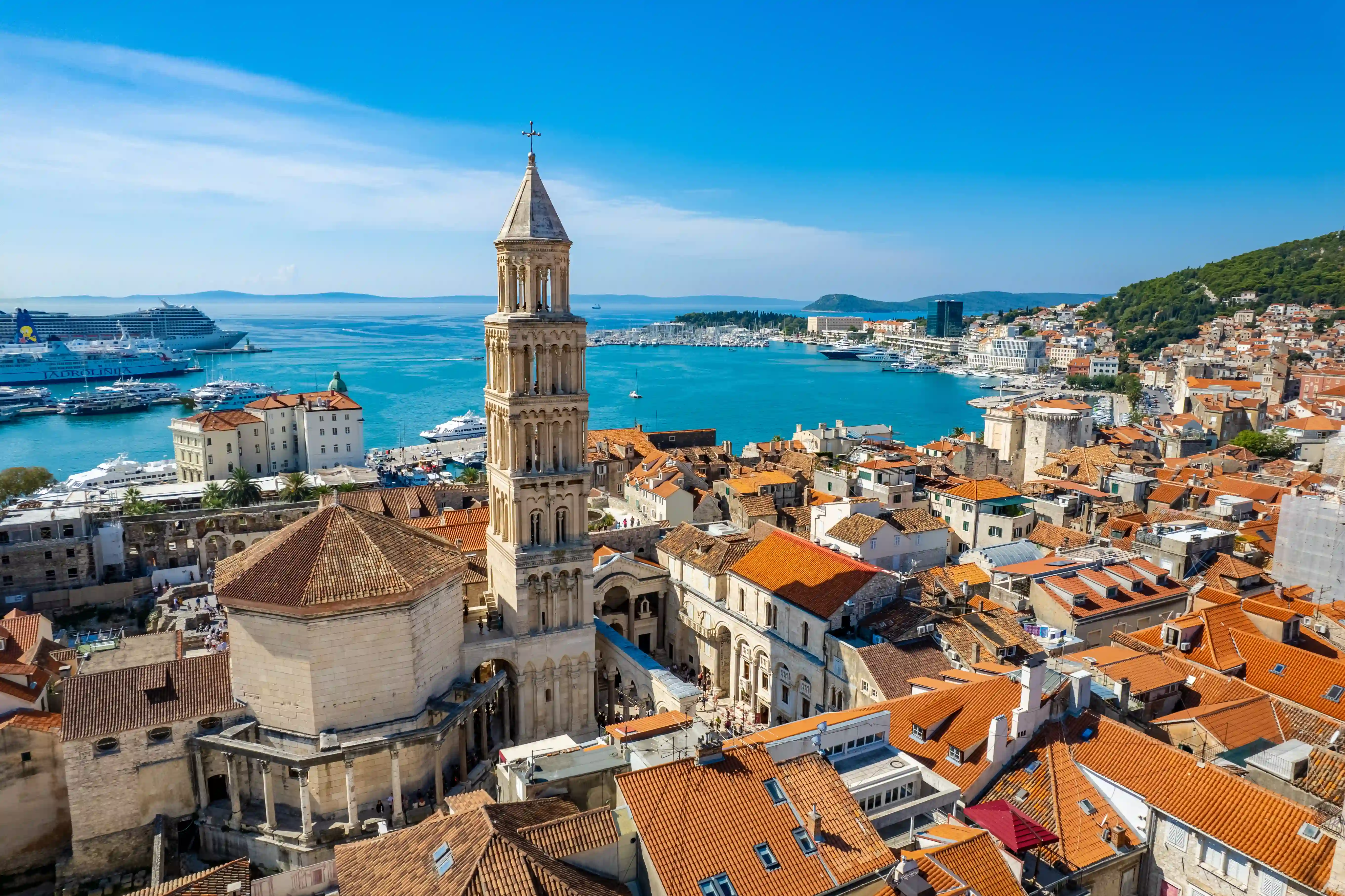
The heart of the city is Diocletian’s Palace, a Roman imperial residence from the 4th century and a UNESCO World Heritage Site since 1979. Unlike a museum, the palace is a living part of the city — within its walls you will find homes, cafés, shops and restaurants.
Split is best suited to travellers looking for a blend of culture and the sea, as well as an excellent starting point for trips to the islands and national parks.
Advantages
- A blend of history and the sea in a walkable centre
- An excellent base for island and national park trips
- A lively city even outside the main season
Good to know
- Crowds and heat in summer (35 °C+)
- Few true sandy beaches in the city itself
- Parking in the old town can be difficult 🔶
Interesting facts about Split
Nine details that make the city special — perfect conversation starters while strolling through the palace.
An old town inside a Roman palace
Split’s historic centre is located within Diocletian’s Palace — people have been living, walking and drinking coffee there for around 1,700 years.
UNESCO-listed since 1979
The historic centre with Diocletian’s Palace has been on the UNESCO World Heritage List since 1979.
A cathedral in the emperor’s mausoleum
The Cathedral of Saint Domnius is one of the oldest in the world — it is located in the mausoleum of Emperor Diocletian, a persecutor of Christians.
Meereen from Game of Thrones
The palace cellars stood in for Daenerys’s throne room, while nearby Klis Fortress represented the city of Meereen.
Picigin was born on Bačvice Beach
The game of picigin — keeping a small ball in the air in shallow water — originated on Split’s Bačvice Beach in the early 20th century and is protected heritage.
A 3,500-year-old sphinx
Diocletian brought sphinxes from Egypt; the one on the Peristyle, carved from black granite, is around 3,500 years old.
The emperor who grew cabbages
After stepping down from power, Diocletian, according to an anecdote, preferred growing vegetables in his palace to returning to rule.
The oldest supporters’ group
Torcida, the supporters of Hajduk founded in 1950, is considered the oldest organised supporters’ group in Europe.
Marjan — the lungs of the city
The forested Marjan peninsula (178 m) is known by locals as the “lungs of the city”; its trails and viewpoints are within easy reach of the old town.
Split’s main sights
Most are located within or around the old town — all within walking distance.

Diocletian’s Palace and cellars
A Roman imperial palace from the 4th century and the heart of the city. Walk through the cellars and the Peristyle, the palace’s central square.
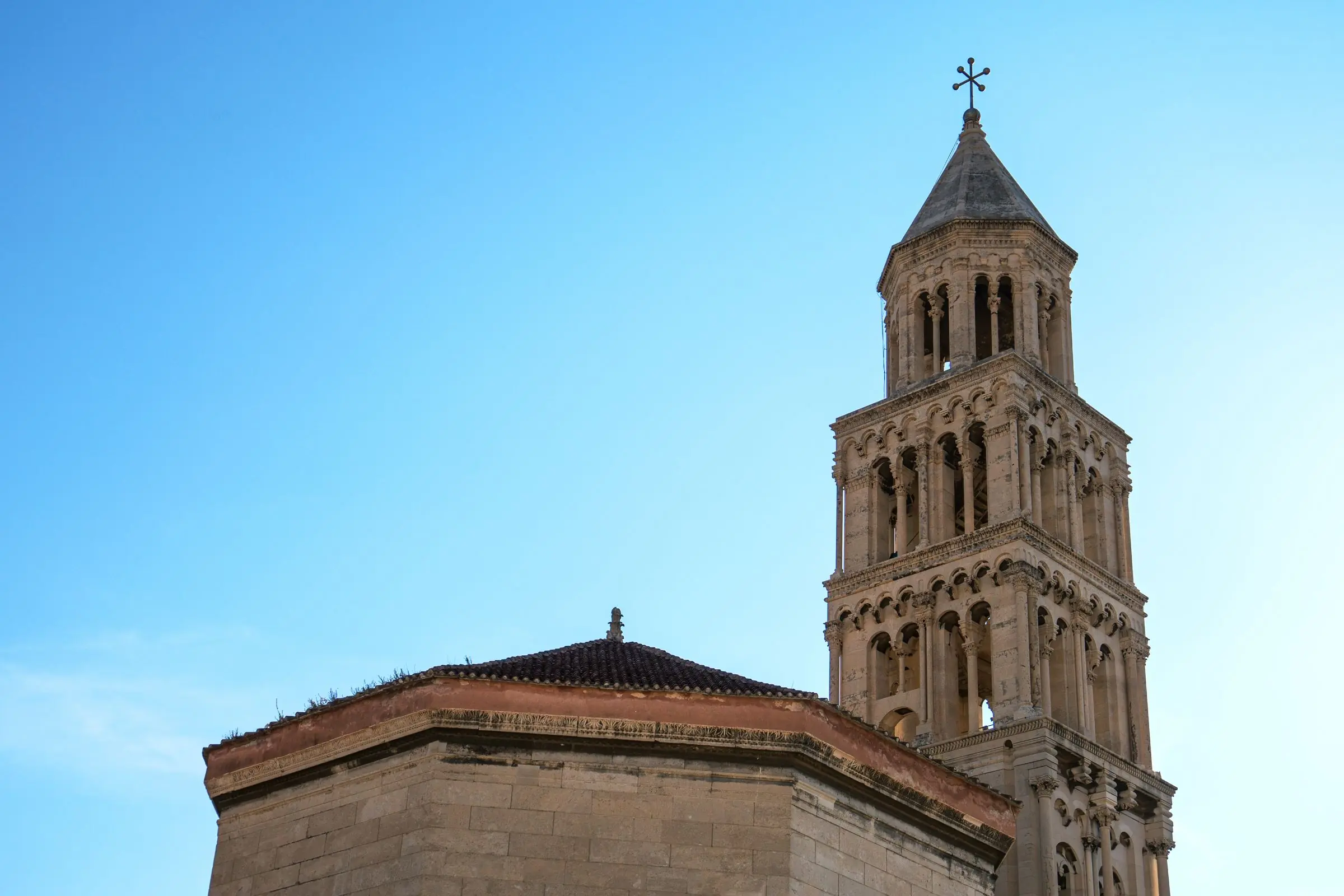
Cathedral of Saint Domnius and bell tower
One of the oldest cathedrals in the world, located in Diocletian’s mausoleum. The climb up the bell tower offers views over the city.
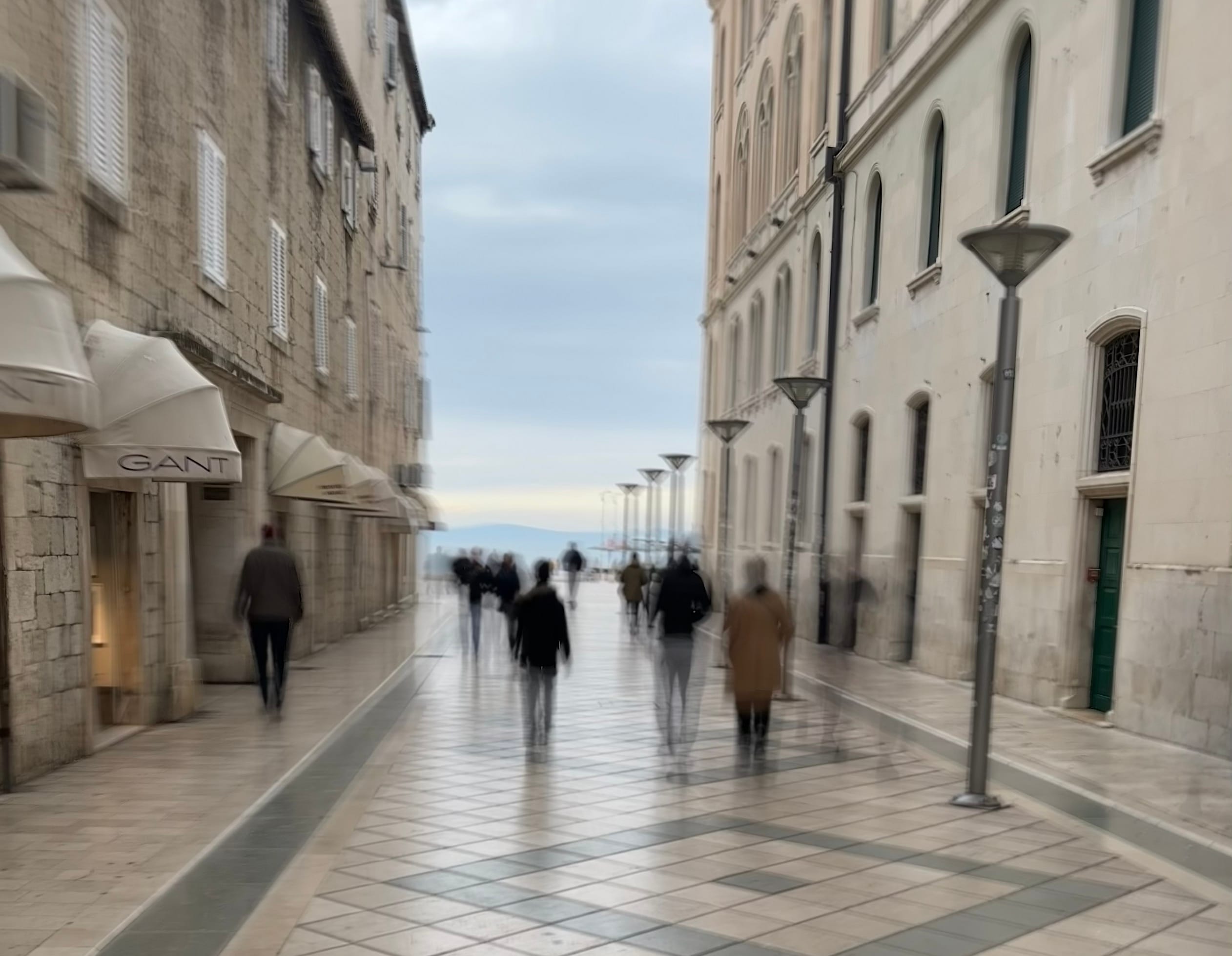
Riva and Marmontova Street
The city’s main seafront promenade and the heart of daily life. Marmontova Street leads towards the fish market and the green market.
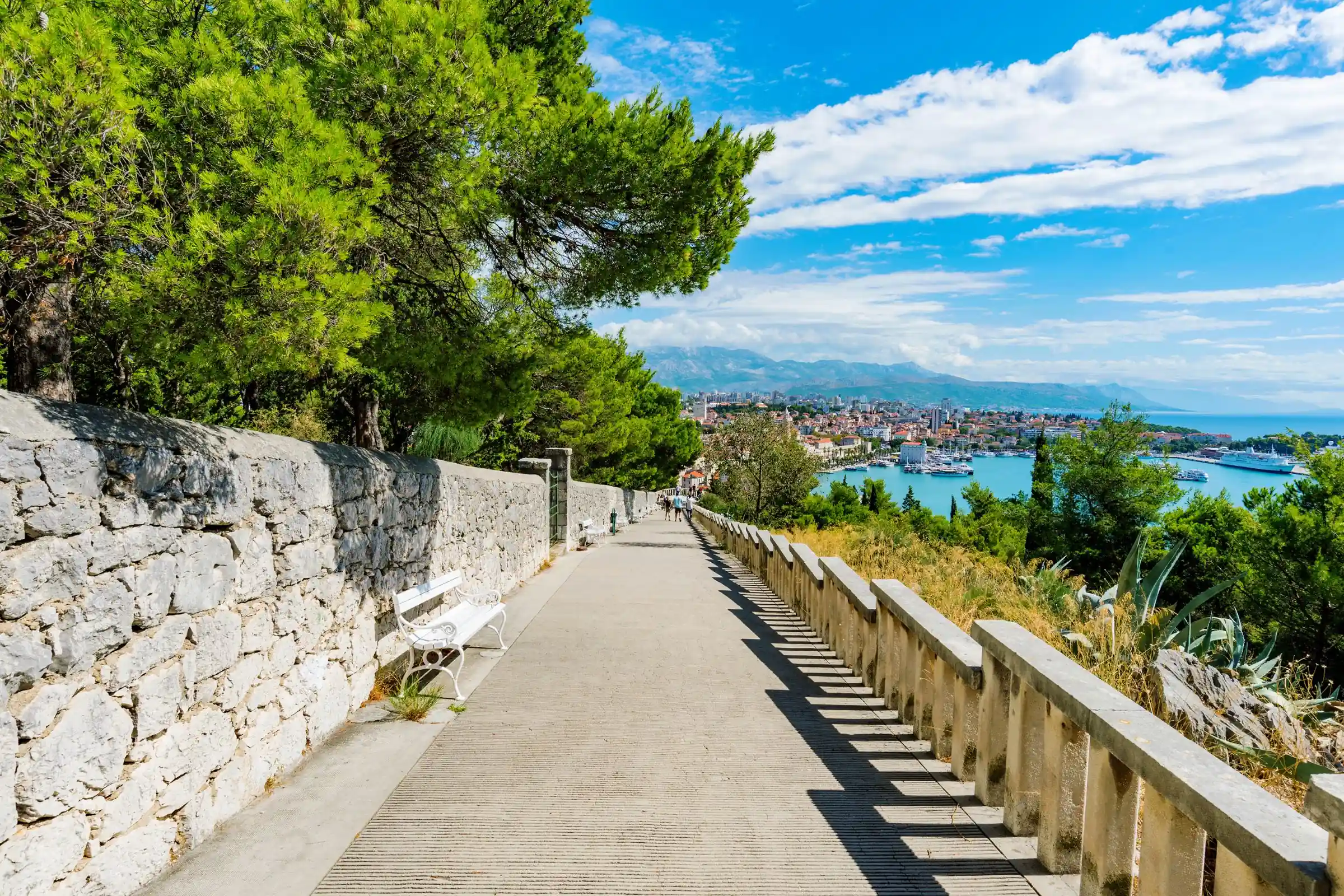
Marjan — park and viewpoints
A forested peninsula above the city (178 m) with trails, viewpoints and small beaches. Best for sunset.
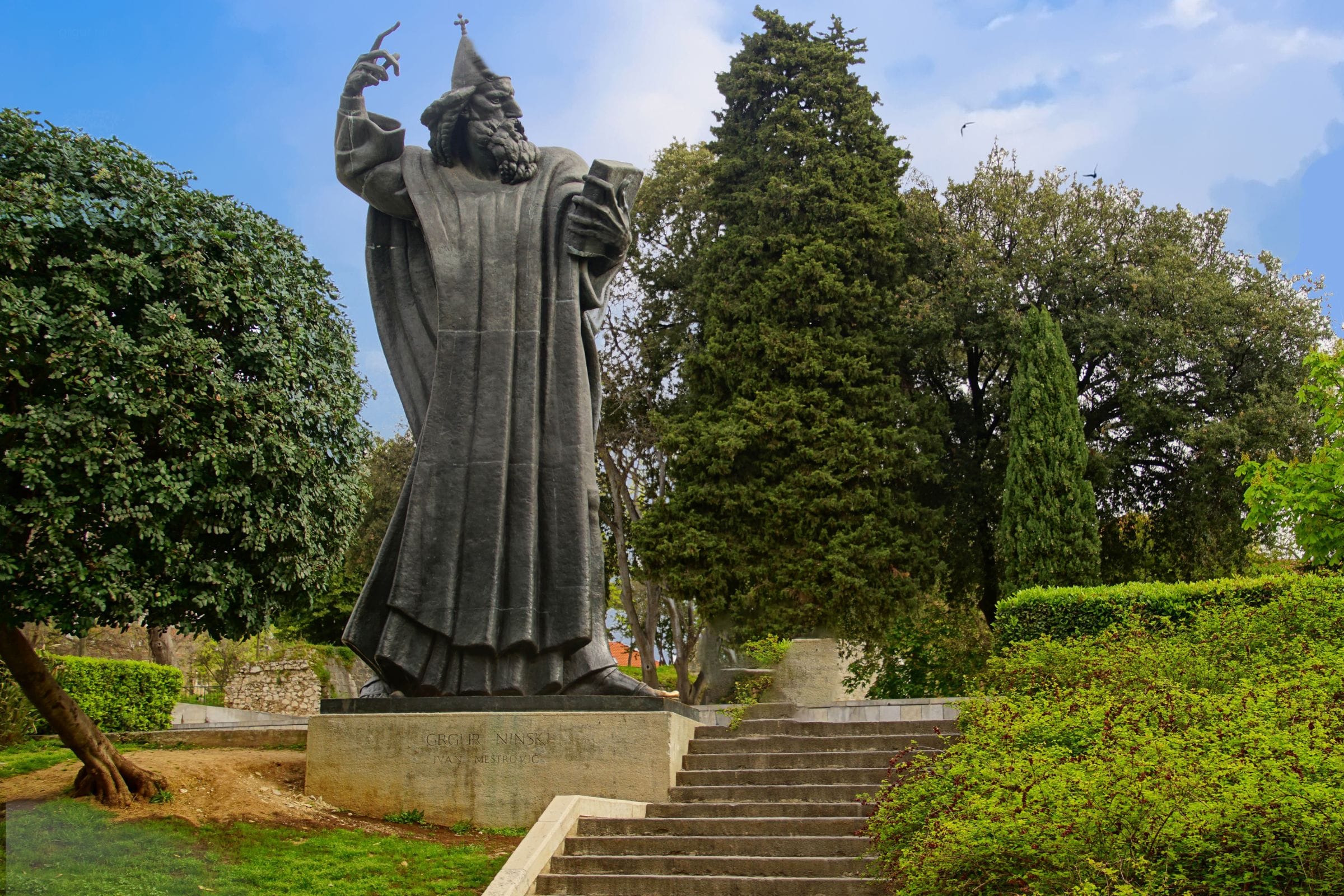
Gregory of Nin and the Golden Gate
Ivan Meštrović’s monumental statue beside the palace’s best-preserved northern gate, the Golden Gate. Touch the toe “for luck”.
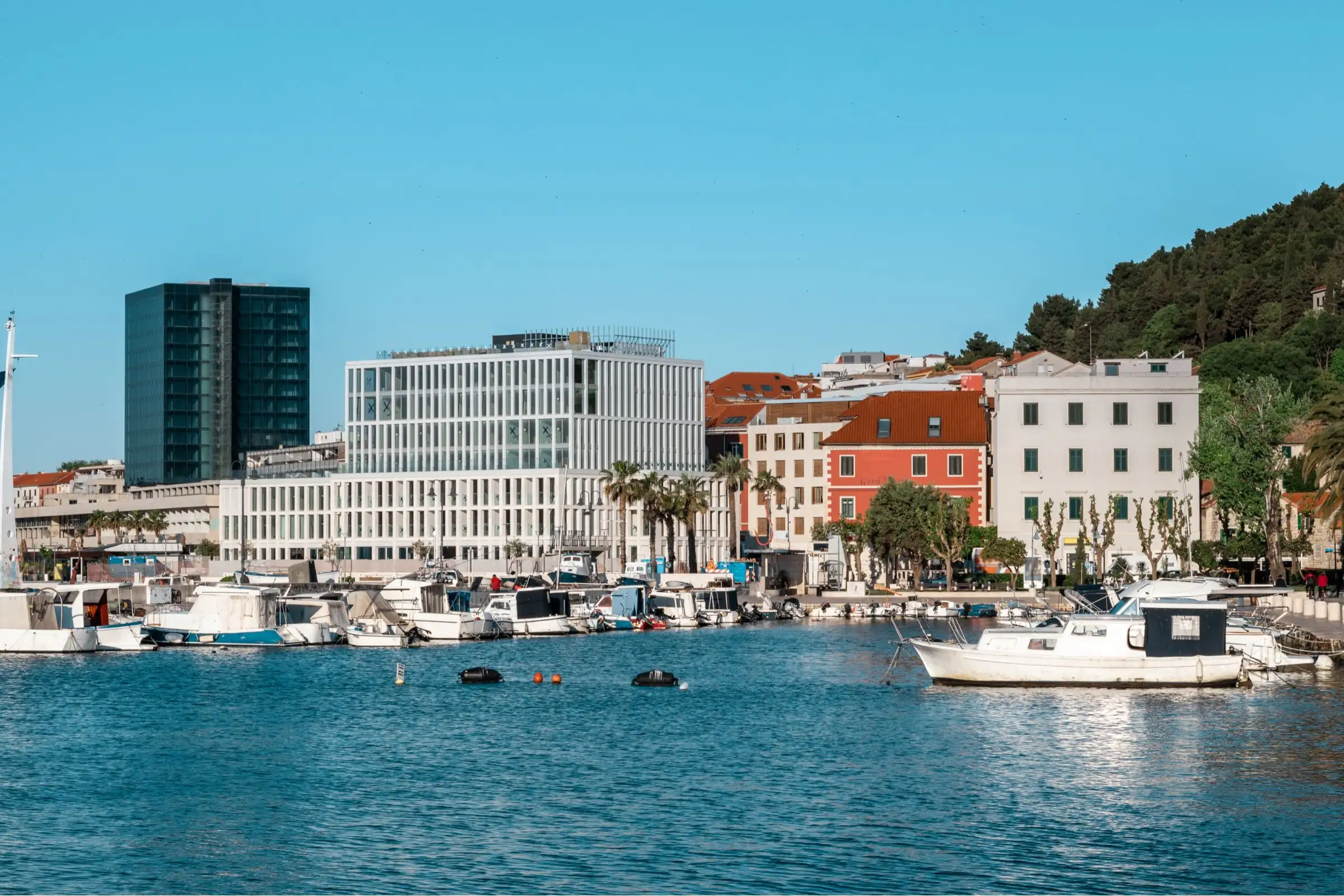
Veli Varoš and Matejuška
The old stone lanes of the fishermen’s quarter and the small harbour of Matejuška — authentic Split away from the main tourist route.
Orientation
Map of Split and weather
Main locations and current conditions in one place. Click a marker on the map for details and directions.
Marked: Diocletian’s Palace · Riva · Marjan · Bačvice · Kašjuni · Žnjan · Ferry terminal
Weather in Split
The best beaches in Split and the surrounding area
Bačvice and Firule are sandy and close to the centre; the others are mostly pebble beaches. For the most beautiful beaches, head to the islands.
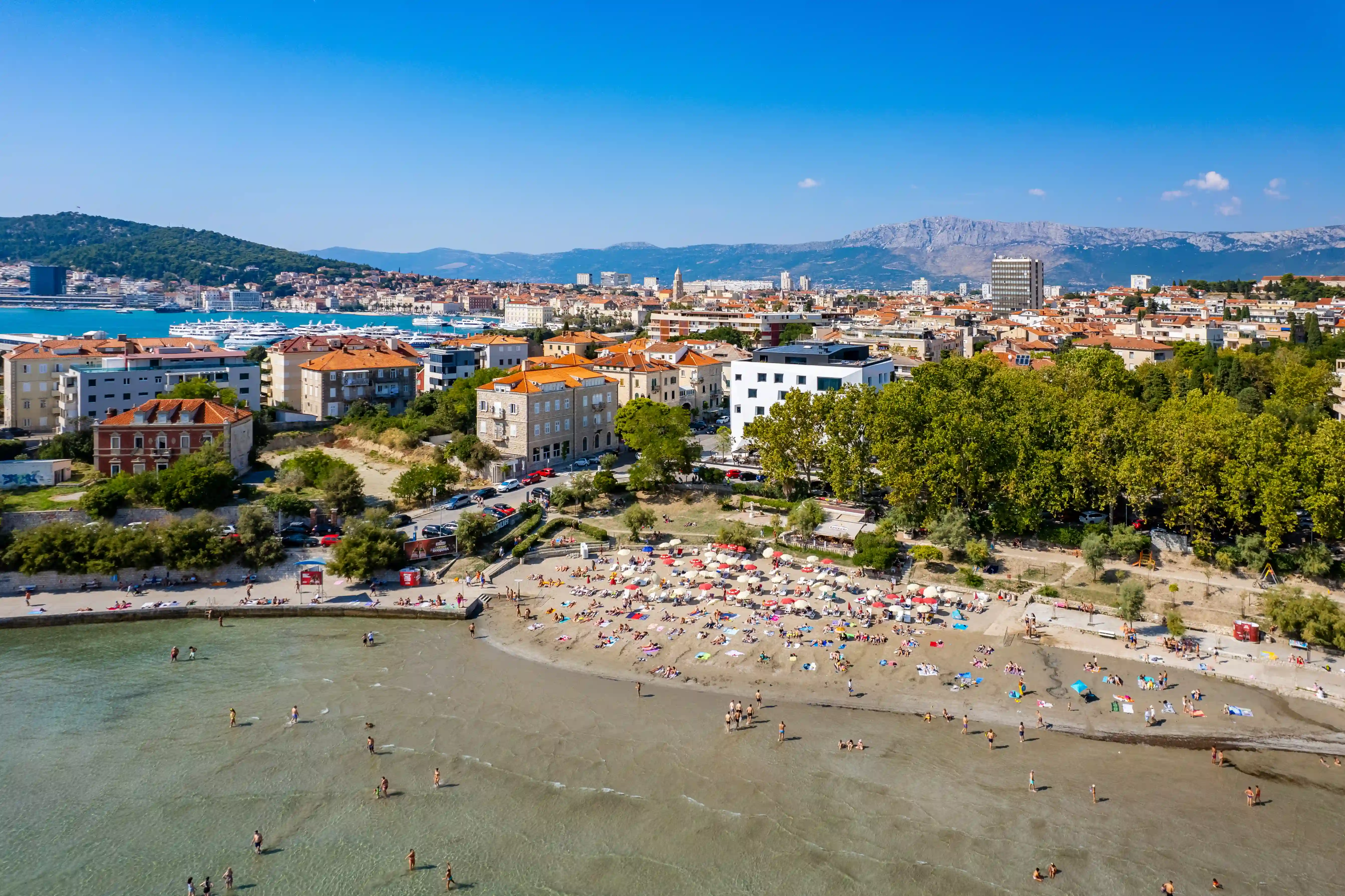
The city’s best-known beach, sandy and shallow. Home of the game of picigin; lively both during the day and in the evening.
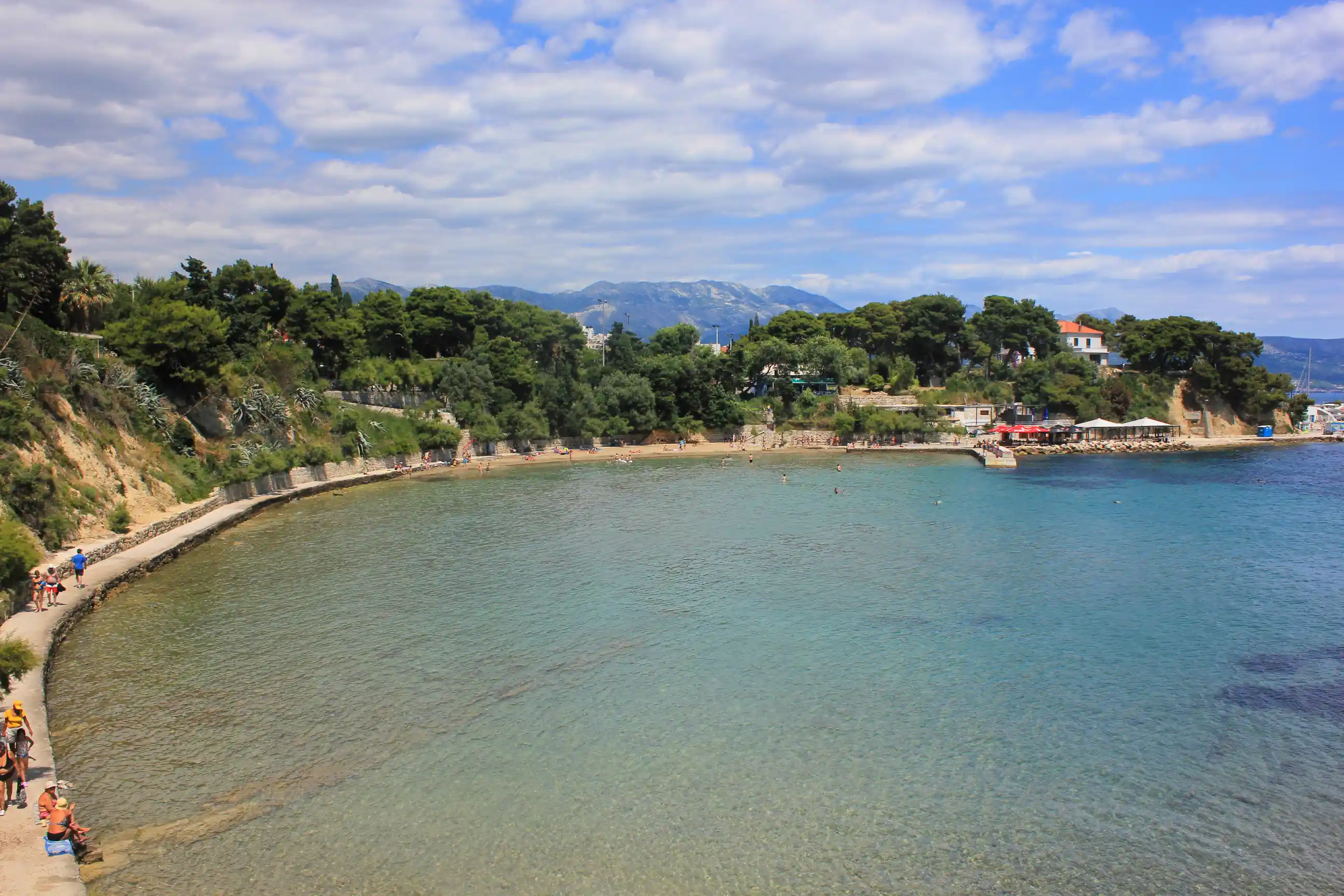
A sandy and quieter alternative to Bačvice; the shallow entrance is suitable for families.

Some of the clearest sea in the city, with a beautiful natural setting below Marjan. Easiest to reach by Uber or bicycle.
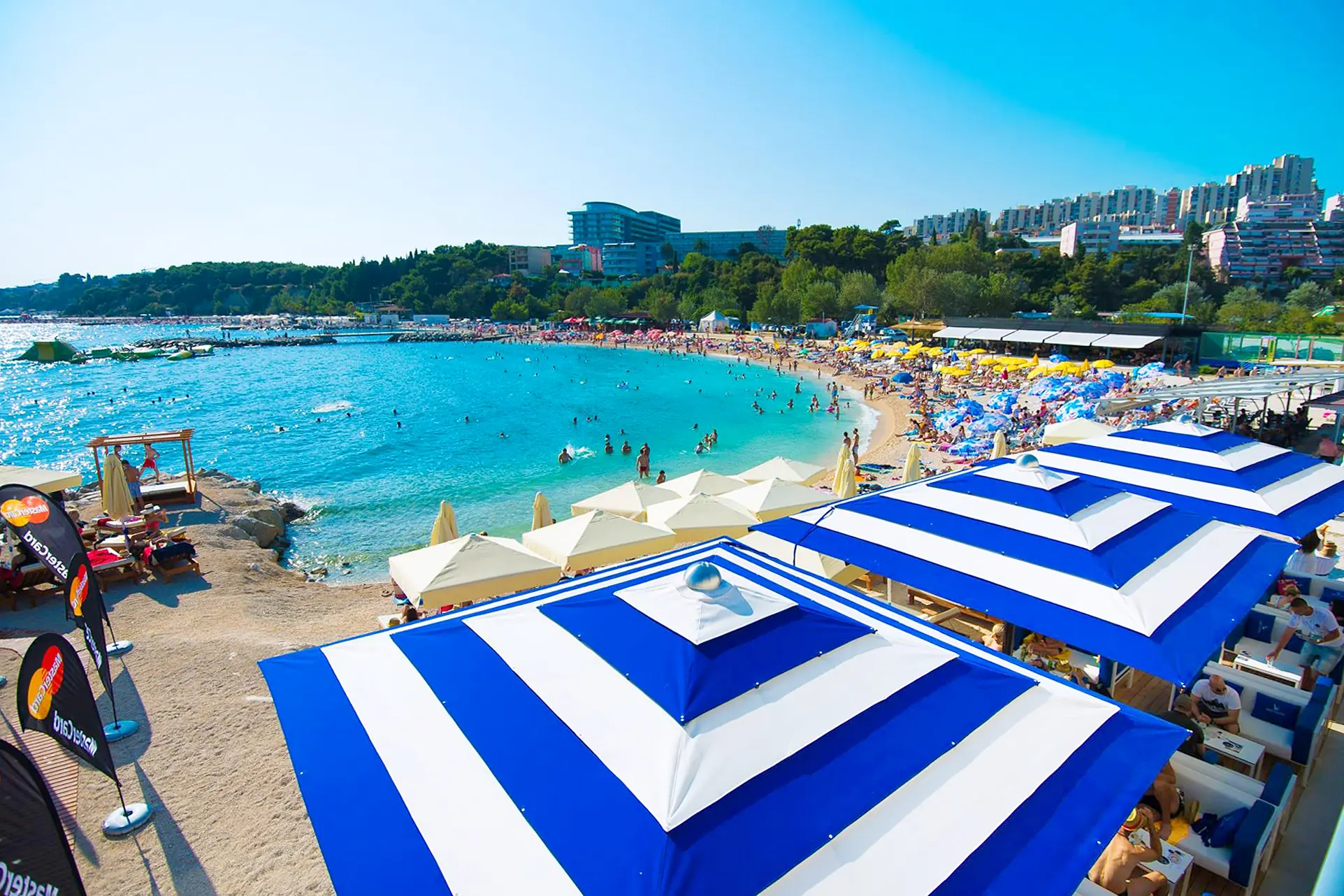
A large, renovated beach with facilities and easier parking — good for families. 🔶 works in progress.
🔶 Check: Bene Beach (northern Marjan, shaded) is reportedly closed for renovation in 2026. For the most beautiful beaches in the region, plan a trip to Zlatni rat (Brač) or Stiniva (Vis).
The best neighbourhoods for accommodation in Split
Choose an area according to your travel style — from the old town to quieter family-friendly districts.
Old Town / Palace
All the sights are within walking distance, with the most atmosphere. Ideal for short stays and first-time visits.
Bačvice and Lučac
Close to the beach and nightlife, yet still within easy reach of the centre.
Varoš and Meje
Old stone lanes, close to Marjan, with quieter evenings.
Žnjan and the eastern part of the city
More space, beaches and easier parking; a good choice for families travelling by car.
Split in 1, 2 and 3 days
Ready-made suggestions you can adapt to your own pace.
Split in 1 day
The most important sights in one walk.
- MorningDiocletian’s Palace and cellars
Peristyle, Vestibule, northern wall.
- MiddayCathedral of Saint Domnius + Riva
Climb the bell tower, walk along the seafront.
- AfternoonMarjan
Viewpoint and sunset over the city.
Split in 2 days
City + sea + one shorter trip.
- Day 1Old town
Palace, cathedral, Riva, Marjan.
- Day 2 — morningBeach
Bačvice or Kašjuni.
- Day 2 — afternoonTrogir or Klis
UNESCO town or fortress.
Split in 3 days
Add a full-day trip.
- Days 1–2City and beaches
As above, without rushing.
- Day 3Island or Krka National Park
Brač/Bol or Hvar, or the Krka waterfalls.
- EveningVeli Varoš
A konoba away from the main tourist route.
How to get to Split
Check all changeable information (timetables, prices) before departure. 🔶
By plane — Split Airport (SPU)
The airport is in Kaštela, about 24 km from the centre. You can reach the main station (next to the ferry port) by:
- Airport shuttle — from 2026 operated by Platanus (no longer Pleso), ~€9–10 🔶
- City bus — lines 37/38 to Sukoišan (~1 km from the old town) and line 2 to the ferry port 🔶
- Taxi / Uber / Bolt — ~€33–50, depending on demand 🔶
By car — motorway and distances
Split is connected by the A1 motorway. Approximate distances (🔶 check kilometres and driving time):
- Zagreb — ~410 km 🔶
- Ljubljana — 🔶
- Budapest / Vienna — 🔶
- Major Polish cities — 🔶
By bus
The main bus station is located next to the ferry port and railway station, just a few minutes’ walk from the palace. There are numerous daily services from Zagreb, Dubrovnik and the region. 🔶
By ferry and catamaran
Ferries and catamarans depart from Split port towards Brač, Hvar, Vis and Šolta (Jadrolinija, Kapetan Luka and others). Routes and timetables change seasonally — check before travelling. 🔶
How to get to Split
Check all changeable information (timetables, prices) before departure. 🔶
By plane — Split Airport (SPU)
The airport is in Kaštela, about 24 km from the centre. You can reach the main station (next to the ferry port) by:
- Airport shuttle — from 2026 operated by Platanus (no longer Pleso), ~€9–10 🔶
- City bus — lines 37/38 to Sukoišan (~1 km from the old town) and line 2 to the ferry port 🔶
- Taxi / Uber / Bolt — ~€33–50, depending on demand 🔶
By car — motorway and distances
Split is connected by the A1 motorway. Approximate distances (🔶 check kilometres and driving time):
- Zagreb — ~410 km 🔶
- Ljubljana — 🔶
- Budapest / Vienna — 🔶
- Major Polish cities — 🔶
By bus
The main bus station is located next to the ferry port and railway station, just a few minutes’ walk from the palace. There are numerous daily services from Zagreb, Dubrovnik and the region. 🔶
By ferry and catamaran
Ferries and catamarans depart from Split port towards Brač, Hvar, Vis and Šolta (Jadrolinija, Kapetan Luka and others). Routes and timetables change seasonally — check before travelling. 🔶
The best time to visit Split
May–June and September offer the best balance of warm sea and fewer crowds.
May – June
Pre-season
Warm weather, fewer crowds and more affordable prices. Ideal for sightseeing and the first swimmers of the year.
July – August
Peak season
The peak of summer: sea temperatures of 24–27 °C, but also crowds and heat of 35 °C+. Arrive at the beaches early.
September – October
Post-season
The warmest sea with fewer people. The best balance of price and experience.
November – March
Winter
A peaceful cultural city without the crowds. Not much swimming, but pleasant for sightseeing.
🔶 Mention festivals and events (for example, the summer cultural programme) only after checking the official dates.
Food and local experiences
What to try: Dalmatian prosciutto, cheese preserved in oil, fresh seafood, pašticada with gnocchi, soparnik from nearby Poljica and local wines.
Where to look: konobas away from the palace’s main route — Veli Varoš, Matejuška and around the Pazar market and fish market (Peškarija).
How to avoid tourist traps: avoid menus with photos on the Riva; look for places where locals eat. We are preparing a separate article with specific recommendations.
Must-try
- Prosciutto
- Cheese in oil
- Seafood
- Pašticada
- Soparnik
- Black risotto
- Rakija / lozovača
Day trips from Split
Split is an excellent base — islands, UNESCO towns and national parks are all within easy reach.
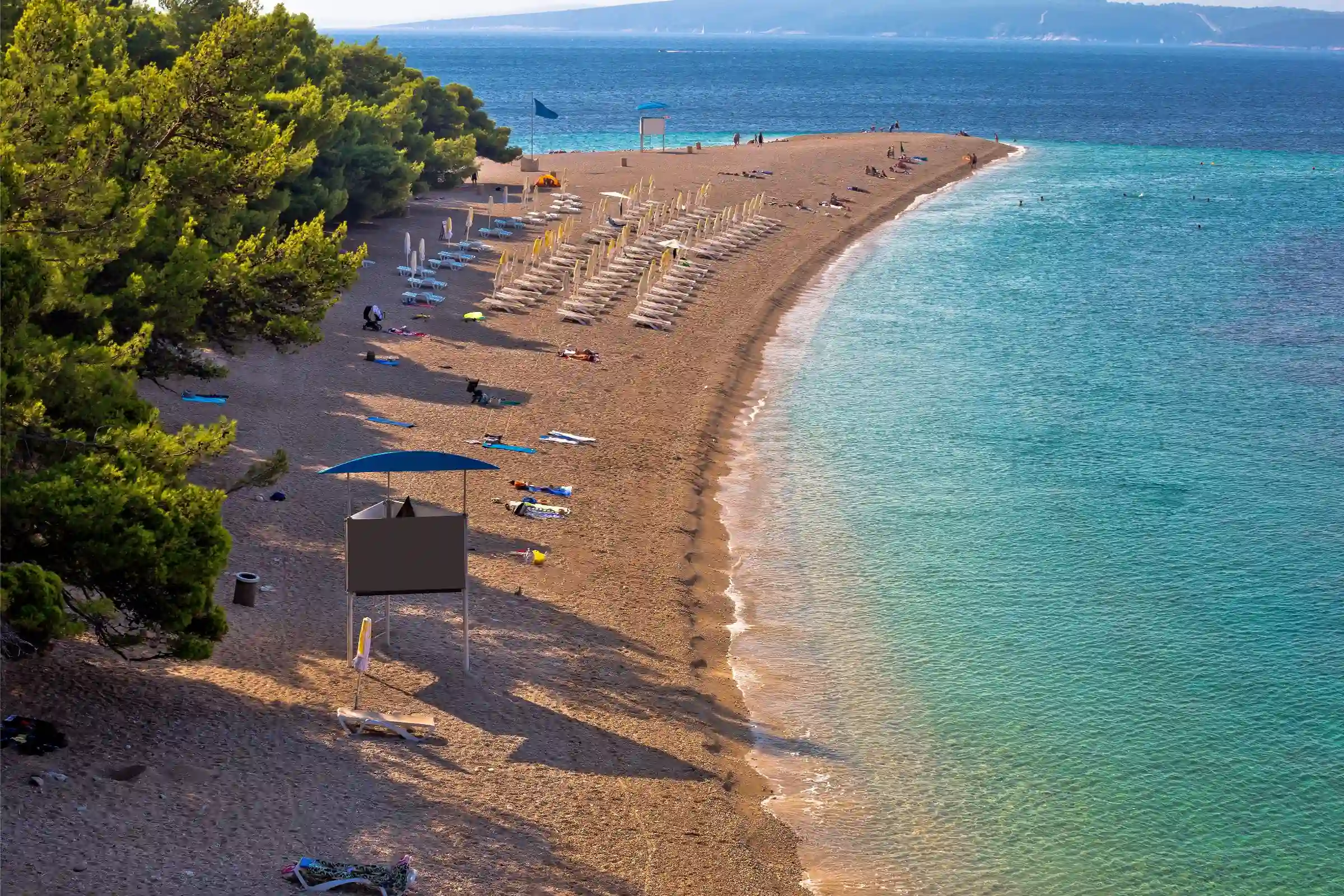
Brač — Zlatni rat
The most famous beach in Croatia, near Bol. Reach it by ferry from Split; ideal for a full-day trip.
Find out more
Hvar
A sunny island and the lively town of Hvar; reachable by catamaran from Split for a day or longer.
Find out more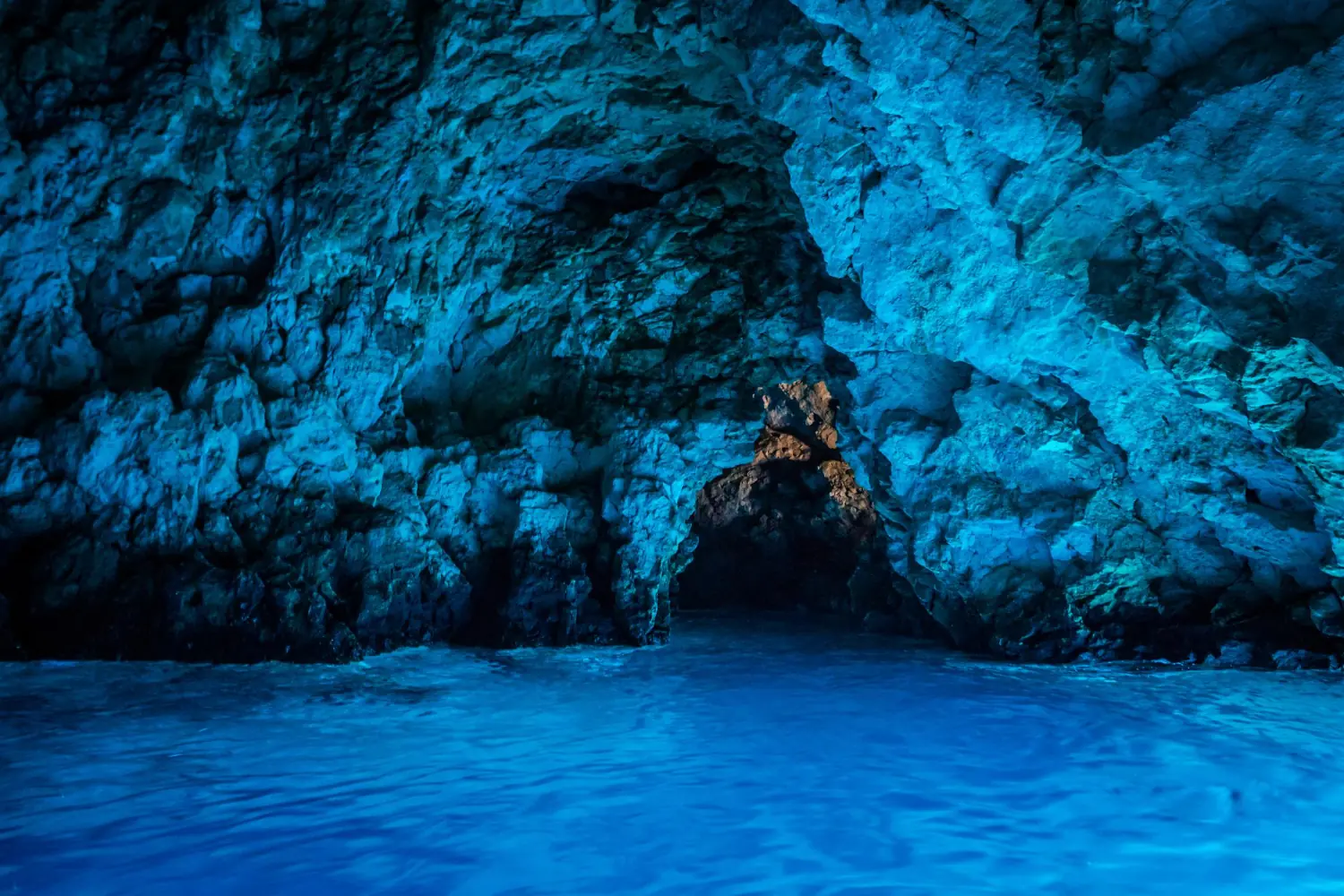
Vis and the Blue Cave
A more remote, authentic island; Stiniva and the Blue Cave (Biševo) are the highlights.
Find out more
Trogir
A UNESCO-listed town near Split, around 30 minutes by car. Easy to combine with Split Airport.
Find out more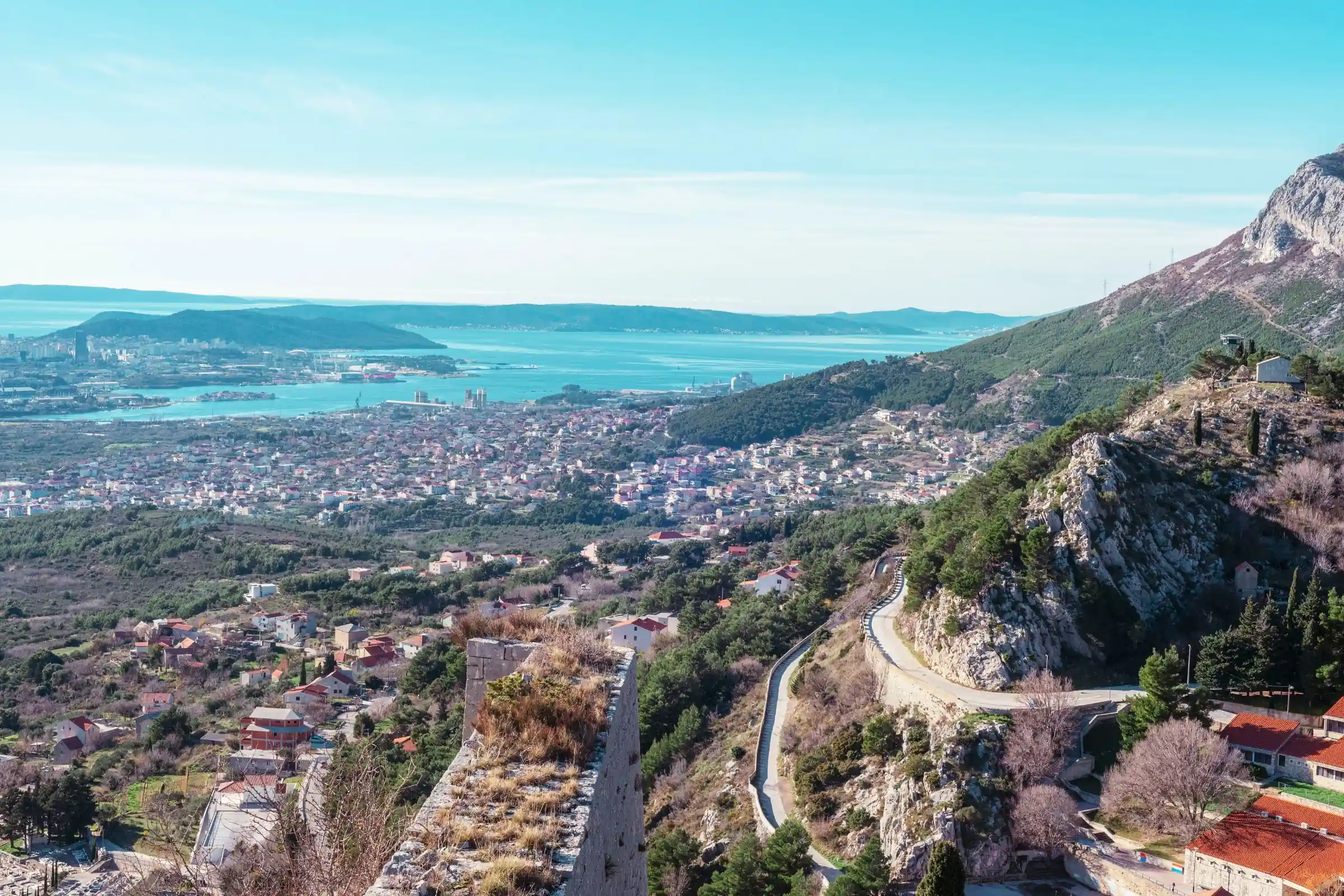
Klis
A historic fortress at the gateway to Dalmatia, with views over Split. Famous from “Game of Thrones”.
Find out more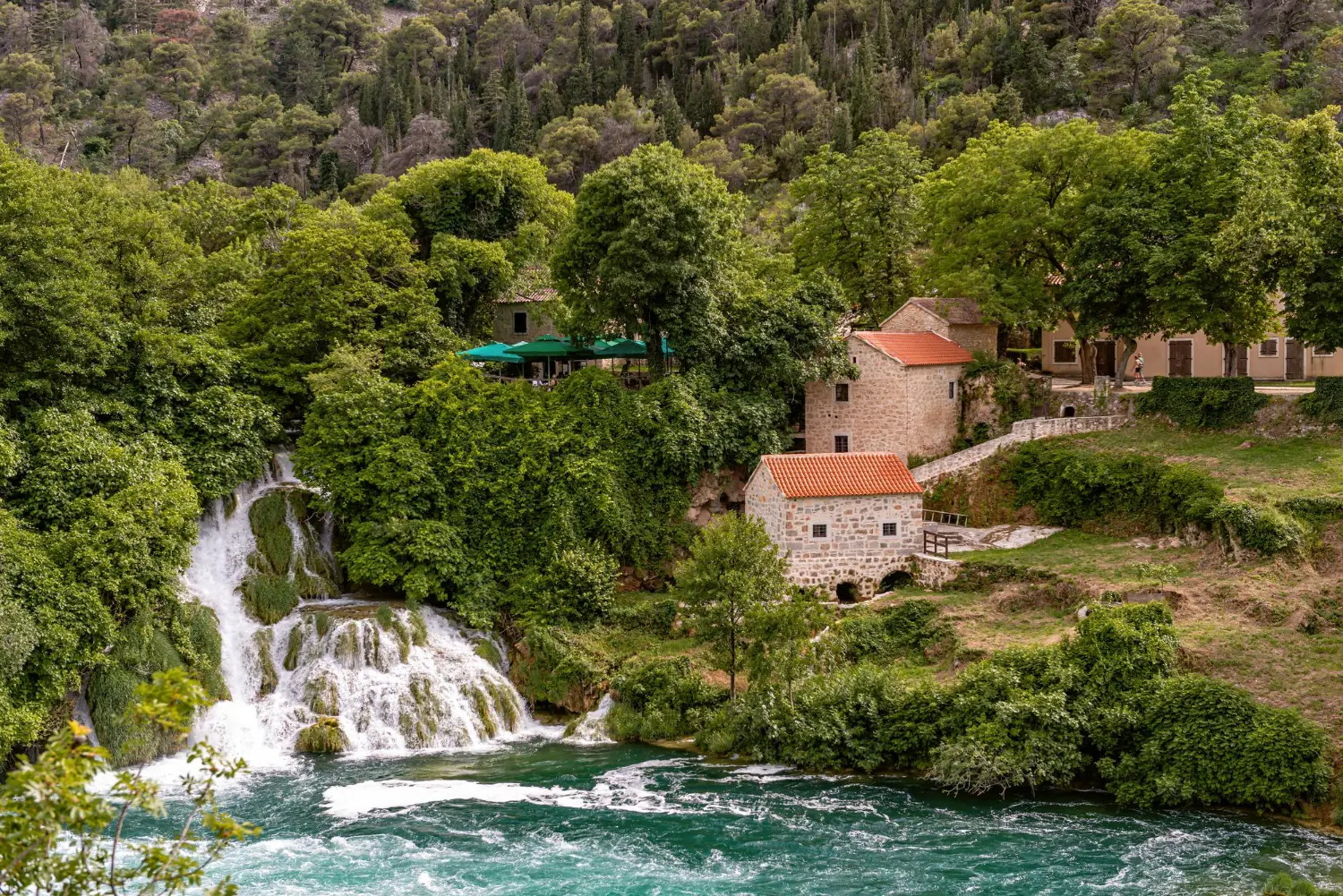
Krka National Park
Waterfalls and walking trails in the national park; a popular full-day trip by car or organised tour.
Find out moreEverything travellers most often ask about Split
How many days are enough for Split?
For the city itself, 2 days are enough. If you want to take trips to the islands or national parks, plan 3–4 days.
What to see in Split in one day?
Diocletian’s Palace and its cellars, the Cathedral of Saint Domnius with the Peristyle, a walk along the Riva and a climb up Marjan for views of the city.
Does Split have sandy beaches?
Yes. Bačvice and Firule are sandy and within walking distance of the centre; most other beaches are pebble beaches.
What is the best beach in Split?
Bačvice for proximity and atmosphere, Kašjuni for the clearest sea, and Žnjan for space and families. Bene is shaded, but 🔶 check whether it is open (renovation in 2026).
When is the best time to visit?
May–June and September offer warm sea with fewer crowds. July and August are the hottest months, but also the busiest.
How do I get from the airport to the centre?
By airport shuttle to the main station (next to the ferry port), city bus, taxi or Uber/Bolt. The distance is ~24 km. 🔶 (check shuttle operator and prices)
Do I need a car in Split?
Not for sightseeing in the city — the centre is walkable. A car is useful for more distant beaches and day trips; in summer, avoid driving into the old town.
Where to park in Split?
Use car parks outside the immediate centre and continue to the centre by public transport or taxi. Zones and prices change, so 🔶 check them before arrival.
What are the best day trips?
The islands of Brač (Zlatni rat), Hvar and Vis; on the mainland, Trogir, Klis and Omiš; and Krka National Park. Most are reachable by ferry/catamaran or by car.
Where to stay in Split?
The old town for a first visit and atmosphere, Bačvice for nightlife, Varoš/Meje for peace, and Žnjan and the east of the city for families and easier parking.
Is Split good for families?
Yes — it has a pedestrian old town, beaches with shallow entrances (Bačvice, Firule), space at Žnjan and easy-to-organise day trips.
How much does a visit to Split cost?
It depends on the season and accommodation. You can save the most by travelling outside July and August. Specific accommodation and ticket prices should be 🔶 checked before publishing.
How to get around Split?
The centre is best explored on foot; for beaches and the wider city, use the city bus (Promet Split), taxi or Uber/Bolt.
Is Split safe for tourists?
Split is generally a safe city. Normal caution applies in crowds and during nights out, as in any tourist centre.
Related guides and articles
Diocletian’s Palace — guide
Read more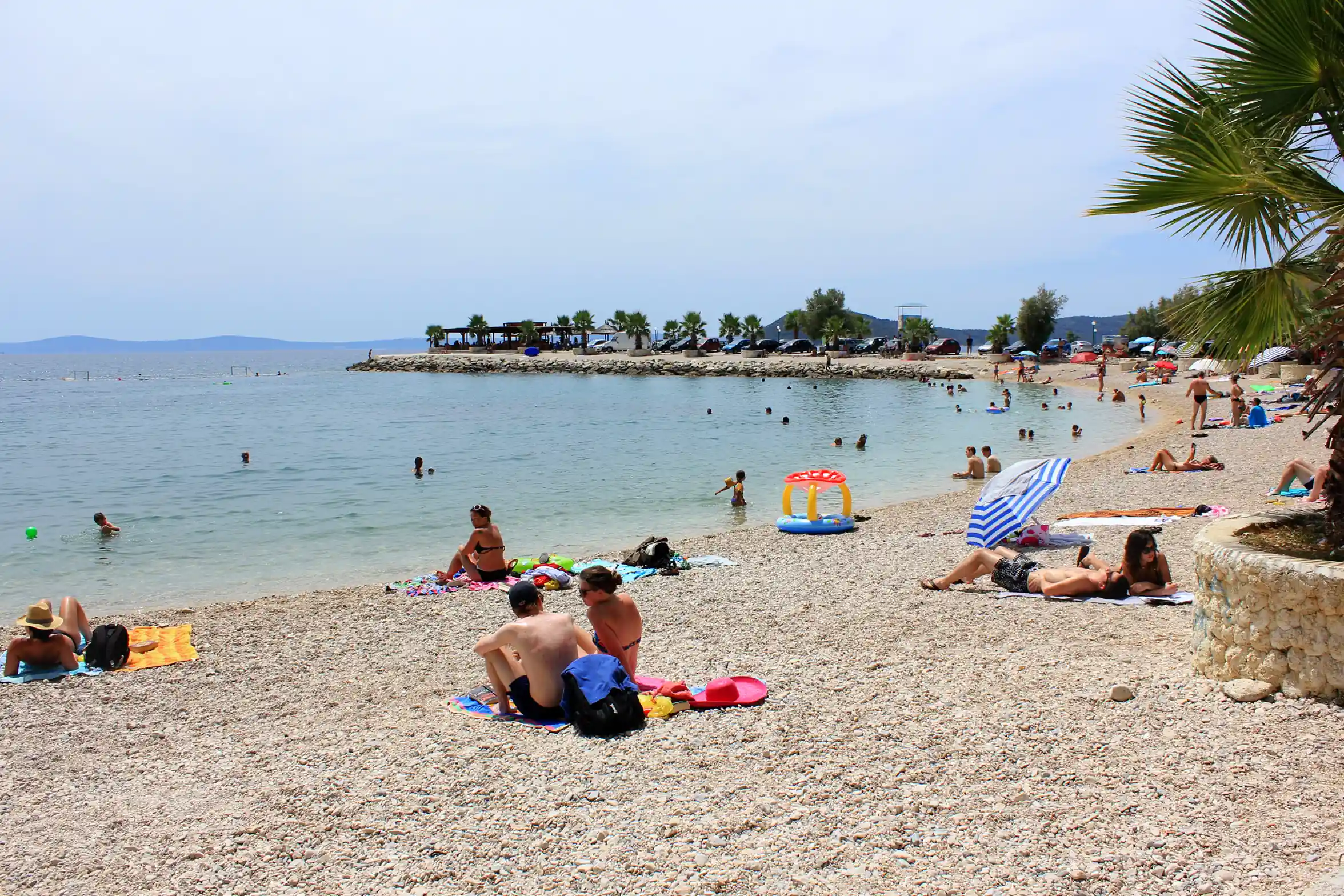
The best beaches in Split
Read more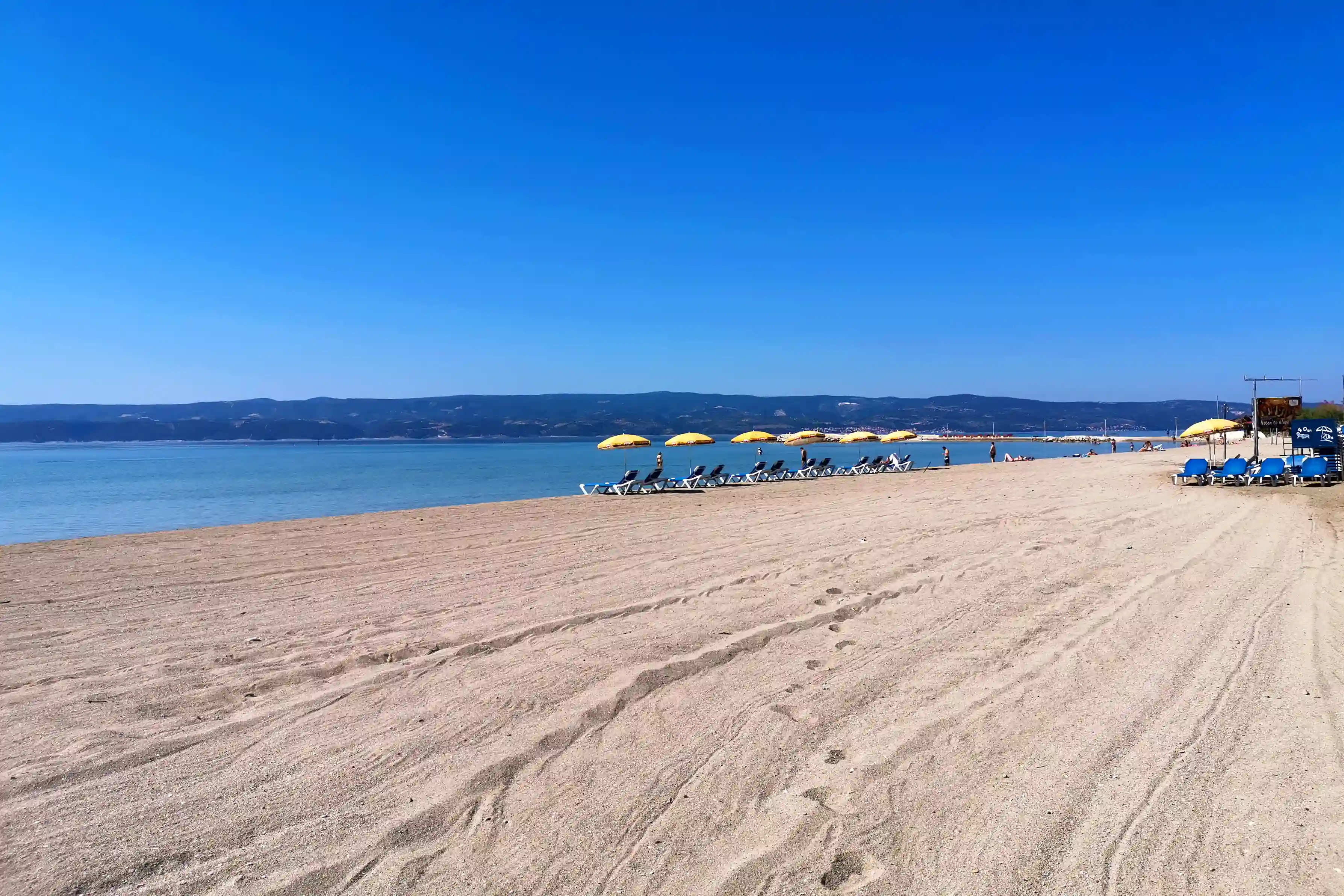
Day trips from Split
Read more
Trogir guide
Read more Coming soonPlan your holiday in Split with verified accommodation
Apartments, villas and rooms in Split and the surrounding area — find accommodation that suits your trip.