
UNESCO heritage in Croatia: 10 World Heritage sites and 23 traditions worth experiencing
March 23, 2026
Luxury villas in Croatia: exclusive locations for the perfect seaside holiday
March 30, 2026Contents
Show- How many days should you set aside for the trip?
- Day 1 and 2: Zadar – the perfect start to the trip
- Day 3: Šibenik – history, fortresses, and Krka
- Day 4 and 5: Split – the heart of Dalmatia
- Day 6: Makarska – a relaxing break by the sea and Biokovo
- Day 7 to 9: Dubrovnik – the grand finale of the trip
- Best side trips on the Zadar – Dubrovnik route
- Tips for organizing the trip
- Conclusion
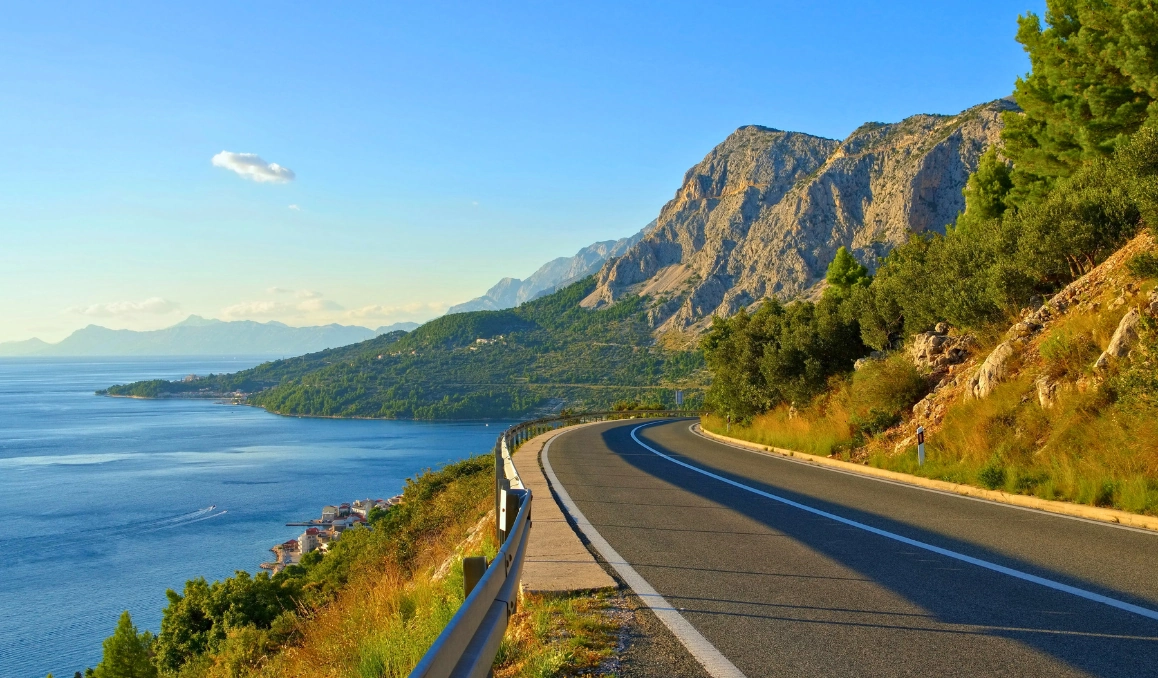
A road trip through Croatia is one of the most beautiful ways to explore Dalmatia. It is hard to find a better route than the one connecting Zadar, Šibenik, Split, Makarska, and Dubrovnik. This coastal drive brings together everything travelers love about Croatia – historic towns, spectacular views, crystal-clear sea, national parks, and unforgettable excursions in the surrounding area.
That is exactly why this route is ideal for anyone who wants to see several destinations in one trip, but without rushing. Below, we bring you a suggestion on how to organize the journey, what to see in each city, and how many days to set aside for each destination.
How many days should you set aside for the trip?
For this route, we recommend 7 to 9 days, depending on whether you want to focus more on excursions or relaxation. If you want to see the main attractions and keep a good pace, 7 days is more than enough. For a fuller experience, with more time in Split and Dubrovnik, plus at least one national park and an island trip, the ideal duration is 9 days.
Recommended schedule:
- Zadar: 2 days
- Šibenik: 1 day
- Split: 2 days
- Makarska: 1 day
- Dubrovnik: 2 to 3 days
Day 1 and 2: Zadar – the perfect start to the trip
Zadar is an excellent city to start your road trip. It is lively enough to immediately feel the energy of the journey, yet relaxed enough to ease into without the feeling of crowds and a fast pace. Known for its blend of history, sea, and sunsets, Zadar is a destination that instantly sets the tone for the entire trip.
The city’s best-known attractions are certainly the Sea Organ and Greeting to the Sun, two contemporary waterfront installations that have become symbols of modern Zadar. In the evening, this is one of the best places to enjoy the sunset, and many would say one of the most beautiful on the entire Adriatic.
Still, the true symbol of the city is St. Donatus Church, a unique early medieval building located next to the Roman Forum, which best reflects Zadar’s rich history. A walk through the old town center and along Kalelarga is the perfect way to experience its atmosphere. For summer days, there are city beaches such as Kolovare, as well as many options for dinner by the sea.
What to do in Zadar
- • Visit the Sea Organ and Greeting to the Sun, unique seaside installations
- • Walk through the old town center and along the main street, Kalelarga
- • Explore St. Donatus Church and the Roman Forum right in the center
- • Relax on city beaches such as Kolovare
Best day trips from Zadar
- • Dugi Otok and Sakarun Beach, known for its turquoise sea
- • Kornati National Park, ideal for a boat excursion
- • Nin, a small historic town with sandy beaches


Day 3: Šibenik – history, fortresses, and Krka
After Zadar, the route naturally continues toward Šibenik, one of the most underrated cities on the Croatian coast. Although smaller than Zadar and Split, Šibenik has a special charm, rich history, and one of the most beautiful old town centers in Dalmatia.
The city is best known for St. James Cathedral, which is listed as a UNESCO World Heritage Site and represents the most important symbol of Šibenik. But the city is not defined by just one landmark — its fortresses offer a special experience. St. Michael’s Fortress and Barone Fortress offer spectacular views of the city, the sea, and the surrounding islands, and are ideal for a short climb and enjoying the panorama.
In addition to the historic center, Šibenik is also a great base for day trips. Nearby is St. Nicholas Fortress, an impressive UNESCO site at the entrance to St. Anthony’s Channel, as well as Krka National Park, one of Croatia’s most famous natural gems. If you want to include a more relaxed trip by the sea, Primošten is a perfect choice — a picturesque little town with beautiful beaches and the Our Lady of Loreto viewpoint.
For Šibenik and at least one excursion, we recommend setting aside a full day so you can combine history, nature, and the sea without rushing.
What to do in Šibenik
- • Visit St. James Cathedral, the city’s most important symbol under UNESCO protection
- • Walk through the old town center and the stone streets around the cathedral
- • Climb up to St. Michael’s and Barone Fortresses and enjoy the panoramic view
Best day trips from Šibenik
- • Explore Krka National Park and its famous waterfalls and walking trails
- • Visit St. Nicholas Fortress, a unique UNESCO site at the entrance to Šibenik
- • Take a trip to Primošten and climb to the Our Lady of Loreto viewpoint


Day 4 and 5: Split – the heart of Dalmatia
Split is an unmissable stop on any journey through southern Croatia. As the largest city in Dalmatia, it offers the perfect combination of history, urban rhythm, sea, and nearby excursions. Two days in Split are enough to feel its atmosphere, but also to explore part of the surrounding area.
On the way from Šibenik to Split, it is definitely worth stopping in Trogir, a small UNESCO town that is ideal for a short break of a few hours. Its old town center, stone streets, and waterfront are perfect for a light walk before continuing the trip.
In the very center of the city lies Diocletian’s Palace, one of Croatia’s most famous historical landmarks. Walking through the narrow streets inside the palace, stepping onto Peristyle Square, and having coffee by the Riva are an essential part of any stay in Split. Not far from the palace is the statue of Gregory of Nin, an unmissable attraction that many people touch for good luck. For a break from the city bustle, Marjan is an excellent choice, a favorite place for walking, recreation, and panoramic views of the city and islands.
Split is also a great base for day trips. Particularly worth mentioning are Klis Fortress, which rises above the city and offers spectacular views of Split and the surrounding area, as well as Salona, the remains of an ancient Roman city in the immediate vicinity. Sea lovers may also consider a trip to Brač or Hvar, if they want to extend their Dalmatian experience to the islands as well.
What to do in Split
- • Explore Diocletian’s Palace, the heart of the old town under UNESCO protection
- • Walk around Marjan and enjoy views of the city and islands
- • Touch the toe of the Gregory of Nin statue for good luck
- • Stroll along the Riva and the old town center by the sea
- • Relax on beaches such as Bačvice or Kašjuni
Best day trips from Split
- • Klis Fortress, panoramic view of Split and the surrounding area
- • Salona, remains of an ancient Roman city nearby
- • Trogir, a small UNESCO town ideal for half a day
- • The island of Brač, known for Zlatni Rat Beach
- • The island of Hvar, a blend of old town charm and crystal-clear sea


Day 6: Makarska – a relaxing break by the sea and Biokovo
After two more active days in Split, Makarska comes as the perfect place to slow down. On the way to Makarska, it is definitely worth stopping in Omiš, a picturesque little town located at the mouth of the Cetina River, known for its impressive canyon and old pirate stories.
The Makarska Riviera is known for its long pebble beaches surrounded by pine trees, crystal-clear sea, and lively seaside promenade. It is ideal for an easygoing day without too much planning – a morning swim, afternoon coffee by the waterfront, and an evening walk at sunset.
For a quieter and more authentic experience, you can head to the St. Peter Peninsula, a green oasis right next to the town, ideal for gentle walks, enjoying views of Makarska, and visiting the statue of St. Peter.
If you still want a bit of action, set aside time to visit Biokovo Nature Park. Its biggest attraction is Skywalk Biokovo, a glass viewpoint offering spectacular views of the coast and islands.
If you want a change of scenery, you can easily hop over to nearby Podgora, where you will find the impressive “Seagull’s Wing” monument, dedicated to the fighters of the Second World War, along with a beautiful promenade and sea views. Nearby are also Brela, known for some of the most beautiful beaches on the Adriatic.
What to do in Makarska
- • Relax on the beaches of the Makarska Riviera and enjoy the crystal-clear sea
- • Walk along the St. Peter Peninsula and visit its statue
Best day trips from Makarska
- • Omiš, explore the Cetina River canyon and enjoy views of the old pirate town
- • Biokovo Nature Park and Skywalk Biokovo, spectacular views of the coast and islands
- • Podgora, see the “Seagull’s Wing” monument and take a walk by the sea
- • Brela, enjoy some of the most beautiful beaches on the Adriatic


Day 7 to 9: Dubrovnik – the grand finale of the trip
Dubrovnik is the perfect ending to this route, a city that almost always leaves a strong impression whether you are arriving for the first time or returning to it. Its monumental walls, stone streets, and impressive historic center make it one of the most striking destinations in Croatia. Three days in Dubrovnik give you enough time to explore the city and enjoy its surroundings.
The main attraction is certainly the Dubrovnik city walls, which offer a unique perspective of the old town and spectacular sea views. Walking the walls is one of the most special experiences in Dubrovnik, and it is just as interesting to explore the narrow streets inside the walls and stroll along the famous Stradun.
For an extra experience, a visit to Lokrum is recommended, a green island just off Dubrovnik that is perfect for swimming and escaping the crowds, as well as a climb to Srđ, which you can also reach by cable car, and from which you get one of the most famous panoramic views of the city. If you have more time, Dubrovnik is also a great base for day trips – especially Mljet, one of Croatia’s greenest islands, known for its National Park with two saltwater lakes and the islet of St. Mary, ideal for a peaceful escape into nature, cycling, and swimming in crystal-clear sea, as well as many hidden beaches nearby. For a quieter alternative, Cavtat is a charming little town south of Dubrovnik, perfect for a relaxed walk by the sea and an escape from the city bustle.
What to do in Dubrovnik
- • Walk along the Dubrovnik city walls and enjoy the sea view
- • Explore the old town and stroll along Stradun
- • Visit the old pharmacy in the Franciscan Monastery, one of the oldest in Europe
- • Have a drink at the Buža bars on the cliffs above the sea
- • Experience sunset from Srđ
- • Relax at Coral Beach Club by the sea in a lounge atmosphere
- • Discover hidden streets and viewpoints within the walls
Best day trips from Dubrovnik
- • Lokrum, a peaceful little island ideal for escaping the crowds
- • Mljet, a National Park with enchanting saltwater lakes and untouched nature
- • Srđ, a panoramic view of Dubrovnik and the surrounding islands
- • Pasjača Beach, a unique beach beneath the cliffs (check access due to possible landslides)
- • Cavtat, a charming little town south of Dubrovnik


Best side trips on the Zadar – Dubrovnik route
One of the biggest advantages of this trip is the large number of excursions that fit easily into the route. They are exactly what adds extra value to this drive and makes it more than just moving from one city to another.
- From Zadar: Dugi Otok, Kornati, Nin
- From Šibenik: Krka National Park, Primošten
- From Split: Klis Fortress, Brač, Hvar, Trogir
- From Makarska: Omiš, Biokovo Skywalk, Podgora, Brela
- From Dubrovnik: Lokrum, Mljet, Cavtat
Tips for organizing the trip
For a road trip like this, a car is the best option because it allows the greatest flexibility and makes stopping along the way easy. It is especially practical if you plan to visit viewpoints, smaller beaches, and attractions outside the city centers.
Another great advantage of this route is that many interesting towns and places are located literally along the way, so there is no need to plan every detail in advance. For example, on the road from Šibenik to Split, you can easily stop in Primošten or Trogir without making a special detour. That is exactly why it is recommended to travel at a relaxed pace and leave room for spontaneous breaks and exploration.
The most pleasant time for this kind of trip is usually May, June, and September, when temperatures are pleasant and crowds are smaller than in the peak season. In July and August, the route is still attractive, but you should expect more traffic, higher prices, and larger crowds in popular destinations such as Split and Dubrovnik.
It is a good idea to book accommodation in advance in the bigger cities, especially if you are traveling in summer. For extra comfort, you can combine city accommodation in Zadar, Split, and Dubrovnik with one more relaxing night in Makarska or the surrounding area.
Conclusion
The Zadar – Šibenik – Split – Makarska – Dubrovnik route is one of the best options for a road trip through Croatia. In a relatively short time, it allows you to experience a large part of the Dalmatian coast, combine cultural landmarks with natural beauty, and still set your own pace of travel.
If you are looking for an itinerary that includes historic cities, excursions such as Krka and Klis, relaxation by the sea, and a spectacular finale in Dubrovnik, this route offers everything you need for an unforgettable trip.