
Festivals in Croatia: music events worth visiting in 2026
June 5, 2026
15 best places and activities in Croatia
July 6, 2026Contents
Show- Quick answer
- The Sea Organ in Zadar
- The underwater wine cellar on Pelješac
- The Museum of Broken Relationships in Zagreb
- The Sinjska Alka in Sinj
- Diocletian’s Palace in Split
- How to plan a trip around these 5 experiences
- When is the best time to experience this side of Croatia?
- Conclusion
- FAQ: unique experiences in Croatia
If you are looking for a trip that is not just another series of pretty postcards, this is a guide to five experiences that make Croatia different. They are not all “unique” because nowhere else in the world has anything similar, but because, in this form, they are deeply connected to Croatian landscapes, history and way of life.
Quick answer
- Croatia’s most unusual sound: the Sea Organ in Zadar, an instrument played by the sea.
- The most special wine experience: the Edivo Wine underwater wine cellar in Drače on Pelješac.
- The most original museum: the Museum of Broken Relationships in Zagreb, dedicated to objects and stories left behind after love ends.
- The liveliest tradition: the Sinjska Alka, a knightly tournament that turns the whole of Sinj into a historic stage.
- The best blend of antiquity and everyday life: Diocletian’s Palace in Split, a Roman palace that is not just a monument, but a living city centre.
Planning to connect several of these places in one trip? Take a look at accommodation in Croatia and build your route towards Zadar, Pelješac, Split or Zagreb.
1. Listening to a melody composed by the sea in Zadar
Source: Canva
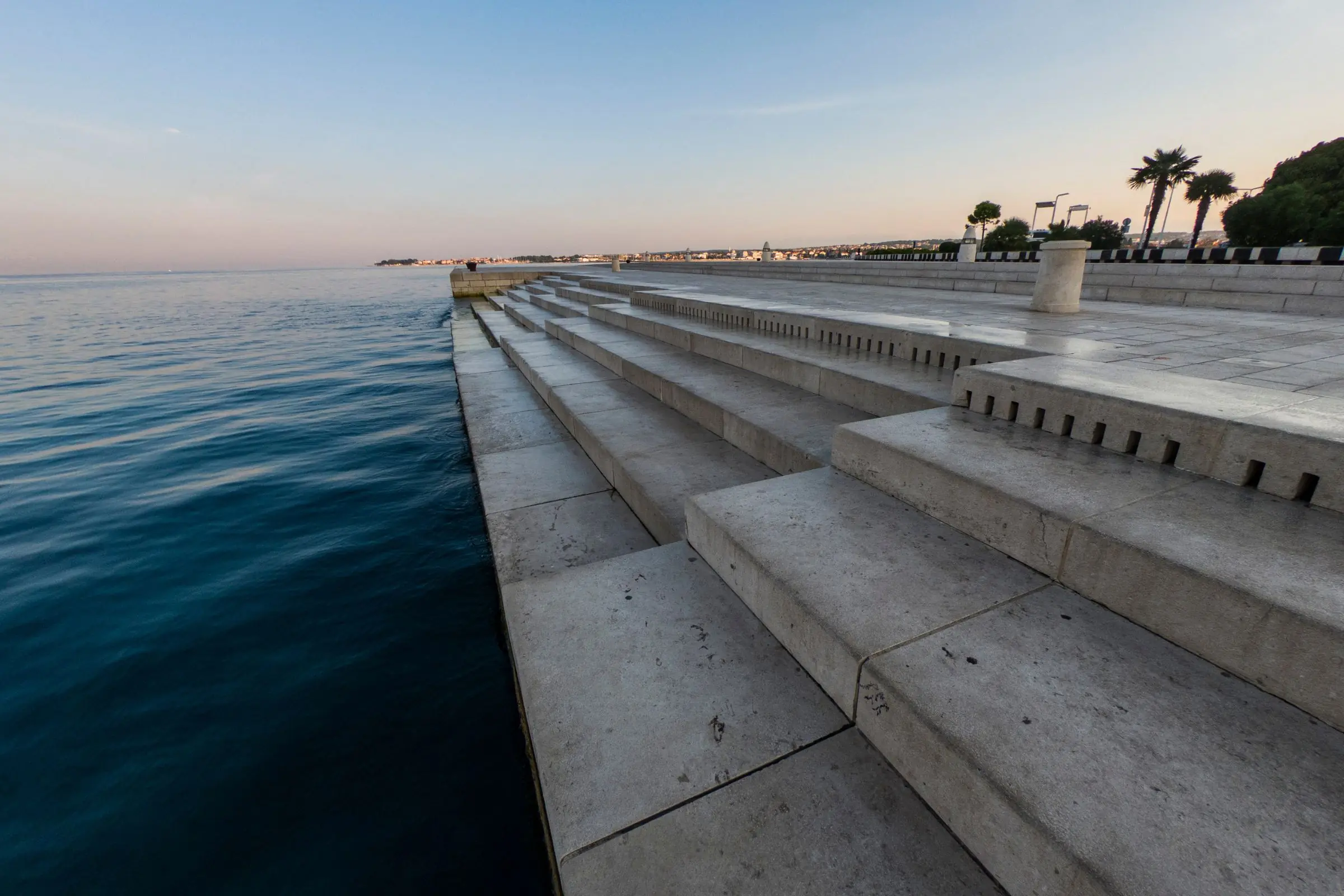
Most coastal towns offer a view of the sea. Zadar goes one step further: here, the sea is not only seen, but also heard. The Sea Organ is an architectural and musical instrument built into the stone steps on the waterfront, and its “music” is not performed by a person, but by the waves.
The system of pipes is located beneath the steps. When the waves hit the shore, they push air through the pipes and create deep, unpredictable tones. That is why the same melody never happens twice. One day the sound may be quiet and almost meditative; the next, stronger, deeper and more dramatic.
This is not an attraction to simply “tick off” in five minutes. It is best to sit on the steps, slow down and let the city move around you. Behind you is Zadar’s old town, in front of you the sea, and beneath you an instrument that plays according to the rhythm of the waves.
If you would like to stay in the city and include the Sea Organ in your evening walk, take a look at accommodation in Zadar.
2. Diving in search of wine on Pelješac
Source: Edivo Wines
Pelješac has long been synonymous with serious Croatian wine, especially Plavac Mali, Dingač and Postup. But in Drače there is an experience that goes beyond a classic cellar tasting: wine that spends part of its life beneath the sea.
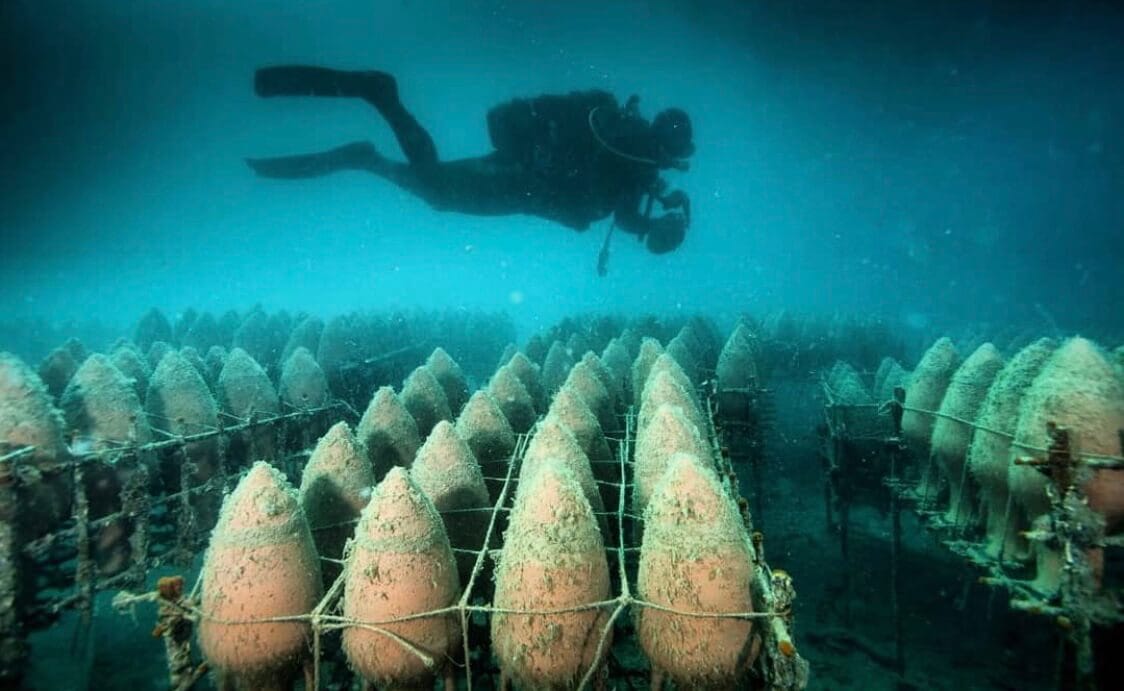
In the Edivo Wine underwater wine cellar, bottles and amphorae do not age only in the controlled darkness of a cellar, but also in a marine environment. After time spent below the surface, the amphorae often emerge covered in shells and traces of the sea, so the bottle becomes almost a souvenir in itself.
The most interesting part of the story is not only the tasting, but the idea that you can literally dive down to the wine. With a guide and suitable arrangements, visitors can see the underwater cages and amphorae, and then continue the story with a tasting on land.
If you would like to combine a wine tour, the sea and southern Dalmatia, take a look at accommodation on Pelješac.
3. Therapy at the Museum of Broken Relationships in Zagreb
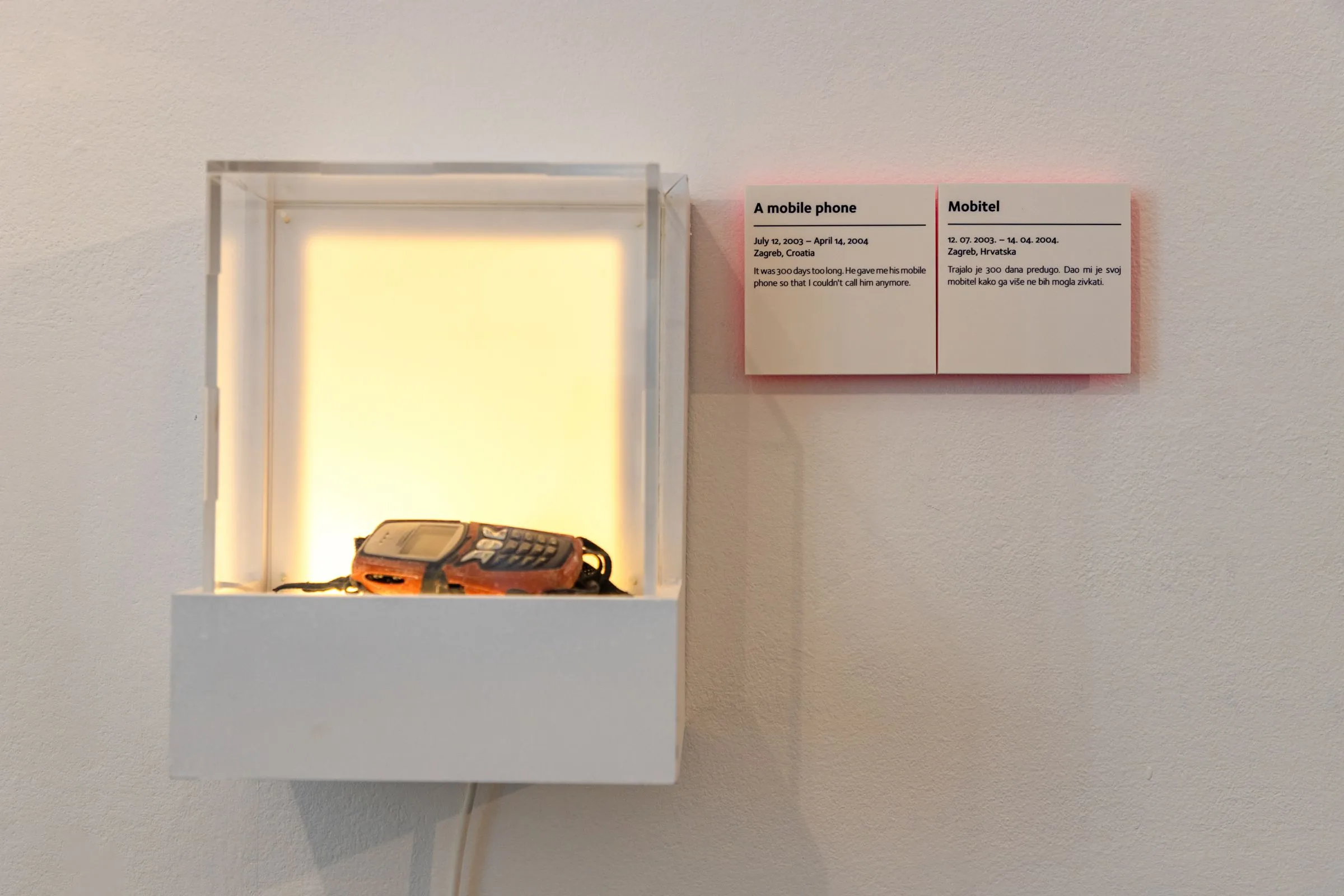
Source: Canva
At first glance, the Museum of Broken Relationships sounds like something sad. In reality, it is much more complex: sometimes funny, sometimes uncomfortable, sometimes touching, and sometimes it catches you completely off guard.
Instead of classic artworks or great historical artefacts, the museum displays objects that people have associated with the end of a relationship. Each object comes with a short story. Sometimes it is a small item that looks worthless from the outside, but becomes clear alongside the text: to someone, that object contains an entire emotional universe.
That is the museum’s strength. You do not need to know much about Zagreb, art or history to understand it. It is enough to have ever lost, got over or left something behind.
4. Witnessing the Alka charge in Sinj
The Sinjska Alka is not just a local event you visit if you happen to be nearby. It is an event that Sinj lives for all year round. During the days of the Alka, the town changes rhythm: uniforms, horses, historic rules, the audience and strong local pride turn it into a stage.
The essence of the competition looks simple: an Alka knight, at full gallop, must strike the alka, a small metal ring suspended above the track, with his lance. But it is precisely in that simplicity that the tension lies. The hit depends on speed, a steady hand, experience, concentration and the horse.
The tradition is linked to the year 1715 and the defence of Sinj from an Ottoman siege. For that reason, the Alka is not only a sporting competition, but a symbol of the identity of the Cetina region. If you want to understand how alive local history can be, this is one of the strongest examples in Croatia.
If you are combining the Alka with a holiday in Dalmatia, a practical base can be accommodation in Split, with a day trip towards Sinj.
5. Walking through an ancient palace that became a city
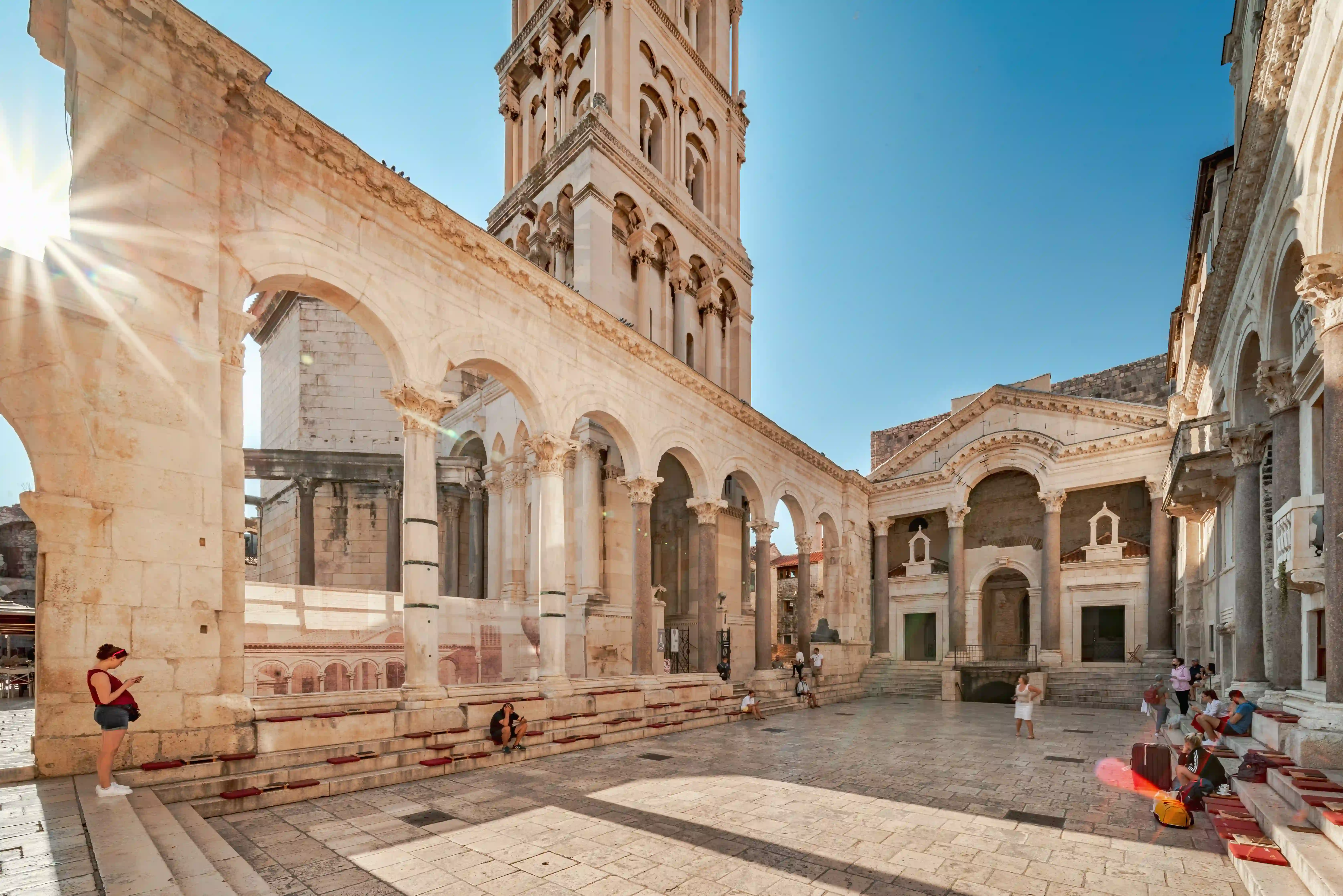
Source: Canva
Diocletian’s Palace is not a Roman ruin you observe from behind a fence. It is the heart of Split. Within its walls are flats, cafés, restaurants, shops, apartments, narrow streets and everyday life that does not stop just because the space is historically important.
That is the biggest difference. In many cities, ancient remains are set apart as open-air museums. In Split, you move through a space where history has not only been preserved, but has continued to be used. The Peristyle, the Vestibule, the cellars, stone passages and town houses do not feel like scenery, but like layers of the same living city.
The best way to experience the palace is not simply to follow a map of sights. Walk through the Golden Gate, pause on the Peristyle, descend towards the cellars, come out onto the Riva, and then deliberately get lost in the narrow streets. That is when Split best shows why it is special: an ancient framework and Mediterranean everyday life exist at the same time.
To explore the palace without rushing, it is most practical to stay in the city. Take a look at accommodation in Split.
How to plan a trip around these 5 experiences
You do not have to visit all five places in one trip, but they can be connected well if you want a route that makes more sense than the classic “a bit of beach, a bit of old town” holiday. It is best to choose your route according to whether you are arriving by car, by plane, or combining the coast with the interior.
Coastal route
Zadar → Pelješac → Split
Best if you want the sea, wine and ancient Dalmatia in one trip.
Cultural route
Zagreb → Sinj → Split
A good choice if you want to combine a museum, living tradition and UNESCO heritage.
7-day route
Zagreb → Zadar → Pelješac → Split/Sinj
The best option if you want to turn the whole article into a real journey.
When is the best time to experience this side of Croatia?
If you are not tied to school holidays, the best periods for this type of trip are May, June, September and early October. Then you still have plenty of sunshine, but fewer crowds, easier parking and a better rhythm for museums, walks and excursions.
Spring
Excellent for Zagreb, Zadar, Split and Sinj. Temperatures are pleasant and the cities are not overloaded.
Summer
Best for Pelješac and evening Zadar, but expect crowds and the need for earlier planning.
Autumn
Perhaps the best balance for wine, Split and the coastal route. The sea is still pleasant, and the atmosphere is slower.
Croatia is at its most interesting when you step beyond the expected
Sun and sea are certainly a major reason why people come to Croatia, but they are not the whole story. If you reduce a trip only to beaches, you will miss what makes the country layered: a city that plays music with the help of waves, wine that ages beneath the sea, a museum made up of other people’s break-ups, a knightly tradition that still moves an entire town, and a Roman palace where people live as if that were the most normal thing in the world.
It is exactly these kinds of places that give a journey character. You do not have to visit them all at once. It is enough to choose one or two and build a route around them that is not a copy of every other Adriatic holiday.
FAQ: unique experiences in Croatia
What are the most unusual things you can experience in Croatia?
Among the most unusual experiences are listening to the Sea Organ in Zadar, visiting an underwater wine cellar on Pelješac, touring the Museum of Broken Relationships in Zagreb, watching the Sinjska Alka and walking through Diocletian’s Palace in Split.
Is the Sea Organ in Zadar free?
Yes. The Sea Organ is located in a public space on Zadar’s waterfront and you can visit it without a ticket at any time of day.
Can you really dive down to wine on Pelješac?
Yes, but not independently and not without prior arrangements. The underwater wine experience needs to be booked in advance, and the dive is done with a guide and under suitable conditions.
Where is the Museum of Broken Relationships located?
The Museum of Broken Relationships is located in Zagreb’s Upper Town, close to the best-known historic sites in the city centre.
When does the Sinjska Alka take place?
The Sinjska Alka traditionally takes place in early August in Sinj. If you are planning a visit, check the official schedule for the specific year, as programme and ticket details may change.
Why is Diocletian’s Palace special?
It is special because it is not only a preserved Roman monument, but the living city centre of Split. Within the ancient walls, there are still flats, cafés, restaurants, shops and everyday urban life.
Can all 5 places be visited in one trip?
Yes, but it is best to plan at least 7 days. The most logical route is Zagreb, Zadar, Pelješac, Split and Sinj, with enough time for driving, rest and more spontaneous stops along the way.