


Zadar — the complete city guide
The Sea Organ and the most beautiful sunset, the Roman Forum and St Donatus, city walls, beaches and islands — everything you need for the perfect visit, with tips on where to stay and how to get there.
- UNESCO walls (2017)
- Sea Organ and Greeting to the Sun
- Ideally 2–3 days
Essential information for planning
Key facts about the city and everything important before you set off.
Northern Dalmatia, Croatia
Venetian walls (2017)
The Sea Organ and sunsets
May–June and September
2–3 days (+ day trips)
Zadar (Zemunik) ~8 km
Old Town on a peninsula
23000 · +385 23
Where it is and what it is known for
Zadar is the largest city in northern Dalmatia, set on a narrow peninsula by the Adriatic. Its old core brings together layers of Roman, medieval and Venetian heritage — the Roman Forum, the Church of St Donatus and the city walls — all within easy walking distance.
Alongside its history, the city is now known for its unique modern installations on the waterfront: the Sea Organ, played by the sea, and the light installation Greeting to the Sun. It is from here, they say, that you can see the most beautiful sunset in the world.
Zadar is also an ideal base for islands and national parks — Kornati, Paklenica, Telašćica, as well as Plitvice and Krka within easy reach for day trips. All of this makes it one of the most well-rounded destinations on the coast.
Pros
- A rich, walkable old town by the sea
- The Sea Organ and superb sunsets
- A base for Kornati, Plitvice, Paklenica and the islands
Bear in mind
- The waterfront gets crowded at sunset in summer
- City beaches can get busy 🔶
- For sand and the most beautiful coves, you need to head to the islands
Interesting facts about Zadar
Nine details that make the city special — perfect conversation starters at sunset on the waterfront.
An organ played by the sea
The Sea Organ on the waterfront was the first of its kind in the world — waves passing through pipes beneath the steps create music that is never repeated.
Greeting to the Sun
Beside the organ is a huge solar-powered circle of light; by day it absorbs the sun, and after sunset it dances with colour beneath your feet.
The most beautiful sunset in the world
Zadar’s sunset was also made famous by director Alfred Hitchcock, who called it the most beautiful in the world — more beautiful than the one in Florida.
St Donatus from the 9th century
The round Church of St Donatus is the symbol of the city; it was built in the 9th century, partly from stone taken from the ancient Forum.
The largest Roman forum on the eastern Adriatic
Zadar’s Roman Forum was the largest on the eastern Adriatic coast; even today, you can walk among ancient columns in the heart of the city.
UNESCO-listed walls
Zadar’s defensive system and the Renaissance Land Gate with the Lion of St Mark have been on UNESCO’s list of Venetian fortifications since 2017.
Maraschino from Zadar
The famous Maraschino liqueur, made from Marasca cherries, has been produced in Zadar for centuries and was once enjoyed at European royal courts.
A city of basketball
Zadar is the cradle of Croatian basketball and home to legends such as Krešimir Ćosić; in the city, the sport is a true way of life.
Kalelarga is older than the city
Zadar locals jokingly say that Kalelarga (the Wide Street), the main street, is older than the city itself — it has always been the heart of city life.

Three millennia on one peninsula
Zadar’s old town sits on a narrow peninsula and is one of the oldest continuously inhabited places on the Adriatic — from Roman Iader, through Byzantium, to centuries of Venetian rule. In one short walk, you move through millennia.
Within just a few hundred metres you will find the largest Roman forum on the eastern Adriatic, the round Church of St Donatus from the 9th century, the Romanesque cathedral and the Renaissance Venetian gates (UNESCO, 2017). The main street, Kalelarga, still follows the ancient axis of the city, and everything is pedestrian-friendly and close at hand — it is best discovered without rushing, ending your walk by the Sea Organ at sunset.
Zadar’s main sights
Most are located in the old town on the peninsula — within walking distance.

Sea Organ and Greeting to the Sun
An iconic combination of wave-generated sound and a light installation at the tip of the peninsula; best experienced at sunset.

St Donatus and the Roman Forum
A round pre-Romanesque church from the 9th century in the middle of the largest Roman forum on the eastern Adriatic; concerts are held here in summer.

Cathedral of St Anastasia
The largest cathedral in Dalmatia; the climb up the bell tower rewards you with views of red rooftops, the sea and the islands.

Land Gate and city walls
A Renaissance city gate with the Lion of St Mark and preserved Venetian walls, part of UNESCO heritage since 2017.

Five Wells Square and the park
A picturesque square with five Renaissance wells beside the city park and Captain’s Tower — a peaceful pause in the old town.
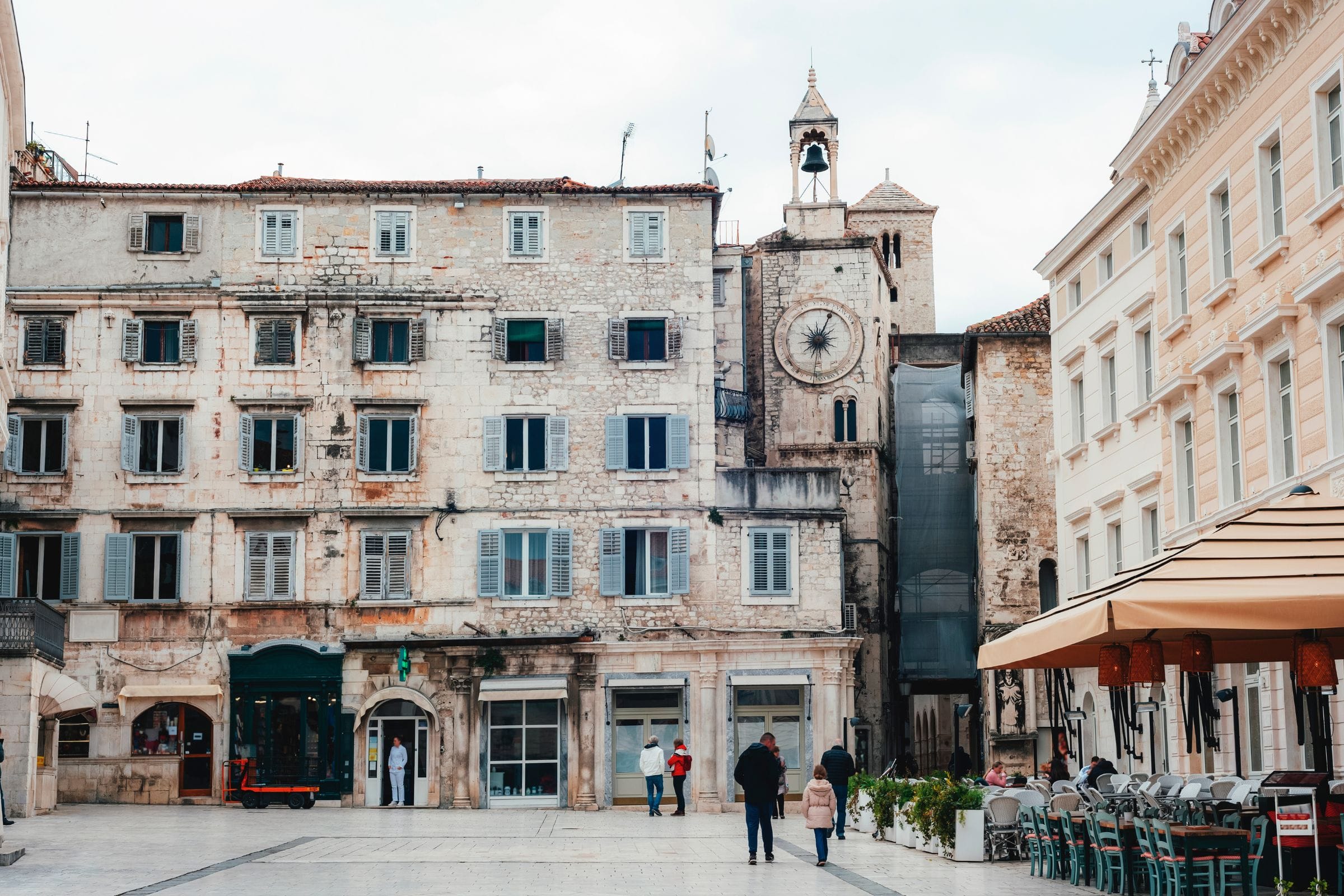
Kalelarga and People’s Square
The main street and city square with the loggia are the heart of everyday life; ideal for coffee, a stroll and soaking up the atmosphere.

Museum of Ancient Glass
A rich collection of Roman glass with demonstrations of ancient glassblowing; one of the few museums of its kind in the region.

Gold and Silver of Zadar
A treasury of reliquaries and sacred art next to the Monastery of St Mary — one of the most valuable collections in the country.
Orientation
Map of Zadar and weather
The old town, the waterfront with the Sea Organ, beaches and airport in one place. Click a marker on the map for details and directions.
Marked: Sea Organ · St Donatus and Forum · cathedral · Land Gate · Kolovare · Borik · airport
Weather in Zadar
The best areas to stay in Zadar
Choose according to your type of trip — from the historic old town to beachside holiday resorts.
Old Town (peninsula)
All the sights and the waterfront with the Sea Organ are on your doorstep. The most atmospheric option, but lively in summer and with limited parking.
Borik and Puntamika
A tourist area north-west of the centre with beaches, hotels and a promenade; well connected to the old town.
Kolovare
By the most popular city beach, just a few minutes’ walk from the old town — practical for both swimming and sightseeing.
Diklo and surroundings
A quieter coastal area with apartments and coves; a good option for families and longer stays.
The best beaches in and around Zadar
City beaches are pebbly; for sand and the most beautiful coves, head to the nearby islands.

The main city beach with pebbles, swimming areas and cafés, just a few minutes’ walk from the centre.

A well-maintained beach in the tourist area with hotels, facilities and a promenade; suitable for families.

A series of smaller, quieter coves with pine trees; pleasant for escaping the city crowds.
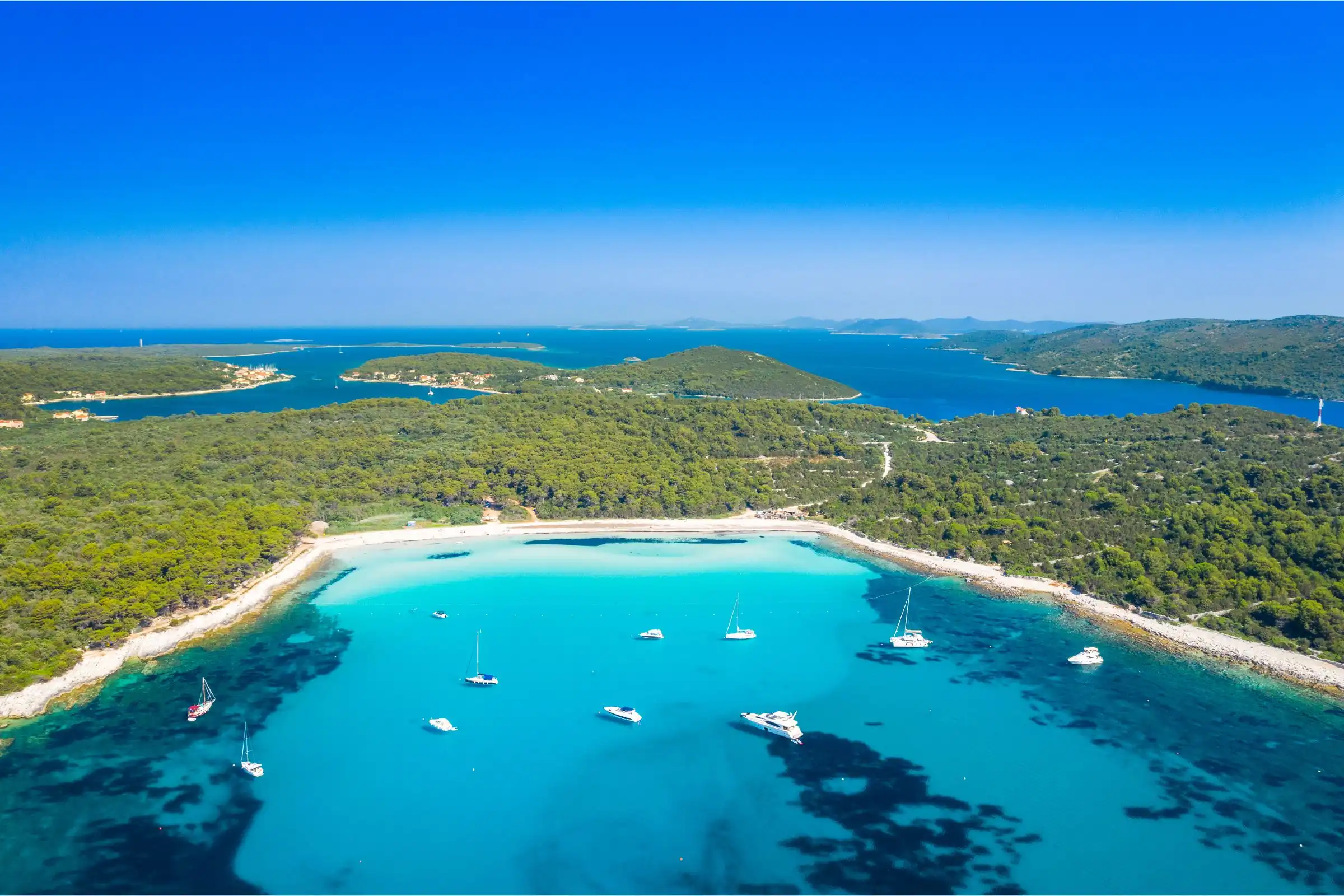
A fairytale white sandy beach with turquoise sea; one of the reasons to take a trip to Dugi Otok.
🔶 Tip: for the most beautiful beaches, plan a ferry trip to Dugi Otok (Sakarun, Telašćica) or to Nin for the sandy Queen’s Beach.
Zadar in 1, 2 and 3 days
Ready-made suggestions that you can adapt to your own pace.
Zadar in 1 day
The essentials in one walk.
- MorningRoman Forum and St Donatus
Antiquity and the city’s symbol in the heart of the old town.
- MiddayCathedral and Kalelarga
Bell tower, main street and People’s Square.
- SunsetSea Organ
The sound of the sea and Greeting to the Sun.
Zadar in 2 days
City + beach and museums.
- Day 1Old town and waterfront
As above, without rushing.
- Day 2 — morningMuseums and walls
Ancient Glass, Gold and Silver, Land Gate.
- Day 2 — afternoonKolovare or Borik
Swimming and a seaside break.
Zadar in 3 days
Add a full-day trip.
- Days 1–2City, museums, beaches
As above.
- Day 3 — option AKornati or Dugi Otok
Islands by boat and swimming.
- Day 3 — option BPlitvice or Paklenica
Lakes or mountain trails.
How to get to Zadar
Check changeable information (timetables, prices) before departure. 🔶
By plane — Zadar Airport (ZAD)
Zadar Airport (Zemunik) is around 8–12 km from the centre and has numerous low-cost flights from Europe in summer. The city can be reached by airport bus (coordinated with flights), taxi and Uber/Bolt. 🔶
By car — motorway and distances
Zadar is very well connected by the A1 motorway. Approximate distances 🔶:
- Split — ~160 km, around 1 h 30 min by car 🔶
- Zagreb — ~290 km, around 2 h 30 min 🔶
- Plitvice — ~120 km 🔶
By bus
Zadar has a large bus station with frequent connections from across Croatia and the region. From Split and Zagreb, the journey takes approximately 2–4 h, depending on the service. 🔶
By ferry and catamaran (islands)
Ferries and catamarans sail from Zadar port to Ugljan, Pašman, Dugi Otok and other islands, as well as excursions to Kornati. Routes change seasonally — check before travelling. 🔶
The best time to visit Zadar
May–June and September offer warm sea temperatures with fewer crowds on the waterfront.
May – June
Pre-season
Pleasant for sightseeing and first swims, the sea is warming up, and crowds and prices are lower than in summer.
July – August
Peak season
The peak period: warm sea and a full events calendar, but also the biggest crowds, especially on the waterfront at sunset.
September – October
Post-season
Warm sea with fewer people — often the best balance of experience and price.
November – March
Winter
A peaceful city without crowds, pleasant for culture and walks; the sea is too cold for swimming.
Food and local experiences
What to try: fresh fish and seafood, Dalmatian pašticada, lamb and products from the surrounding area — Pag cheese and Nin šokol.
What to drink: be sure to try Zadar’s Maraschino liqueur, while local wines from northern Dalmatia pair well with a meal.
Where to look: konobas in the narrow streets of the old town and at the market; we are preparing a separate article with specific restaurant recommendations.
Must-try
- Grilled fish
- Pašticada
- Pag cheese
- Maraschino
- Nin šokol
- Black risotto
- Rožata
Day trips from Zadar
National parks, islands and Croatia’s oldest small town — all within easy reach by a short drive or boat trip.

Plitvice Lakes
Croatia’s best-known national park with waterfalls and lakes; a full-day trip from Zadar.
More
Kornati NP
A labyrinth of around a hundred uninhabited islands; a boat trip with swimming and a fish lunch.
More
Paklenica NP
Impressive Velebit canyons, trails and climbing areas; a paradise for hikers and an active day out.
More Coming soon
Nin
The oldest Croatian royal town, with the smallest cathedral, a saltworks and the sandy Queen’s Beach.
More Coming soon
Dugi Otok and Telašćica
Sakarun Beach, steep cliffs and the salt lake of Telašćica Nature Park; a perfect island day.
More
Krka NP
Waterfalls and trails along the Krka River; a popular trip south of Zadar towards Šibenik.
MoreEverything travellers most often ask about Zadar
How many days are enough for Zadar?
For the old town itself, 1–2 days are enough. With beaches, museums and trips to the islands or national parks, plan 3–4 days.
Is Zadar worth visiting?
Yes — the combination of antiquity, a medieval old town, the modern Sea Organ and sunset on the waterfront makes it one of the most interesting cities on the coast.
What are the Sea Organ and Greeting to the Sun?
The Sea Organ is an installation where the sea and waves “play” through pipes beneath the steps, while Greeting to the Sun is a neighbouring solar-powered circle of light that comes alive after sunset. Both are at the tip of the peninsula and are free to visit.
Where is the most beautiful sunset from?
From the waterfront by the Sea Organ, where the sun sinks into the sea behind the islands. This very view is what gave Zadar its reputation for having one of the most beautiful sunsets in the world.
What are the best beaches in Zadar?
In the city, the most popular are Kolovare, the beaches in Borik and the coves in Diklo. For sand and turquoise sea, go to Sakarun on Dugi Otok or to Nin.
What are the best day trips from Zadar?
Plitvice Lakes, Kornati NP (by boat), Paklenica NP, Dugi Otok with Telašćica and Nin, Croatia’s oldest small town — all are within easy reach for a day trip.
How do you get from the airport to the centre?
The airport is around 8–12 km from the centre; there is an airport bus coordinated with flights, as well as taxis and Uber/Bolt. 🔶
Do you need a car in Zadar?
Not for the old town itself — it is pedestrian-friendly and compact. A car is useful for beaches outside the centre and day trips; in summer, expect limited paid parking. 🔶
How far is Zadar from Split and Plitvice?
Split is around 160 km away (~1 h 30 min by motorway), and Plitvice Lakes are around 120 km away. Thanks to the A1, Zadar is very well connected in all directions. 🔶
Where should you stay in Zadar?
The Old Town for atmosphere, Borik/Puntamika for beaches and hotels, Kolovare for proximity to both the sea and the old town, and Diklo for peace and more affordable accommodation.
Is Zadar good for families?
Very — the pedestrian-friendly old town, beaches with swimming areas, museums and proximity to islands and parks make it practical and fun for all ages.
What is Maraschino?
Maraschino is Zadar’s famous liqueur made from Marasca cherries, produced here for centuries and once enjoyed at European royal courts. It also makes an excellent souvenir.
Related guides and articles

Sea Organ — guide
Read Coming soon
Kornati NP — trip
Read
The best beaches in Zadar
Read Coming soon
Guide to Split
ReadPlan your holiday in Zadar with verified accommodation
Apartments, villas and rooms in Zadar and the surrounding area — find accommodation that suits your trip.